

I. Definition and Classification of Aluminum Foil Film: Understanding the Basic Framework of the Product
Aluminum foil film is not a single-specification product, but rather a series of materials formed based on composite structures, performance characteristics, and application scenarios. Clearly defining and classifying it is a prerequisite for accurate selection and rational application.
1.1 Basic Definition of Aluminum Foil Film
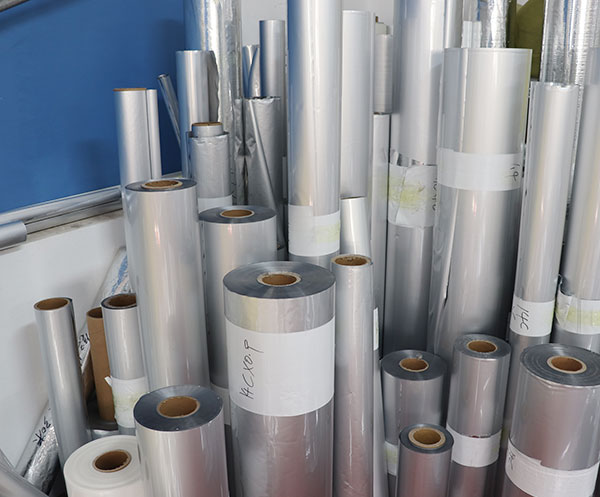
Aluminum foil film refers to a multi-layer composite film made by bonding industrial pure aluminum or aluminum alloy foil (99.5% purity or higher) as the core barrier layer with plastic films (such as PE, PP, PET, NY, etc.), paper, or other functional substrates through adhesives or hot-melt lamination processes. Its core advantage lies in combining the high barrier properties of aluminum foil (oxygen barrier, water barrier, light barrier) with the flexibility, impact resistance, and heat-sealing properties of plastic films, while also being lightweight and easy to process. It can be manufactured into various forms such as packaging bags, rolls, and container liners to meet the packaging and protection needs of different scenarios.
Compared to single aluminum foil or plastic film, aluminum foil film offers more comprehensive performance: while pure aluminum foil boasts excellent barrier properties, it is brittle, easily broken, and difficult to heat-seal; while single plastic film (such as PE Film) is flexible and easy to process, its barrier properties are poor, failing to meet long-term preservation or protection needs. Aluminum foil film, through multi-layer lamination, achieves a synergistic performance of "1+1>2," solving the processing and usage defects of pure aluminum foil while compensating for the barrier shortcomings of single plastic film.
1.2 Core Classification Methods of Aluminum Foil Film
Aluminum foil film can be divided into various types based on different classification dimensions. Different types of products exhibit significant differences in structure, performance, and application scenarios.
Classification by Composite Structure
The composite structure is the core factor determining the performance of aluminum foil film, primarily designed based on barrier requirements, processing methods, and application scenarios. Common composite structures include the following three categories:
Double-layer composite structure: Composed of a layer of aluminum foil and a layer of plastic film, this structure is simple, low-cost, and suitable for scenarios with moderate barrier requirements. Typical structures include "aluminum foil/PE" and "aluminum foil/PET": In the "aluminum foil/PE" structure, the PE layer has good heat-sealing properties, making it suitable for food packaging bags (such as biscuit bags and candy bags); in the "aluminum foil/PET" structure, the PET layer has excellent temperature resistance and stiffness, making it suitable for packaging that requires printing or secondary processing (such as gift packaging and cushioning film for electronic products). The thickness of the aluminum foil in a double-layer structure is typically 6-12μm, and the plastic film thickness is 20-50μm, with the overall thickness controlled at 30-60μm, balancing performance and cost.
Three-layer composite structure: This adds a functional substrate layer to the double-layer structure to further enhance specific properties, and is currently the most widely used structural type. Typical structures include "PET/Aluminum Foil/PE" and "NY/Aluminum Foil/CPP": In the "PET/Aluminum Foil/PE" structure, the outer PET layer provides puncture resistance and printability, the middle aluminum foil layer provides high barrier properties, and the inner PE layer ensures heat-sealing properties, making it suitable for food preservation (such as milk powder and coffee powder) and pharmaceutical intermediate packaging. In the "NY/Aluminum Foil/CPP" structure, the NY layer enhances impact resistance and oil resistance, while the CPP layer can withstand 121°C retort sterilization, making it suitable for high-temperature sterilized foods (such as canned goods and cooked foods) and pesticide packaging. The aluminum foil thickness of three-layer structures is typically 8-15μm, with a total thickness of 50-100μm, offering balanced performance and a Wide range of applications.
Multi-layer composite structures: These contain four or more substrate layers, designed for high-requirement applications, focusing on enhanced barrier properties, weather resistance, or special functions. Typical structures include “PET/Aluminum Foil/EVOH/PE” and “NY/Aluminum Foil/ALOX/PP”. In the “PET/Aluminum Foil/EVOH/PE” structure, the EVOH (ethylene-vinyl alcohol copolymer) layer is an additional high-barrier layer that works synergistically with the aluminum foil to reduce oxygen permeability to below 0.05 cm³/(m²・24h・0.1MPa), making it suitable for applications with extremely high barrier requirements, such as infant formula and high-end health products. In the “NY/Aluminum Foil/ALOX/PP” structure, ALOX (alumina coating) enhances the corrosion resistance of the aluminum foil, while the PP layer offers excellent temperature resistance, making it suitable for packaging highly corrosive chemical raw materials (such as acidic liquids and solvents). The total thickness of these multi-layer structures is typically 80-150 μm, resulting in higher costs, but they meet the stringent requirements of specialized industries.
Classification by Performance Characteristics
Based on different core performance focuses, aluminum foil films can be classified into the following categories, each optimized for specific needs:
High-barrier aluminum foil film: Focusing on oxygen barrier, water barrier, and light barrier properties, the aluminum foil thickness is typically ≥8μm. Some are composited with EVOH or PVDC (polyvinylidene chloride) barrier layers. Oxygen transmittance ≤0.2cm³/(m²・24h・0.1MPa), water vapor transmittance ≤0.5g/(m²・24h), and light transmittance ≤0.1%. Main applications include food preservation (e.g., edible oils, nuts), pharmaceutical preparations (e.g., vaccines, freeze-dried drugs), and precision electronic components (e.g., chips, sensors), preventing oxidation, moisture absorption, or deterioration due to light exposure.
Weather-Resistant Aluminum Foil Film: Emphasizing resistance to high and low temperatures and UV aging. The plastic composite layer often uses heat-resistant materials (e.g., PET, CPP) and adds UV absorbers (e.g., UV-531) or antioxidants (e.g., 1010). Operating temperature range: -40℃ to 150℃. Tensile strength retention ≥80% after artificial accelerated aging (1000 hours of UV irradiation). Suitable for outdoor storage (e.g., building materials, agricultural coverings), cold chain transportation (e.g., frozen foods, biological reagents), and high-temperature environments (e.g., automotive parts, industrial equipment protection).
Functional aluminum foil film: Possesses special functions such as antistatic properties, puncture resistance, and chemical corrosion resistance, achieved through the addition of functional additives or composite special substrates. Antistatic aluminum foil film has a surface resistivity controlled at 10⁹-10¹¹Ω, suitable for packaging electronic components (e.g., circuit boards, resistors, capacitors); puncture-resistant aluminum foil film has a puncture resistance ≥80N, achieved through composite PET or PP woven layers, suitable for packaging hardware parts and mechanical accessories; chemically resistant aluminum foil film is composited with an acid/alkali-resistant plastic layer (e.g., PET, PP) after aluminum foil passivation treatment (e.g., chromium-free passivation), suitable for packaging chemical raw materials (e.g., hydrochloric acid, sodium hydroxide solution).
Classified by Application Area
The diverse usage needs across different industries have driven the development of targeted product series for aluminum foil films:
Food Packaging Aluminum Foil Film: Emphasizing hygiene, safety, and freshness preservation, it must comply with GB 4806 series standards, with heavy metal content ≤10mg/kg and VOCs content ≤10mg/m². Common types include food packaging bags (e.g., snack bags, milk powder bags), retort pouches (e.g., cooked food bags, can linings), and vacuum packaging films (e.g., meat and seafood vacuum films). The appropriate composite structure and performance parameters are selected based on food characteristics (e.g., whether heating is required, storage period).
Pharmaceutical Packaging Aluminum Foil Film: Emphasizing asepticity, compliance, and stability, it must comply with YBB pharmaceutical packaging standards and GMP specifications. Microbial limits for aseptic packaging must be ≤10cfu/g, and specific migration levels must meet pharmaceutical requirements. Main applications include pharmaceutical blister packaging (e.g., aluminum foil for tablets and capsules), aseptic bags (e.g., packaging for infusions and biological agents), and pharmaceutical intermediate packaging (e.g., raw materials and excipient films). Some products require resistance to low temperatures (-40℃) or sterilization (121℃ moist heat sterilization).
Aluminum foil for electronic packaging: The core requirements are antistatic properties, electromagnetic shielding, and cleanliness. Surface resistivity ≤10¹¹Ω, shielding effectiveness ≥30dB, and cleanliness reaching Class 100 (particle count ≤10 particles/m³, particle size ≥0.5μm). Suitable for packaging precision electronic components such as chips, circuit boards, and sensors, preventing electrostatic breakdown or electromagnetic interference from affecting component performance, while avoiding dust and impurity contamination.
Aluminum foil for industrial packaging: Emphasis is placed on durability, corrosion resistance, and load-bearing capacity. Tensile strength ≥35MPa, puncture resistance ≥60N, and some products require oil and solvent resistance. Common applications include packaging for chemical raw materials (such as bags for granular and liquid chemicals), packaging for mechanical parts (such as protective films for bearings and gears), and packaging for building materials (such as waterproof membranes and insulation linings). Product specifications can be adjusted according to the weight, shape, and storage environment of industrial products.
II. Aluminum Foil Film Production Process: Key Links from Raw Materials to Finished Products
The performance and quality of aluminum foil film highly depend on mature and precise production processes. From the rolling of the aluminum foil substrate to the lamination of multiple substrates, and then to subsequent printing and bag-making processing, parameter control at each stage directly affects the product's quality stability.
2.1 Preparation Process of Core Substrates
The core substrates of aluminum foil film include aluminum foil and plastic film. The preparation processes of both determine their basic properties and are prerequisites for subsequent lamination processing.
Aluminum Foil Substrate Rolling Process
The rolling of aluminum foil is the process of processing aluminum ingots into ultra-thin aluminum foil. It requires four key steps: melting and casting, cold rolling, precision rolling, and annealing, to ensure the uniformity of aluminum foil thickness, surface quality, and mechanical strength:
Melting and Casting Process: Industrial pure aluminum ingots with a purity of 99.5% or higher are fed into a melting furnace and melted into molten aluminum at 700-750℃. A refining agent (such as hexachloroethane) is added to remove hydrogen and impurities for 30-45 minutes. Subsequently, the molten aluminum is cast into aluminum coils with a thickness of 6-8mm using a continuous casting and rolling mill (casting roll diameter 600-800mm, speed 1-2m/min) under the cooling effect of cooling water (temperature 20-30℃). The casting and rolling process requires controlling the casting and rolling pressure (10-15MPa) to ensure that the aluminum cast and rolled coils have uniform grains (grain size ≤50μm), no cracks, and tensile strength ≥80MPa, laying the foundation for subsequent rolling.
Aluminum foil composite woven fabric: High-Barrier Protective Material
Aluminum foil composite woven fabric is a high-performance industrial protective material made by hot-melt laminating an aluminum foil layer with polyester (PET) or polyethylene (PE) woven fabric. With excellent high-barrier properties and robust mechanical strength, it serves as a core material for industrial equipment transport, storage, and specialized protective applications. No company recommendations are included in this text.
Exceptional Barrier Protection: The aluminum foil layer completely blocks moisture, oxygen, corrosive gases, and UV radiation. With a water vapor transmission rate as low as 0.2 g/(m²·24h), it effectively prevents corrosion of metal components and oxidation of precision electronic parts. It reflects over 95% of thermal radiation, preventing aging of paint and plastic components due to light exposure, making it suitable for long-term protection.
Superior Mechanical Strength: The woven fabric substrate provides high tear resistance, puncture resistance, and compression resistance, with tensile strength exceeding 200 N/15 mm. This enables the material to withstand scratches from sharp edges, stacking pressure, and friction during transport and storage, protecting the equipment's appearance and structural integrity.
Flexible Adaptability: The material supports heat sealing and custom sizing. It can be fabricated into sealed covers, packaging bags, or container liners, and functional coatings such as anti-static, flame retardant, and VCI vapor-phase rust inhibitors can be added to meet protection requirements for heavy machinery, instruments, chemical materials, and other items.
This material is suitable for multi-modal transport, outdoor storage, and indoor precision storage. Its lightweight nature does not increase transport costs, and some products are recyclable, aligning with green industrial development trends. When in use, sharp-edged equipment should be cushioned to ensure sealing integrity and prevent damage to the aluminum foil layer, which could compromise barrier performance.
Frequently Asked Questions (FAQs):
1. How effective is the moisture barrier performance of this Aluminum foil composite woven fabric?
The aluminum foil composite woven fabric has extremely high barrier properties. The aluminum foil layer completely blocks moisture, oxygen, and corrosive gases, with a water vapor permeability as low as 0.2 g/(m²·24h). During transportation or storage, it effectively prevents corrosion of metal parts and oxidation of precision electronic components, ensuring the long-term stability of equipment.
2. Can the material withstand mechanical damage during transportation?
Yes. The PET/PE woven fabric substrate gives the material high tear resistance, puncture resistance, and compression resistance. Tensile strength can reach over 200 N/15 mm, effectively resisting sharp edge scratches, stacking compression, and friction and collision during transportation and storage, protecting the appearance and structural integrity of the equipment.
3. Can specifications or functions be customized for different equipment?
Customization is supported. We can cut different sizes according to customer needs and heat-seal them into packaging bags, covers, or container liners. Functional coatings, such as antistatic, flame-retardant, and VCI vapor phase corrosion inhibitors, can be added to meet the protection requirements of various equipment and special scenarios.
4. What transportation and warehousing scenarios is the product suitable for?
Wide range of applications. It can be used in multimodal transport environments including sea, land, and air transport, as well as indoor precision storage or open-air warehousing. Its high barrier properties and weather resistance can withstand salt spray, rain, ultraviolet radiation, and temperature fluctuations, ensuring the safe protection of industrial equipment in various environments.
5. What are the precautions for use and environmental disposal?
When using, the appropriate thickness should be selected according to the weight of the equipment and the sharpness of the edges, and cushioning materials should be used to ensure a complete seal and prevent damage to the membrane material. After disposal, some products can be recycled and reused, which conforms to the concept of green industry and reduces environmental impact.
This website uses cookies to ensure you get the best experience on our website.
 Español
 Pусский
 Deutsch
 العربية



 WhatsApp
 Phone
Phone