


I. Core Characteristics of Aluminum Foil Film: Multi-Dimensional Performance Advantages
The performance advantages of aluminum foil film stem from the physical properties of the aluminum foil itself and the synergistic effect of the composite layer. These characteristics collectively determine its irreplaceable role in the packaging field, specifically in four dimensions: barrier properties, stretchability, protection, and processing adaptability.
1.1 Barrier Properties: Protecting the Quality of Contents
Barrier properties are the core advantage of aluminum foil film. Aluminum foil possesses near-perfect barrier capabilities against oxygen, water vapor, and light (especially ultraviolet light), a characteristic unmatched by ordinary plastic films. The oxygen permeability of pure aluminum foil can be as low as 0.1 cm³/(m²・24h・0.1 MPa) and the water vapor permeability ≤0.5 g/(m²・24h), fundamentally cutting off the pathways of oxidation, moisture absorption, and deterioration of the contents. For example, the commonly used "PET/aluminum foil/PE" composite structure in food packaging provides stiffness and puncture resistance, the aluminum foil layer blocks oxygen and light, and the PE layer handles heat sealing. The synergistic effect of these three layers extends the shelf life of snacks (such as potato chips and nuts) from 3 months to 6-12 months while maintaining the original taste and flavor.
In the pharmaceutical field, the barrier properties of aluminum foil film are crucial for ensuring drug safety. Products with extremely high storage requirements, such as vaccines and biological agents, require a multi-layered "PET/aluminum foil/EVOH/PE" composite structure. The EVOH (ethylene-vinyl alcohol copolymer) layer further enhances oxygen barrier properties, ensuring an oxygen permeability of ≤0.3cm³/(m²・24h・0.1MPa). This ensures that the active ingredients do not degrade or deteriorate within the shelf life of the drug under refrigerated conditions at 2-8℃. Furthermore, the barrier properties of aluminum foil film can isolate external odors and impurities, preventing contamination of the contents. This characteristic is particularly important in the packaging of high-end foods (such as infant formula) and precision electronic components.
1.2 Excellent ductility and formability: Adaptable to complex packaging forms
Aluminum foil has good ductility and can be rolled into ultra-thin foils with a thickness of only 6-20μm. This characteristic allows it to be tightly laminated with various plastic films and adaptable to diverse forming processes, fitting products of different shapes. For example, in the pharmaceutical field, aluminum-plastic blister packaging uses aluminum foil film to form precise blister structures through stamping. Each blister independently wraps a tablet or capsule, ensuring both airtightness and easy individual use. The curved design of the blister also cushions external impacts, preventing breakage of the medicine.
In the food packaging field, the formability of aluminum foil film can meet various needs such as vacuum packaging, heat shrink packaging, and 3D pouch forming. For example, the "NY (nylon)/aluminum foil/PE" composite film used in vacuum packaging of meat can tightly adhere to the surface of the meat under vacuum, reducing residual air inside the packaging and further extending shelf life. Heat-shrinkable aluminum foil film can shrink upon heating, perfectly wrapping irregularly shaped products (such as ham and sausages), improving packaging sealing and aesthetics. Furthermore, the lightweight nature of ultra-thin aluminum foil (6-8μm) reduces packaging material usage, lowers transportation costs, and aligns with the trend of green packaging.
1.3 Comprehensive Protection: Addressing Risks in Multiple Scenarios
The protective properties of aluminum foil film encompass antistatic, rust prevention, corrosion resistance, and impact resistance. Through the functional design of the composite layers, it can meet the protection needs of different fields. In the electronics field, electronic components (such as chips and circuit boards) are extremely sensitive to static electricity; even slight static electricity can cause damage. Therefore, aluminum foil film for electronic packaging requires the addition of antistatic agents to control the surface resistance at 10⁹-10¹¹Ω. Simultaneously, the metallic properties of the aluminum foil layer provide a certain degree of electromagnetic shielding, reducing the impact of external electromagnetic interference on component performance.
In the industrial sector, aluminum foil film's rust and corrosion protection properties safeguard metal parts and machinery from environmental erosion. For example, the "PET/aluminum foil/PP" composite film used in automotive parts transportation isolates the parts from oxygen and moisture, preventing rust. For mildly corrosive chemicals (such as certain coatings and adhesives), chemically resistant composite layers (such as PP and PET) can be selected to ensure the aluminum foil does not react with the contents, maintaining structural stability. Furthermore, aluminum foil film exhibits excellent impact resistance, cushioning external forces during transportation and reducing damage caused by collisions and compression.
1.4 Flexible Processing Adaptability: Meeting Personalized Needs
Aluminum foil film is compatible with various processing steps such as printing, heat sealing, cutting, bag making, and perforation, providing stable processing results and meeting the personalized needs of different industries. In printing, after corona treatment or a base coat, the aluminum foil film surface exhibits strong ink adhesion, enabling high-precision, multi-color printing with high pattern clarity and resistance to fading. For example, aluminum foil film used in high-end gift packaging can be gravure-printed with intricate patterns and logos to enhance the product's visual appeal; while aluminum foil film used in pharmaceutical packaging must clearly print key information such as drug names, batch numbers, and expiration dates to ensure traceability, and the printing inks must meet pharmaceutical-grade safety standards, with no harmful substance migration.
Regarding heat sealing, aluminum foil film has a wide heat-sealing temperature range (typically 120-180℃) and a heat-sealing strength ≥30N/15mm, meeting the packaging needs of high-speed production lines. For instance, in automated packaging lines in food factories, aluminum foil film can be heat-sealed at a rate of 100-200 bags per minute, with smooth edges and good sealing, avoiding issues such as incomplete or missing seals. In addition, depending on the application requirements, aluminum foil films can undergo special treatments such as perforation, embossing, and adhesive coating: breathable aluminum foil films achieve micro-breathability through laser perforation (0.1-1mm aperture), suitable for breathable packaging of fresh foods (such as meat, fruits, and vegetables); embossed aluminum foil films use embossing rollers to press diamond patterns, stripes, and other designs, improving surface anti-slip performance and texture; adhesive-coated aluminum foil films have pressure-sensitive adhesive coated on the surface, which can be used as labels or protective films, offering strong adhesion and easy peeling.
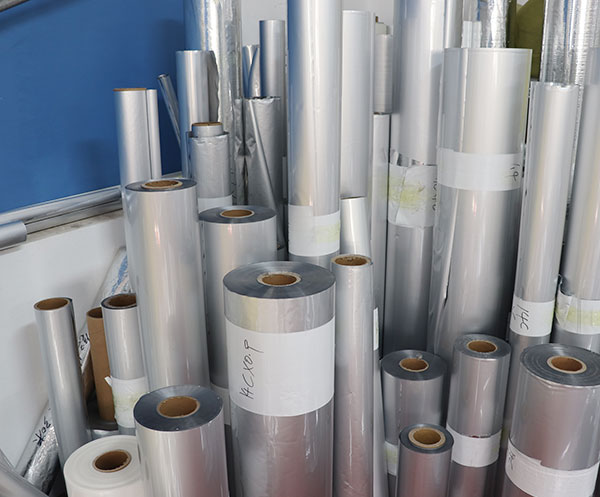
II. Classification of Aluminum Foil Films: By Structure and Application
Aluminum foil films can be classified in various ways. Based on differences in composite structure, aluminum foil thickness, and application scenarios, they can be divided into different types. Each type of product has significant differences in performance and applicable scope, and purchasers need to select the appropriate type based on their specific needs.
2.1 Classification by Composite Structure: Performance Upgrades from Double-Layer to Multi-Layer
Based on composite structure, aluminum foil films can be divided into three categories: double-layer composite, triple-layer composite, and multi-layer composite. The complexity of the structure directly determines the product's barrier properties, strength, and cost. Double-layer composite aluminum foil film is the basic structural type, with common combinations being "aluminum foil/PE" and "aluminum foil/PP". The PE or PP layer primarily provides heat-sealing properties and flexibility, while the aluminum foil layer provides barrier properties. These products are relatively inexpensive, but their barrier properties and puncture resistance are relatively limited, making them suitable for simple packaging applications such as candy inner packaging, tea sachets, and desiccant packaging. For example, the "aluminum foil/PE" composite film used in tea sachets can block oxygen and light, preserving the aroma and taste of the tea, and the heat-sealing properties of the PE layer facilitate automated packaging.
Triple-layer composite aluminum foil film is currently the most widely used type, with typical structures including "PET/aluminum foil/PE", "NY/aluminum foil/PE", and "PET/aluminum foil/PP". The addition of PET or NY (nylon) layers significantly improves the film's stiffness, puncture resistance, and temperature resistance: the PET layer has good temperature resistance (withstanding temperatures above 120℃), making it suitable for applications requiring sterilization or high-temperature storage; the NY layer offers excellent flexibility and puncture resistance, making it suitable for packaging products with sharp edges (such as nuts and beans). This type of aluminum foil film offers a balanced barrier and strength, making it suitable for applications requiring high protection, such as snacks, milk powder, pharmaceutical intermediates, and electronic components. For example, the "NY/aluminum foil/PE" composite film used in milk powder packaging features an NY layer that prevents the milk powder bag from being torn during handling, an aluminum foil layer that blocks oxygen and moisture to prevent the milk powder from absorbing moisture and clumping, and a PE layer that ensures easy opening and good sealing.
Multilayer composite aluminum foil films (four layers or more) are structures designed for high-end demands. Common combinations include "PET/aluminum foil/NY/PE", "PET/aluminum foil/EVOH/PE", and "PET/aluminum foil/AL/PE" (aluminum foil + aluminum vapor-deposited layer). By adding special functional layers such as EVOH and aluminum vapor-deposited layer, barrier properties, temperature resistance, or corrosion resistance are further enhanced. For example, in the "PET/aluminum foil/EVOH/PE" structure, the EVOH layer's oxygen barrier capability is more than 100 times that of ordinary PE, making it suitable for packaging pharmaceutical products that are extremely sensitive to oxygen, such as vaccines and biological agents. The "PET/aluminum foil/AL/PE" structure, through double-layer metal barrier (aluminum foil + aluminum vapor deposition), can achieve complete light blocking, making it suitable for packaging photosensitive foods (such as certain vitamin supplements) or chemical products. Multilayer composite aluminum foil films offer excellent performance but have higher production costs, and are mainly used in the high-end market.
High-barrier aluminum foil film: Protective Material for industrial equipment transportation and Storage
High-barrier aluminum foil film is a high-performance protective material made by dry-laminating aluminum foil with PET, PE, or other plastic films. With excellent barrier properties, weather resistance, and mechanical strength, it has become a core choice for industrial equipment transportation and storage protection. This content does not recommend any company.
Its core protective performance can be summarized in three main aspects:
Exceptional Barrier Capability: The dense aluminum foil layer completely blocks moisture, oxygen, corrosive gases, and ultraviolet rays. Water vapor transmission rate can be as low as 0.1g/(m²·24h), and oxygen transmission rate approaches zero, effectively preventing corrosion of metal components and oxidation failure of precision electronic parts. The foil also reflects over 95% of thermal radiation, preventing paint aging and plastic component brittleness, making it suitable for long-term storage and strict cross-border transportation conditions.
Outstanding Mechanical Properties: The laminated aluminum foil film combines flexibility and tear resistance, with a puncture strength ≥35N. It can withstand scratches from sharp edges during transport, stacking pressure, and friction or collision in storage, protecting the appearance and internal structure of equipment.
Flexible Adaptability: The film supports heat-sealing, cutting, splicing, and size customization. It can be made into vacuum packaging bags, 3D covers, or container liners as needed. Functional coatings such as VCI vapor corrosion inhibitors, anti-static, or flame-retardant layers can be added to meet the protection requirements of heavy machinery, instruments, and precision tools.
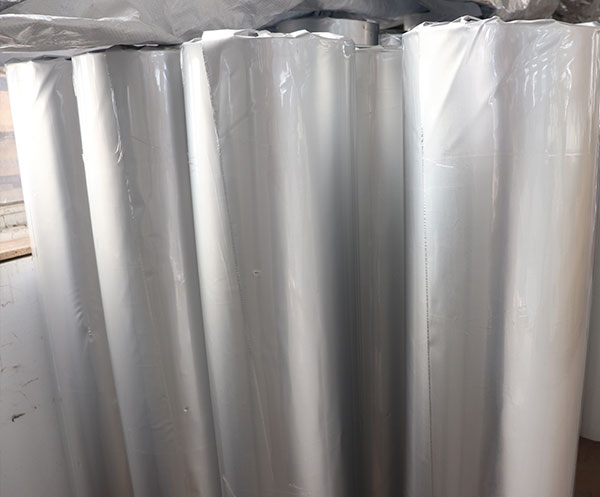
In practical applications, the film can block salt spray in maritime transport, dust on land routes, and rain, reducing transport damage rates. In storage, it can serve as moisture-proof liners or dust covers, providing a stable environment, especially suitable for outdoor storage with high humidity and strong sunlight. The lightweight design does not increase transport load, and some products use recyclable materials, aligning with green industrial trends.
When in use, sharp-edged equipment should be paired with cushioning materials such as EPE foam to prevent puncturing the foil layer. After vacuum packaging, the seal integrity should be checked to ensure stable long-term protective performance.
Frequently Asked Questions (FAQs):
1. Is this High-barrier aluminum foil film effective at preventing moisture and rust?
Yes, the high-barrier aluminum foil film uses a dense aluminum foil layer that completely blocks moisture, oxygen, and corrosive gases. Water vapor transmission is as low as 0.1 g/(m²·24h), and oxygen transmission is close to zero. It effectively prevents metal equipment from rusting and precision electronic components from oxidizing, while reflecting ultraviolet rays and heat radiation, protecting painted surfaces and plastic parts for long-term stability.
2. Is the film durable during transportation and storage? Will it be scratched or torn?
The high-barrier aluminum foil film is composited with PET or PE substrates, combining flexibility and tear resistance. Its tensile strength can reach over 200N/15mm, and its puncture strength ≥35N, resisting sharp edge scratches during transportation, stacking compression, and friction and collisions in the storage environment, protecting the appearance and internal structure of equipment.
3. What transportation and storage environments is the film material suitable for?
This product is suitable for various transportation and storage scenarios, including sea freight, land transport, long-distance transportation, and open-air or indoor warehousing. It can withstand temperatures from -30℃ to 110℃, blocks salt spray, rain, and dust, and is especially suitable for high-humidity, high-light environments, providing stable protection for equipment.
4. Can it be customized according to equipment size or special requirements?
Yes. High-barrier aluminum foil film supports heat sealing, cutting and splicing, and size customization, and can be used to make vacuum packaging bags, three-dimensional covers, container liners, etc. VCI vapor phase corrosion inhibitors, antistatic agents, or flame-retardant coatings can also be added as needed to meet the protection requirements of heavy machinery, instruments, precision electronic equipment, and many other items.
5. What operational details should be noted during use?
For equipment with sharp edges and corners, use pearl cotton or other cushioning materials to avoid puncturing the aluminum foil layer and affecting the barrier effect. After vacuum packaging, check the seal integrity and conduct regular spot checks on the protective performance of the storage packaging to ensure stable long-term protection.
This website uses cookies to ensure you get the best experience on our website.
 Español
 Pусский
 Deutsch
 العربية



 WhatsApp
 Phone
Phone