


I. Core Process of Woven Film Processing: A Complete Chain Breakdown from Raw Materials to Finished Products
Woven film processing is a systematic project, involving multiple stages such as raw material pretreatment, extrusion molding, stretching and shaping, weaving and lamination, and post-processing. Each stage is interconnected and collectively determines the quality of the product. While there are slight differences in the processing flow between different types of woven films (such as single-layer PP woven film and HDPE composite woven film), the core steps are common, requiring precise control over the operational specifications and quality standards of each stage.
(I) Raw Material Pretreatment: The "Basic Defense Line" for Processing Quality
Raw material pretreatment is the first step in woven film processing, mainly including raw material screening, drying, mixing, and color matching. Its purpose is to remove impurities and moisture from the raw materials, ensuring uniform raw material composition and providing a stable raw material foundation for subsequent processing stages, avoiding processing defects caused by raw material issues.
1. Raw Material Screening and Inspection
The core of raw material screening is to remove resin particles and impurities that do not meet quality requirements, ensuring the purity of the raw materials. Common raw materials for woven films include resins such as PP, HDPE, and LLDPE. Key indicators such as melt flow index (MFR), density, and impurity content of the raw materials must be tested to ensure they meet production standards before use.
Melt Flow Index (MFR) Testing: MFR directly affects the flowability of the raw material and is an important basis for selecting processing parameters. The MFR of PP resin is typically controlled at 2-5 g/10 min, and that of HDPE resin is 0.5-2 g/10 min. If the MFR deviation exceeds ±1 g/10 min, the extrusion temperature or screw speed needs to be adjusted to suit the raw material characteristics. For example, if a company purchases PP resin with an MFR of 7 g/10 min (far exceeding the standard range), direct use may lead to uneven thickness of the extruded filaments. The flowability needs to be improved by lowering the extrusion temperature (from 200℃ to 185℃) to avoid processing defects.
Impurity Screening: Impurities in the raw materials (such as metal particles, dust, and discolored particles) can affect the appearance and mechanical properties of the woven film. They must be screened using a vibrating screen (usually with a mesh size of 40-60). The impurity content should be controlled below 0.01%. For example, a company failed to screen the raw materials and used HDPE resin containing 0.05% impurities in production, resulting in spots on the surface of the extruded flat yarns. The scrap rate of the finished woven film increased from 3% to 12%. After adding a screening step, the scrap rate returned to normal.
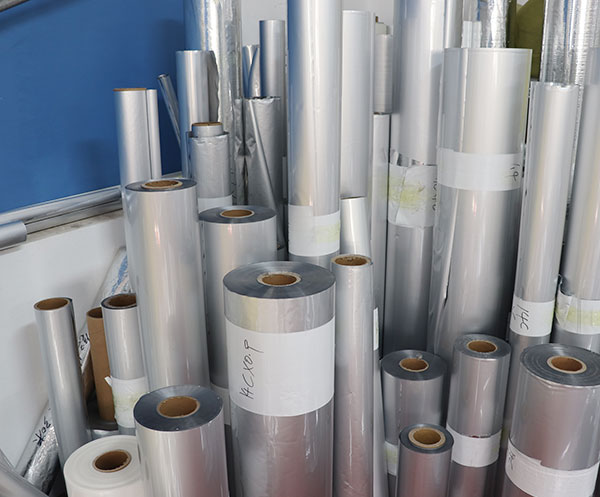
Moisture Content Testing: Moisture in the raw materials evaporates during extrusion, causing bubbles in the flat yarns and affecting their strength. The moisture content of PP and PE resins should be controlled below 0.1%. If the moisture content exceeds the standard (e.g., >0.2%), drying treatment is required. For example, a company purchased LLDPE resin with a moisture content of 0.3% during the rainy season. After direct extrusion, the flat filament bubble rate reached 8%. After hot air drying (temperature 80-100℃, time 2-3 hours), the moisture content decreased to 0.08%, and the bubble rate decreased to below 1%.
2. Raw Material Mixing and Color Matching
According to product performance requirements, the base resin and additives (such as UV stabilizers, antioxidants, and toughening agents) need to be mixed in proportion. If a specific color is required, color masterbatch also needs to be added. The uniformity of mixing directly affects the consistency of the woven film's performance:
Additive Mixing: The addition ratio of additives needs to be precisely controlled. For example, the addition amount of UV stabilizer in outdoor woven film is 0.1%-0.5%, and the antioxidant is 0.2%-0.5%. The mixing process is usually carried out in a high-speed mixer (speed 800-1200r/min, time 5-10 minutes) to ensure uniform dispersion of the additives. Uneven mixing can lead to localized performance deficiencies in the woven film. For example, one company mixed the UV stabilizer at too low a speed (500 rpm) for less than 3 minutes, resulting in greenhouse film with poor localized UV resistance and patchy aging after one year of use.
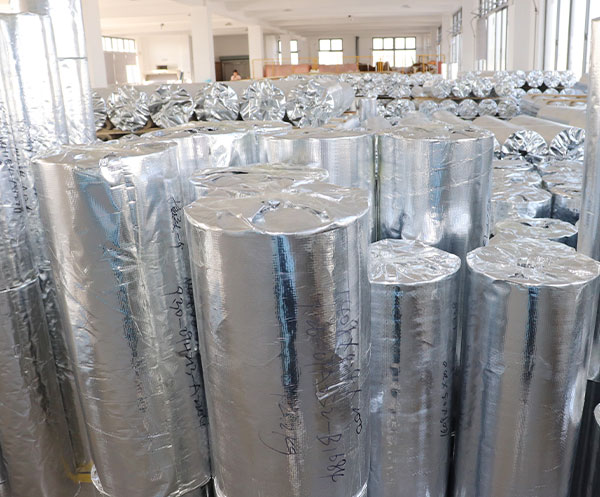
Masterbatch Color Matching: The proportion of masterbatch added depends on the color depth (usually 1%-3%) and must be thoroughly mixed with the base resin to avoid color differences. For example, when producing blue packaging woven film, adding 2% blue masterbatch, if mixed unevenly, will cause uneven stripes in the woven film, affecting its appearance. One company improved its color difference compliance rate from 85% to 98% by optimizing the mixing process (pre-mixing the masterbatch with a small amount of resin before adding the remaining resin).
(II) Extrusion Molding: The "Core Link" in Flat Yarn Processing
Extrusion molding is a crucial step in processing mixed raw materials into flat yarns. The raw materials are melted and plasticized using an extruder, then extruded through a die and cooled to form flat yarns with a certain thickness and width. The processing quality directly determines the mechanical strength and thickness uniformity of the woven film.
1. Extruder Selection and Parameter Setting
The extruder is the core equipment in extrusion molding. A single-screw extruder is commonly used (screw diameter 45-65mm, length-to-diameter ratio 25-30:1). Parameters such as extrusion temperature, screw speed, and die clearance need to be set according to the characteristics of the raw materials and the specifications of the flat yarns.
Extrusion Temperature Setting: The temperature needs to be controlled in stages according to the resin type to ensure that the raw materials are fully melted and do not degrade. The typical extrusion temperatures for PP resin are: Zone 1: 180-190℃, Zone 2: 190-200℃, Zone 3: 200-210℃, and Die head: 210-220℃. For HDPE resin, the temperatures are: Zone 1: 160-170℃, Zone 2: 170-180℃, Zone 3: 180-190℃, and Die head: 190-200℃. If the temperature is too high, the raw material is prone to degradation, leading to discoloration and decreased strength of the flat yarn. If the temperature is too low, the raw material will not melt sufficiently, and unmelted particles will easily appear in the flat yarn. For example, when a company produced PP flat yarn, if the die head temperature reached 240℃, the flat yarn turned yellow, and the tensile strength dropped from 350N/5cm to 280N/5cm. When the temperature dropped to 190℃, unmelted particles appeared inside the flat yarn, and the tear strength decreased by 20%.
Screw speed control: Screw speed directly affects the extrusion volume and filament thickness, and is typically controlled between 30-60 r/min. Excessive speed (e.g., >80 r/min) increases the extrusion volume, potentially exceeding the filament thickness limit, and results in uneven plasticization of the raw material. Insufficient speed (e.g., <20 r/min) leads to low production efficiency and prolonged residence time of the raw material in the barrel, increasing its degradability. For example, a company increased the screw speed from 50 r/min to 90 r/min to improve production, increasing the PP filament thickness from 50 μm to 65 μm, and widening the thickness deviation from ±5% to ±12%. When the speed was reduced to 15 r/min, the filament turned yellow, and the tensile strength decreased by 10%.
Die head clearance adjustment: The die head clearance is set according to the target filament thickness, typically 0.2-0.3 mm. Too large or too small a clearance will cause deviations in filament thickness. For example, when producing HDPE flat yarn with a target thickness of 50μm, the die gap is set to 0.25mm. If the gap is adjusted to 0.3mm, the flat yarn thickness increases to 60μm; if the gap is adjusted to 0.2mm, the flat yarn thickness decreases to 40μm, resulting in insufficient strength. One company once mistakenly adjusted the die gap from 0.25mm to 0.35mm, causing the flat yarn thickness to exceed the standard by 30%. Subsequent readjustment of the gap and rework were necessary, increasing production costs.
2. Cooling and Shaping
The extruded molten flat yarn needs to be cooled and shaped to maintain stable dimensions and form. The cooling effect directly affects the crystallinity and mechanical properties of the flat yarn.
Cooling method selection: Water cooling (cooling water tank) or air cooling is commonly used. PP and PE flat yarns mostly use water cooling, with the cooling water temperature controlled at 20-30℃. The cooling length is typically 1-1.5m. If the water temperature is too high (e.g., >40℃), the cooling rate is slow, resulting in low crystallinity and reduced toughness of the flat yarn. If the water temperature is too low (e.g., <15℃), the cooling rate is too fast, causing internal stress in the flat yarn, which makes it prone to breakage during subsequent stretching. For example, when a company raised the cooling water temperature to 45℃, the crystallinity of the PP flat yarn decreased from 58% to 50%, and the low-temperature (-20℃) impact strength decreased from 45kJ/m² to 32kJ/m². When the water temperature dropped to 10℃, the tensile breakage rate of the flat yarn increased from 1% to 5%.
Traction speed control: The traction speed needs to be matched with the extrusion speed, typically 10-20m/min. If the traction speed is too fast, the flat yarn is easily stretched thinner, reducing its strength; if the speed is too slow, the flat yarn tends to accumulate, affecting the cooling effect. For example, when a company increases its traction speed from 15m/min to 25m/min, the thickness of the PP flat yarn decreases from 50μm to 42μm, and the tensile strength decreases from 350N/5cm to 300N/5cm. When the speed drops to 8m/min, the flat yarn accumulates in the cooling water tank, causing wrinkles, which need to be cut and removed later, increasing the scrap rate.
Multifunctional woven film processing technology: Suitable for Transportation and Warehousing Protection
Multifunctional woven film is a commonly used material for industrial transportation and warehousing protection. Its processing technology integrates substrate weaving, functional lamination, and post-treatment procedures, which determine the core protective properties of the material, such as moisture resistance, tear strength, and weather durability. No company recommendations are included.
The core processing workflow can be divided into three steps:
Substrate Weaving: Polypropylene (PP) or polyethylene (PE) is used as raw material. After extrusion, drawing, and orientation, the fibers are woven into high-strength fabric using circular or flat looms. The weave density and filament specifications can be adjusted as required, providing the material with fundamental tear and compression resistance.
Functional Lamination: This is the key stage to endow the woven film with multifunctionality. Using coating, heat-lamination, or dry-lamination processes, the woven fabric is combined with functional layers such as PE Films, aluminum foil, or VCI anti-rust films. The resulting composite material combines the toughness of the woven fabric with the moisture-proof, barrier, and anti-rust properties of the functional layers, making it suitable for various protection requirements.
Post-Treatment: The laminated rolls are slit and heat-sealed to size. Additional features, such as anti-static or flame-retardant coatings, punching, or printing, can be added. Some products undergo weathering tests to ensure adaptability to outdoor storage and long-distance transportation conditions.
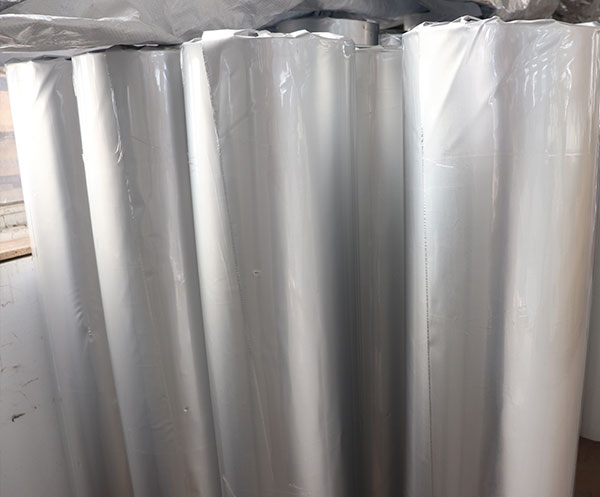
Optimized processing technology allows precise control of material weight and thickness. The manufactured multifunctional woven films support customized sizes and can be made into packaging bags, protective covers, or container liners. During transportation, they resist scratches and salt spray; in warehousing, they prevent moisture and dust intrusion, meeting the protection needs of multiple industrial scenarios.
Frequently Asked Questions (FAQs):
1. What types of industrial transportation and warehousing scenarios are multifunctional Woven Membranes suitable for?
Multifunctional woven membranes are suitable for the transportation and storage of heavy machinery, electronic instruments, precision equipment, and chemical raw materials. During transportation, they can resist scratches, compression, salt spray, and moisture corrosion; during storage, they provide dust protection, moisture protection, and UV protection, suitable for indoor and outdoor, open-air, and long-term storage environments.
2. How is the protective performance of multifunctional woven membranes demonstrated?
This material achieves high protection through a three-layer composite structure: the woven fabric substrate provides high tear resistance, puncture resistance, and pressure resistance; the functional film layer (such as PE Film, aluminum foil, or VCI anti-rust film) provides protection against moisture, oxidation, corrosive gases, and UV rays; antistatic and flame-retardant coatings can be added as needed.
3. What flexibility is there in the processing and customization of woven membranes?
Multifunctional woven membrane supports heat sealing, cutting and splicing, and customized sizes. It can be made into covers, packaging bags, or container liners to suit different equipment specifications. Antistatic, flame-retardant, or VCI anti-rust coatings can also be added according to customer requirements to meet special transportation or storage protection needs.
4. How does the multifunctional woven membrane perform in terms of weather resistance and lifespan?
Optimized composite processes ensure that the material maintains good performance within a temperature range of -40℃ to 120℃, resisting the effects of high humidity, strong sunlight, wind, and rain. With proper storage and use, it can protect equipment from moisture, dust, and oxidation damage for a long time, ensuring equipment safety.
5. What are the operational precautions when using multifunctional woven membrane?
During use, the appropriate film thickness and basis weight should be selected according to the weight and shape of the equipment. Sharp edges should be cushioned with cushioning material to prevent punctures to the film layer, ensuring sealing and barrier effects. After heat sealing or vacuum packaging, the integrity of the seal should be checked, and the protective effect of the storage packaging should be checked regularly to maintain stable long-term protective performance.
This website uses cookies to ensure you get the best experience on our website.
 Español
 Pусский
 Deutsch
 العربية



 WhatsApp
 Phone
Phone