


I. Core Factors Influencing the Waterproof Performance of Woven Membranes: A Comprehensive Analysis from Raw Materials to Processes
The waterproof performance of woven membranes is not determined by a single step, but rather by the combined effects of raw material characteristics, production processes, product structural design, and post-treatment. The selection and control of each step directly or indirectly affects the penetration path and blocking efficiency of water molecules. Only by precisely controlling the key nodes throughout the entire chain can a balance be achieved between waterproof performance, cost, and other functions.
(I) Raw Material Characteristics: The "Foundation" of Waterproof Performance
Raw materials are the core prerequisite for determining the waterproof performance of woven membranes. The molecular structure and density of the resin, as well as the type and ratio of functional additives, directly affect the microstructure density and water molecule blocking ability of the membrane material, forming a crucial line of defense for waterproof performance control.
1. Resin Molecular Structure: The "Source Guarantee" of Waterproof and Dense Properties
The arrangement, branching degree, and crystallinity of the resin's molecular chains determine the size and distribution of the micropores in the woven membrane, thus affecting the difficulty of water molecule penetration. This is a key intrinsic factor influencing waterproof performance:
Molecular Chain Arrangement and Density: The tighter the resin molecular chain arrangement and the higher the density, the smaller the micropores in the membrane material, and the stronger the waterproof performance. HDPE (High-Density Polyethylene) resin, due to its high molecular chain linearity and tight arrangement, has a density of 0.941-0.965 g/cm³, resulting in woven membranes with significantly better waterproof performance than PP (Polypropylene) resin (density 0.900-0.915 g/cm³) and LLDPE (Linear Low-Density Polyethylene) resin (density 0.910-0.925 g/cm³). For example, the water vapor transmission rate (PVP) of HDPE woven film of the same thickness (100μm) is typically 3-5 g/(m²·24h), while that of PP woven film can reach 8-12 g/(m²·24h), and that of LLDPE woven film is 6-9 g/(m²·24h). A chemical company used HDPE woven film to package moisture-absorbing polyethylene granules, and after 6 months of storage, the moisture content of the raw materials was still below 0.1%; however, after switching to PP woven film, the moisture content of the raw materials rose to 0.3% under the same conditions, and slight clumping occurred.
Branching degree: The lower the branching degree, the easier it is for the molecular chains to arrange themselves tightly, and the better the waterproof performance. HDPE resin has extremely low branching (almost no branches), allowing its molecular chains to pack tightly, forming a dense barrier layer. LLDPE resin, due to the presence of short branches (20-30 branches/1000C), has increased spacing between molecular chains, resulting in slightly inferior waterproofing performance compared to HDPE. While PP resin also has low branching, the presence of methyl side groups on its molecular chains leads to less compact packing than HDPE, resulting in relatively weaker waterproofing performance. For example, in building waterproofing applications, the permeability coefficient of HDPE geomembranes is typically less than 1×10⁻¹¹ cm/s, while that of LLDPE geomembranes is approximately 1×10⁻¹⁰ cm/s, and that of PP geomembranes is 5×10⁻¹⁰ cm/s. HDPE membranes are more suitable for applications with stringent waterproofing requirements, such as landfills and artificial lakes.
Crystallization: Higher crystallinity results in more regular arrangement of resin molecular chains, stronger membrane density, and better waterproofing performance. HDPE resin has a crystallinity of 70%-80%, significantly higher than PP resin (50%-60%) and LLDPE resin (30%-40%), thus exhibiting a substantial advantage in waterproof performance. Further enhancing waterproofing performance can be achieved by adjusting process parameters to increase resin crystallinity. For example, one company, in producing HDPE Waterproof woven membranes, optimized the cooling rate (from 5℃/min to 10℃/min), increasing the resin crystallinity from 75% to 82%, and reducing the membrane's water vapor permeability from 4 g/(m²・24h) to 2.5 g/(m²・24h), resulting in a 37.5% improvement in waterproofing performance.
2. Functional Additives: "Reinforcing Support" for Waterproofing Performance
By adding specific functional additives, the waterproofing performance of woven membranes can be specifically improved, or the bonding stability between the waterproofing layer and the base membrane can be enhanced. Common additive types include waterproofing agents, densifying agents, and interface compatibilizers:
Waterproofing Agents: Adding waterproofing agents (such as silanes and fluorocarbons) directly to the resin can form a hydrophobic layer on the membrane surface, reducing water molecule adsorption and penetration. The addition ratio of silane waterproofing agents is typically 0.5%-1.0%, which can increase the surface contact angle of the woven membrane from 70°-80° to 100°-110°, significantly reducing surface hydrophilicity; the addition ratio of fluorocarbon waterproofing agents is 0.3%-0.8%, which can increase the surface contact angle to over 120°, resulting in a more durable waterproofing effect, but at a higher cost. For example, an outdoor product company added 0.8% silane-based waterproofing agent to its PP woven membrane. The resulting outdoor sunshade film exhibited a water permeability of only 0.5 L/m² within 24 hours during heavy rain; in contrast, a similar product without the added waterproofing agent had a permeability of 5 L/m², failing to meet outdoor usage requirements.
Denseizing Agents: Adding denser agents (such as nano-calcium carbonate or talc, with a particle size of 10-50 nm) can fill the gaps between resin molecular chains, improving the membrane's density and reducing water molecule penetration channels. The addition ratio of nano-calcium carbonate is typically 2%-5%, which can reduce the water vapor permeability of HDPE woven membranes by 15%-20%; the addition ratio of talc is 3%-6%, which has a more significant effect on improving the waterproof performance of PP woven membranes. For example, a packaging company added 4% nano-talc powder to PP woven film, reducing the film's water vapor permeability from 10g/(m²・24h) to 8.2g/(m²・24h), improving waterproof performance by 18%, while only increasing costs by 3%, making it suitable for cost-sensitive food packaging applications.
Interfacial compatibilizers: Adding interfacial compatibilizers (such as maleic anhydride-grafted PP or PE) to composite woven films can improve the bonding tightness between the waterproof functional layer (such as PE Film or aluminum foil) and the woven base film, preventing the formation of water molecule penetration channels due to interfacial gaps. The compatibilizer addition ratio is typically 1%-3%, which can increase the interfacial peel strength of the composite film from 1.5N/15mm to over 3N/15mm, significantly enhancing the stability of waterproof performance. For example, when a company produced PP/PE composite waterproof woven membrane, without adding a compatibilizer, tiny gaps existed at the composite interface. After 3 months of use, the water vapor transmission rate increased from 5 g/(m²・24h) to 8 g/(m²・24h). After adding 2% maleic anhydride-grafted PP compatibilizer, the interface bonded tightly, and after 6 months of use, the water vapor transmission rate remained stable at 5.2 g/(m²・24h).
(II) Production Process: "Process Guarantee" of Waterproof Performance
The production process is the key step in transforming raw materials into woven membranes with specific waterproof properties. From extrusion, stretching, weaving to lamination (or coating), precise control of process parameters at each step affects the membrane's microstructure, density, and interfacial bonding, thus determining the product's waterproof performance. Deviations in process parameters are one of the main reasons for insufficient waterproof performance.
1. Extrusion Process: The "Key to Forming" for Waterproof Layer Density
For single-layer waterproof woven membranes (such as HDPE waterproof membranes), the extrusion process, by controlling temperature, screw speed, and die pressure, determines the density and surface smoothness of the flat filaments, directly affecting waterproof performance:
Extrusion Temperature: This needs to be precisely set according to the resin type to ensure the resin fully melts and does not degrade, forming a dense flat filament structure. The extrusion temperature of HDPE resin is typically 160-200℃. If the temperature is too high (e.g., exceeding 220℃), the resin will undergo thermal oxidative degradation, molecular chain breakage, and micropores will appear inside the flat filaments, potentially increasing water vapor permeability by 20%-30%. If the temperature is too low (e.g., below 150℃), the resin will not melt sufficiently, resulting in unmelted particles inside the flat filaments, forming pores and reducing waterproof performance. For example, when a company produces HDPE waterproof flat yarn, increasing the extrusion temperature from 180℃ to 230℃ increases the water vapor transmission rate of the flat yarn from 3 g/(m²・24h) to 3.8 g/(m²・24h); when the temperature drops to 140℃, the unmelted particle rate inside the flat yarn reaches 3%, and the water vapor transmission rate increases to 4.2 g/(m²・24h).
Screw speed: Affects the plasticizing effect and molecular chain arrangement of the resin, and is usually controlled between 30-60 r/min. Too high a speed (e.g., >80 r/min) shortens the resin residence time in the screw, resulting in uneven plasticizing, unevenness on the surface of the flat yarn, increased water molecule adsorption area, and decreased waterproof performance; too low a speed (e.g., <20 r/min) results in low production efficiency, and the resin may degrade due to excessive residence time, affecting density. For example, to increase production, a company increased the extrusion screw speed of HDPE flat yarn from 50 r/min to 90 r/min. This increased the surface roughness (Ra) of the flat yarn from 0.8 μm to 1.5 μm, and the water vapor transmission rate from 3.2 g/(m²・24h) to 3.9 g/(m²・24h). When the speed was reduced to 15 r/min, the flat yarn showed slight degradation, turning yellow, and the water vapor transmission rate increased to 3.7 g/(m²・24h).
Die pressure: Die pressure is typically controlled between 10-20 MPa. Higher pressure results in a more compact arrangement of resin molecular chains, stronger flat yarn density, and better waterproof performance. If the pressure is too low (e.g., <8MPa), the flat yarn structure becomes loose, with increased internal pores, potentially increasing water vapor permeability by 15%-25%. If the pressure is too high (e.g., >25MPa), the flat yarn is prone to excessive stretching, resulting in micro-cracks on the surface, which negatively impacts waterproof performance. For example, when a company was producing HDPE waterproof flat yarn, reducing the die pressure from 15MPa to 7MPa increased the water vapor permeability from 3.1g/(m²・24h) to 3.9g/(m²・24h). When the pressure was increased to 28MPa, micro-cracks appeared on the surface of the flat yarn, and the water vapor permeability increased to 3.8g/(m²・24h).
Multi-layer Composite Woven Membrane Waterproof: Highly effective moisture-proof and rust-proof protective material
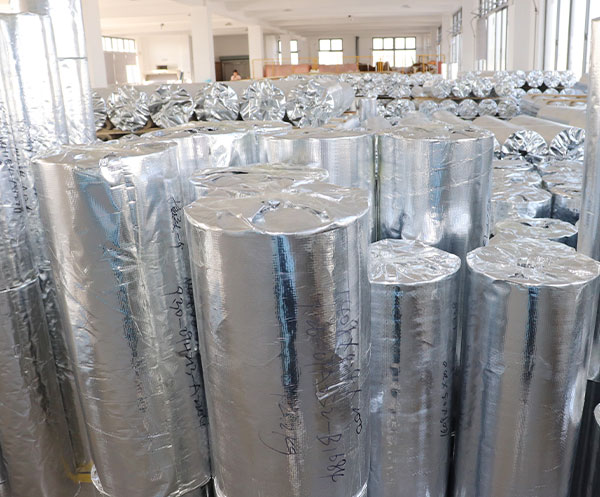
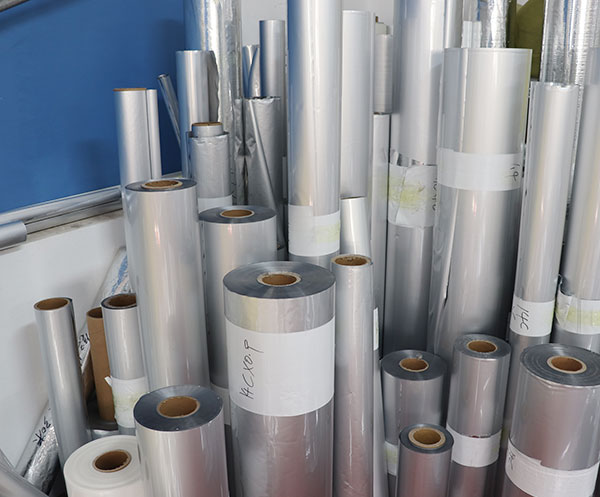
The multi-layer composite woven membrane is a core protective material for high-efficiency moisture-proof and rust-proof applications in the industrial sector. It is made using a multi-layer structure of woven fabric base + functional membrane layer + barrier coating through hot-press or dry composite processes. The membrane combines waterproofing, moisture resistance, rust prevention, and damage resistance, making it suitable for full-scenario industrial equipment transportation and warehousing protection. No company recommendations are included.
Its protective performance comes from the synergistic effect of the multi-layer structure: the woven fabric base is made of PP or PE, providing high tear and puncture resistance to withstand scratches during transportation and compression from stacked storage; the intermediate functional membrane layer uses PE waterproof film or VCI vapor-phase rust-proof film, which blocks water vapor penetration and releases anti-rust agents to form a protective layer on metal surfaces, preventing oxidation and corrosion; the outer barrier coating layer is often aluminum-coated or weather-resistant, reflecting UV and heat radiation, preventing membrane aging while further enhancing waterproof and moisture-proof effects.
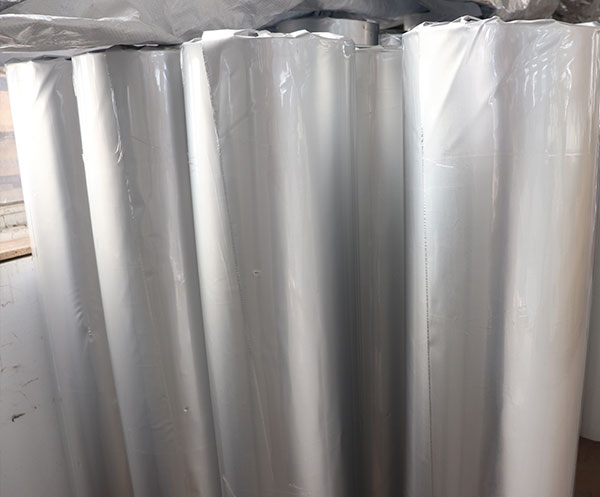
This material supports heat-sealing and customizable sizing, and can be made into packaging bags, protective covers, or container liners. In sea or land transportation, it effectively blocks salt spray and rainwater, while in indoor and outdoor warehousing it prevents moisture and dust intrusion. Its lightweight property does not increase transportation costs, and some products are recyclable, aligning with green industrial practices. During use, sharp edges of equipment should be cushioned to ensure sealing integrity and maximize moisture-proof and rust-proof performance.
Frequently Asked Questions (FAQs):
1. How effective is this multi-layer composite Woven Membrane at blocking water and moisture?
This product uses a multi-layer composite structure of "woven fabric substrate + functional membrane layer + barrier coating," effectively blocking moisture, oxygen, and corrosive gases. The aluminum foil or PE Film layer works synergistically with the VCI anti-rust layer to ensure that metal parts of the equipment will not rust or become damp during transportation and storage, maintaining stability and reliability even after long-term storage.
2. How is the mechanical strength and durability of the product?
The substrate is made of high-strength PP or PE woven fabric, combined with a composite process, providing excellent tear resistance, puncture resistance, and compression resistance. During transportation, it can withstand scratches from sharp edges, stacking compression, and friction and collisions in the storage environment, ensuring the integrity of the equipment's appearance and structure.
3. What transportation and storage scenarios is this material suitable for?
This product is suitable for sea, land, and air transportation and open-air storage environments, and can be made into packaging bags, covers, or container liners. The multi-layered structure reflects ultraviolet rays and heat radiation, blocks moisture and dust, and is suitable for the all-scenario protection needs of various industrial equipment, precision instruments, and heavy machinery.
4. Does the product support customization and special functional requirements?
It supports heat sealing and customized size cutting, and can be made in different sizes and shapes according to equipment specifications. Additional antistatic, flame-retardant, or VCI vapor phase rust inhibitor coatings can be added to meet the special protection needs of electronic instruments, chemical raw materials, etc., flexibly adapting to various industrial scenarios.
5. What precautions should be taken during use?
When packaging equipment with sharp edges or protruding corners, it is recommended to use cushioning materials to prevent punctures to the membrane material and affect the protective effect. Before use, check the integrity of the seal and regularly test the moisture-proof and rust-proof performance to ensure the long-term safety of the equipment throughout transportation and storage.
This website uses cookies to ensure you get the best experience on our website.
 Español
 Pусский
 Deutsch
 العربية



 WhatsApp
 Phone
Phone