

I. Core Factors Influencing the Durability of Woven Films: A Comprehensive Analysis from Raw Materials to Applications
The durability of woven films is not determined by a single factor, but rather by the combined effects of raw material characteristics, production processes, product structure design, and application environment. The selection and control of each link significantly impacts the product's durability. Only by accurately controlling the key nodes throughout the entire chain can a balance between durability and cost be achieved.
(I) Raw Material Characteristics: The "Foundation" of Durability
Raw materials are the core prerequisite for the durability of woven films. The molecular structure, purity, and type and ratio of additives of the resin directly affect the mechanical stability, weather resistance, and chemical resistance of the woven film, forming a line of defense for durability control.
1. Resin Molecular Structure: The "Source Guarantee" of Mechanical Durability
The molecular chain length, branching degree, and crystallinity of the resin determine the tensile strength, tear resistance, and fatigue resistance of the woven film, and are key factors influencing mechanical durability:
Molecular Chain Length (Molecular Weight): The higher the molecular weight, the stronger the interaction between molecular chains, resulting in better tensile strength and tear resistance of the woven film, and thus higher durability. Taking PP resin as an example, PP resin with a weight-average molecular weight of 300,000-400,000 can produce woven films with a tensile strength of 350-400 N/5cm and a tear resistance of 70-80 kN/m, with an outdoor service life of 3-5 years. However, PP resin with a weight-average molecular weight below 200,000 has a tensile strength of only 250-300 N/5cm and a tear resistance of less than 60 kN/m, potentially shortening its outdoor service life to 1-2 years. For instance, a company using low-molecular-weight PP resin (weight-average molecular weight 180,000) to produce greenhouse film experienced significant aging and cracking after only 18 months of use, while a similar product using high-molecular-weight PP resin (weight-average molecular weight 350,000) maintained good performance even after 3 years of use.
Branching degree: Branching degree affects the flexibility and fatigue resistance of the resin, thus affecting the durability of the woven film. LLDPE resin, due to its higher branching degree (20-30 short-chain branches per 100°C), exhibits superior flexibility and fatigue resistance compared to PP and HDPE. Woven films produced from LLDPE are less prone to breakage under repeated folding or impact, making them suitable for reusable applications (such as courier Woven Bags). For example, a logistics company using LLDPE woven bags can reuse them an average of 5-8 times, while PP woven bags can only be reused 2-3 times, primarily due to the superior fatigue resistance of LLDPE.
Crystallization: Higher crystallinity results in greater hardness and strength, but reduces flexibility and impact resistance. A balance must be struck between crystallinity and durability. HDPE resin typically has a crystallinity of 70%-80%, exhibiting high strength but significant low-temperature brittleness, making it prone to breakage below -20°C. Adding toughening agents (such as POE) can reduce crystallinity to 60%-65%, improving low-temperature toughness and allowing HDPE woven films to maintain good impact resistance even at -30°C. For example, a northern company added 8% POE toughening agent to HDPE industrial packaging film, reducing crystallinity from 75% to 62%, increasing low-temperature (-30℃) impact strength from 35kJ/m² to 55kJ/m², and reducing the breakage rate during winter transportation from 12% to 3%.
2. Additive Quality: The "Key Support" for Functional Durability
Additives are an important component in improving the weather resistance, aging resistance, and chemical resistance of woven films. Their type selection, addition ratio, and dispersibility directly affect the durability of woven films in complex environments and are a core means of durability optimization:
UV Resistants: Woven films for outdoor applications (such as greenhouse films and outdoor dustproof nets) require the addition of UV stabilizers to resist UV aging. Commonly used types include benzotriazoles (such as UV-326) and hindered amines (such as UV-770). The addition ratio is typically 0.1%-0.5%. If insufficient (e.g., <0.1%), the tensile strength retention rate of the woven film after one year of outdoor exposure may be less than 50%. Uneven dispersion can lead to accelerated localized aging and "spotted" damage. For example, a company producing greenhouse film used only 0.08% UV stabilizer (UV-326) with uneven dispersion. After one year of use, the localized tensile strength retention rate was only 30%, resulting in large-area cracking. However, after increasing the addition to 0.3% and optimizing the dispersion process, the tensile strength retention rate still reached 75% after three years.
Antioxidants: These prevent the woven film from undergoing oxidative degradation during processing and use, leading to a decrease in durability. A common combination is "primary antioxidant (e.g., 1010) + secondary antioxidant (e.g., 168)," with a total addition of 0.2%-0.5%. The primary antioxidant captures free radicals, while the secondary antioxidant decomposes hydrogen peroxide; their synergistic effect enhances the antioxidant effect. If insufficient antioxidants are added, PP woven films may discolor and become brittle after high-temperature processing, shortening their service life. If an inappropriate antioxidant is selected (such as using one that is not heat-resistant), it will fail in environments above 120°C, leading to rapid aging of the woven film. For example, a company used a single primary antioxidant (1010) to produce high-temperature sterilization food packaging film without adding auxiliary antioxidants. During sterilization at 121°C, the antioxidant failed, and the film became brittle after two months of use, failing to meet food shelf-life requirements.
Antistatic agents: Woven films used for packaging electronic components require the addition of antistatic agents to prevent dust adsorption and component damage caused by static electricity accumulation. The type of antistatic agent also affects durability. Antistatic agents (such as polyether-based agents) form a conductive layer through migration, providing a long-lasting antistatic effect with minimal impact on the mechanical properties of the woven film. Temporary antistatic agents (such as cationic agents) are easily washed away by friction or water washing, not only losing their antistatic effect but also potentially causing the film surface to become sticky, affecting its use. For example, an electronics company used temporary antistatic agents to package components with PP woven film. After three uses, the antistatic effect disappeared, and the surface resistivity increased from 10⁹Ω to 10¹³Ω, failing to meet electrostatic protection requirements. After switching to an antistatic agent, the surface resistivity remained ≤10¹⁰Ω after 10 uses.
Weather-resistant modifiers: For woven films used in extreme environments (such as high humidity and high corrosion), weather-resistant modifiers need to be added to improve durability. For example, dustproof netting used in chemical industrial parks requires the addition of 0.5%-1.0% of acid and alkali resistant modifiers (such as epoxy resin) to resist corrosion from chemical waste gases; greenhouse films used in coastal areas require the addition of 0.3%-0.6% of salt spray resistant modifiers to prevent aging of the film material caused by sea winds. A coastal farm used ordinary PP greenhouse film. Because no salt spray resistant modifier was added, corrosion spots appeared on the surface of the film after 2 years of use, and the light transmittance decreased by 30%. After switching to a product with 0.5% salt spray resistant modifier added, the light transmittance remained above 80% for 3 years.
Durable Woven Membrane Material: High-Barrier, Moisture-Proof, and Rust-Proof Protective Solution
Durable woven membrane is a high-performance protective material widely used in industrial applications, offering high barrier, moisture-proof, and rust-proof functionality. It is made from polypropylene (PP) or polyethylene (PE) woven fabric as the base, and through lamination, hot-press composite, or other processing techniques, it integrates waterproof films, aluminum layers, or VCI vapor-phase anti-rust layers. With its strong structure and multifunctional protective properties, it has become a core material for industrial equipment transportation and storage. This description does not recommend any specific company.
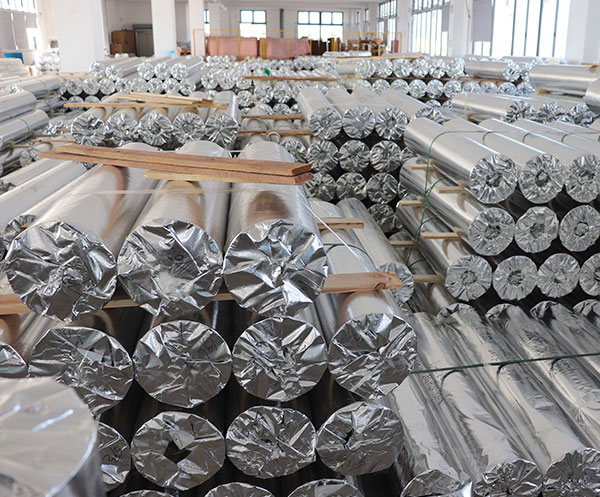
High Barrier and Sealing Performance: The composite layers completely block moisture, oxygen, and corrosive gases. With a water vapor transmission rate as low as 0.3 g/(m²·24h), it prevents moisture ingress into equipment. When combined with heat-sealing processes, it provides fully sealed protection to prevent oxidation of precision components and moisture damage to metal parts.
Long-Lasting Moisture and Rust Protection: The addition of VCI vapor-phase anti-rust agents allows the woven membrane to form a dense protective layer on metal surfaces, providing rust protection for over two years without the need for additional rust-preventive oils. This is clean, safe, and environmentally friendly.
Durable and Damage-Resistant: The woven fabric base provides high tear resistance and puncture strength, with a tensile strength up to 180N/15mm. It can withstand corner scratches, stacking pressure during transportation, and friction or collisions in storage environments, making it suitable for outdoor and exposed storage scenarios.
This material supports custom dimensions, thicknesses, and functional coatings. It can be fabricated into sealed packaging bags, protective covers, or container liners, suitable for heavy machinery, electronic instruments, hardware components, and more. Its lightweight nature does not increase transport load, and some products are recyclable, aligning with sustainable industrial practices. When used with sharp-edged equipment, cushioning materials should be applied to ensure complete sealing, maximizing moisture, rust, and barrier protection.
This website uses cookies to ensure you get the best experience on our website.
 Español
 Pусский
 Deutsch
 العربية



 WhatsApp
 Phone
Phone