

I. Core Drivers of Woven Film Demand: The Triple Empowerment of Policy, Industry, and Technology
The sustained growth in woven film demand is not the result of a single factor, but rather a product of policy guidance, downstream industry expansion, and technological innovation. These three driving forces combine to form a "synergistic effect" of demand growth, continuously optimizing and upgrading the demand structure.
(I) Policy-Driven: Green and Large-Scale Policies Drive Demand Expansion and Structural Adjustment
Policies are a key external factor influencing woven film demand. On the one hand, they drive basic demand growth by promoting large-scale agriculture and standardized industry; on the other hand, "plastic bans" and "environmental policies" guide demand towards biodegradable and high-performance products, forming a dual demand effect of "total expansion + structural optimization."
In the agricultural sector, many countries worldwide have introduced policies to promote large-scale and modern agriculture, directly driving demand for agricultural woven film. For example, China's 14th Five-Year Plan explicitly proposed "promoting green agricultural development and expanding the scale of facility agriculture." In 2023, China's greenhouse planting area reached 6 million hectares, a 25% increase compared to 2018, with an average annual increase in demand for woven film for greenhouses of approximately 80,000 tons. India's government launched the "National Agricultural Development Plan," providing subsidies for large-scale grain storage facilities, driving an average annual growth of 12% in demand for PP woven film for grain storage. In 2023, India's agricultural woven film consumption exceeded 300,000 tons, a 40% increase compared to 2020. Furthermore, policies implemented by various countries to address "white pollution" in agriculture have accelerated the replacement of traditional mulch film with biodegradable woven mulch film. For instance, Northwest China, including Xinjiang and Gansu, introduced "subsidy policies for the promotion of biodegradable mulch film." In 2023, Xinjiang's procurement of biodegradable mulch film increased by 50% year-on-year, accounting for 18% of the local total mulch film consumption, driving rapid growth in demand for biodegradable woven film.
In the environmental protection field, the global "plastic ban" has become a core driving force for the structural transformation of woven film demand. The EU's Single-Use Plastics Directive explicitly requires a complete ban on the use of non-degradable plastic packaging in certain sectors by 2030, driving an average annual growth of 35% in demand for biodegradable woven film in Europe. In 2023, European consumption of biodegradable woven film reached 50,000 tons, mainly used for food packaging and agricultural mulch. China's "Plastic Restriction Order 2.0" proposes that "by 2025, the substitution rate of biodegradable plastics in key sectors should reach over 30%." In 2023, the Chinese market size for biodegradable woven film reached 2.5 billion yuan, with demand concentrated in food packaging and e-commerce logistics. For example, logistics companies such as JD.com and Cainiao purchased over 100 million biodegradable woven express bags in 2023, accounting for 15% of their total express packaging usage. Driven by policy, biodegradable woven film has gradually transitioned from a "niche demand" to a "mainstream demand," becoming a new engine for the growth of woven film demand.
(II) Industry-Driven Growth: Downstream Industry Expansion Drives Dual Growth in Basic and High-End Demand
The expansion of downstream industries (agriculture, industry, and packaging) of woven film is the core endogenous driving force for demand growth. The development stages and characteristics of different industries determine the scale and structure of woven film demand, forming a pattern of "steady growth in basic demand and explosive growth in high-end demand."
The large-scale and intensive development of the agricultural industry has driven steady growth in basic demand for agricultural woven film. Global population growth and the need for food security have driven the expansion of grain planting and storage. In 2023, global grain production reached 2.98 billion tons, an 8% increase from 2018. Large-scale grain storage has led to an average annual growth of 7% in demand for moisture-proof and insect-proof PP/PE composite Woven Bags, with global consumption of woven film for grain storage exceeding 800,000 tons in 2023. Simultaneously, the area under greenhouse cultivation for cash crops (vegetables, fruits, and flowers) has expanded rapidly. In 2023, the global area of facility agriculture reached 50 million hectares, a 15% increase from 2018, driving an average annual growth of 9% in demand for weather-resistant, high-transparency modified PP woven film. For example, in Southeast Asia, increased demand for vegetable exports led to 250,000 tons of greenhouse woven film consumption in 2023, a 35% increase from 2020.
The high-end and globalized development of industrial manufacturing has driven rapid growth in demand for high-end industrial woven film. Global production and trade volume of industrial products such as automobiles, chemicals, and building materials continued to rise. In 2023, global automobile production reached 85 million vehicles, an 18% increase compared to 2020. The cross-border transportation of automotive parts drove an average annual growth of 12% in demand for high-puncture-resistant and antistatic HDPE composite woven film. In 2023, global consumption of industrial woven film exceeded 1.2 million tons, with high-end composite woven film accounting for 25%, a 10 percentage point increase compared to 2018. As the world's largest producer of chemicals and building materials, China's chemical output reached 15 trillion yuan in 2023, and building material production reached 3 billion tons. Demand for corrosion-resistant HDPE woven film for chemical raw material packaging and high-strength PP woven film for building material pipe winding reached 400,000 tons and 350,000 tons respectively, representing increases of 25% and 20% compared to 2020.
The e-commerce transformation and consumption upgrade in the packaging industry are driving the growth in differentiated demand for packaging woven film. The rapid development of the global e-commerce industry has driven the expansion of demand for express delivery packaging. In 2023, global express delivery volume reached 150 billion pieces, a 50% increase compared to 2020. Demand for woven bags used in e-commerce logistics (such as express delivery bags and luggage bags) grew at an average annual rate of 20%, and global consumption of woven film for e-commerce reached 300,000 tons in 2023. Meanwhile, consumption upgrades have driven demand for high-end packaging in the food and electronics sectors. In 2023, global consumption of sanitary PP/PE woven film for food packaging reached 250,000 tons, a 30% increase compared to 2020, and consumption of antistatic composite woven film for electronic component packaging reached 150,000 tons, a 45% increase compared to 2020. High-end woven film for packaging has become the core driver of demand growth in the packaging sector.
(III) Technology-Driven: Technological Innovation Expands Demand Scenarios and Enhances Demand Quality
Innovation in woven film production technology has not only improved product performance and quality but also expanded new demand scenarios, driving demand from "basic functions" to "multi-functional integration," thus forming a virtuous cycle of technology leading demand.
Breakthroughs in material modification technology have improved the performance of woven films, meeting the needs of high-end scenarios. UV-resistant modification technology extends the outdoor service life of PP woven film from 1-2 years to 3-5 years, making it suitable for long-term applications such as agricultural greenhouses and outdoor dust protection. In 2023, global consumption of UV-resistant modified PP woven film reached 500,000 tons, a 60% increase compared to 2018. Antistatic modification technology reduces the surface resistivity of woven film from 10¹²-10¹⁴Ω to 10⁸-10¹⁰Ω, meeting the electrostatic protection requirements for electronic component packaging. In 2023, global consumption of antistatic woven film reached 200,000 tons, a 100% increase compared to 2018. Toughening modification technology improves the low-temperature brittleness of PP woven film, increasing its impact strength retention rate at -20℃ from 60% to 85%, making it suitable for industrial packaging and agricultural covering needs in cold northern regions. In 2023, global consumption of toughened modified PP woven film reached 350,000 tons, a significant increase compared to 2018. Annual growth of 75%.
Upgrades in composite technology have driven the development of woven films towards "multi-functional integration," expanding into new demand areas. Multi-layer composite technologies (such as PP/PE/PET/aluminum foil) enable woven films to simultaneously possess functions such as moisture resistance, high barrier properties, and high-temperature resistance, meeting the packaging needs of pharmaceutical raw materials and new energy battery materials. In 2023, global consumption of multi-layer composite woven films reached 150,000 tons, a 125% increase compared to 2018. Plasma surface treatment technology improves the surface adhesion of woven films, allowing for better bonding with printing layers and coatings, meeting the printing and barrier requirements of high-end food packaging. In 2023, consumption of food-grade composite woven films using this technology reached 120,000 tons, a 90% increase compared to 2018.
The maturity of biodegradable technology is driving the demand for biodegradable woven films from "policy-driven" to "market-driven." PLA/PP blending technology has reduced the cost of biodegradable woven film by 30% while maintaining good mechanical properties. Global consumption of biodegradable woven film reached 100,000 tons in 2023, a 400% increase compared to 2018. Biodegradation technology has shortened the degradation cycle of woven film in the natural environment from non-degradable to 6-12 months, meeting the environmental protection requirements of agricultural mulch films and disposable packaging. Global consumption of biodegradable woven film reached 80,000 tons in 2023, a 500% increase compared to 2018. Technological innovation has not only solved the performance shortcomings of traditional woven film but also opened up new demand markets, becoming the core driving force for the growth in demand for woven film.
I. Core Drivers of Woven Film Demand: The Triple Empowerment of Policy, Industry, and Technology
The sustained growth in woven film demand is not the result of a single factor, but rather a product of policy guidance, downstream industry expansion, and technological innovation. These three driving forces combine to form a "synergistic effect" of demand growth, continuously optimizing and upgrading the demand structure.
(I) Policy-Driven: Green and Large-Scale Policies Drive Demand Expansion and Structural Adjustment
Policies are a key external factor influencing woven film demand. On the one hand, they drive basic demand growth by promoting large-scale agriculture and standardized industry; on the other hand, "plastic bans" and "environmental policies" guide demand towards biodegradable and high-performance products, forming a dual demand effect of "total expansion + structural optimization."
In the agricultural sector, many countries worldwide have introduced policies to promote large-scale and modern agriculture, directly driving demand for agricultural woven film. For example, China's 14th Five-Year Plan explicitly proposed "promoting green agricultural development and expanding the scale of facility agriculture." In 2023, China's greenhouse planting area reached 6 million hectares, a 25% increase compared to 2018, with an average annual increase in demand for woven film for greenhouses of approximately 80,000 tons. India's government launched the "National Agricultural Development Plan," providing subsidies for large-scale grain storage facilities, driving an average annual growth of 12% in demand for PP woven film for grain storage. In 2023, India's agricultural woven film consumption exceeded 300,000 tons, a 40% increase compared to 2020. Furthermore, policies implemented by various countries to address "white pollution" in agriculture have accelerated the replacement of traditional mulch film with biodegradable woven mulch film. For instance, Northwest China, including Xinjiang and Gansu, introduced "subsidy policies for the promotion of biodegradable mulch film." In 2023, Xinjiang's procurement of biodegradable mulch film increased by 50% year-on-year, accounting for 18% of the local total mulch film consumption, driving rapid growth in demand for biodegradable woven film.
In the environmental protection field, the global "plastic ban" has become a core driving force for the structural transformation of woven film demand. The EU's Single-Use Plastics Directive explicitly requires a complete ban on the use of non-degradable plastic packaging in certain sectors by 2030, driving an average annual growth of 35% in demand for biodegradable woven film in Europe. In 2023, European consumption of biodegradable woven film reached 50,000 tons, mainly used for food packaging and agricultural mulch. China's "Plastic Restriction Order 2.0" proposes that "by 2025, the substitution rate of biodegradable plastics in key sectors should reach over 30%." In 2023, the Chinese market size for biodegradable woven film reached 2.5 billion yuan, with demand concentrated in food packaging and e-commerce logistics. For example, logistics companies such as JD.com and Cainiao purchased over 100 million biodegradable woven express bags in 2023, accounting for 15% of their total express packaging usage. Driven by policy, biodegradable woven film has gradually transitioned from a "niche demand" to a "mainstream demand," becoming a new engine for the growth of woven film demand.
(II) Industry-Driven Growth: Downstream Industry Expansion Drives Dual Growth in Basic and High-End Demand
The expansion of downstream industries (agriculture, industry, and packaging) of woven film is the core endogenous driving force for demand growth. The development stages and characteristics of different industries determine the scale and structure of woven film demand, forming a pattern of "steady growth in basic demand and explosive growth in high-end demand."
The large-scale and intensive development of the agricultural industry has driven steady growth in basic demand for agricultural woven film. Global population growth and the need for food security have driven the expansion of grain planting and storage. In 2023, global grain production reached 2.98 billion tons, an 8% increase from 2018. Large-scale grain storage has led to an average annual growth of 7% in demand for moisture-proof and insect-proof PP/PE composite Woven Bags, with global consumption of woven film for grain storage exceeding 800,000 tons in 2023. Simultaneously, the area under greenhouse cultivation for cash crops (vegetables, fruits, and flowers) has expanded rapidly. In 2023, the global area of facility agriculture reached 50 million hectares, a 15% increase from 2018, driving an average annual growth of 9% in demand for weather-resistant, high-transparency modified PP woven film. For example, in Southeast Asia, increased demand for vegetable exports led to 250,000 tons of greenhouse woven film consumption in 2023, a 35% increase from 2020.
The high-end and globalized development of industrial manufacturing has driven rapid growth in demand for high-end industrial woven film. Global production and trade volume of industrial products such as automobiles, chemicals, and building materials continued to rise. In 2023, global automobile production reached 85 million vehicles, an 18% increase compared to 2020. The cross-border transportation of automotive parts drove an average annual growth of 12% in demand for high-puncture-resistant and antistatic HDPE composite woven film. In 2023, global consumption of industrial woven film exceeded 1.2 million tons, with high-end composite woven film accounting for 25%, a 10 percentage point increase compared to 2018. As the world's largest producer of chemicals and building materials, China's chemical output reached 15 trillion yuan in 2023, and building material production reached 3 billion tons. Demand for corrosion-resistant HDPE woven film for chemical raw material packaging and high-strength PP woven film for building material pipe winding reached 400,000 tons and 350,000 tons respectively, representing increases of 25% and 20% compared to 2020.
The e-commerce transformation and consumption upgrade in the packaging industry are driving the growth in differentiated demand for packaging woven film. The rapid development of the global e-commerce industry has driven the expansion of demand for express delivery packaging. In 2023, global express delivery volume reached 150 billion pieces, a 50% increase compared to 2020. Demand for woven bags used in e-commerce logistics (such as express delivery bags and luggage bags) grew at an average annual rate of 20%, and global consumption of woven film for e-commerce reached 300,000 tons in 2023. Meanwhile, consumption upgrades have driven demand for high-end packaging in the food and electronics sectors. In 2023, global consumption of sanitary PP/PE woven film for food packaging reached 250,000 tons, a 30% increase compared to 2020, and consumption of antistatic composite woven film for electronic component packaging reached 150,000 tons, a 45% increase compared to 2020. High-end woven film for packaging has become the core driver of demand growth in the packaging sector.
(III) Technology-Driven: Technological Innovation Expands Demand Scenarios and Enhances Demand Quality
Innovation in woven film production technology has not only improved product performance and quality but also expanded new demand scenarios, driving demand from "basic functions" to "multi-functional integration," thus forming a virtuous cycle of technology leading demand.
Breakthroughs in material modification technology have improved the performance of woven films, meeting the needs of high-end scenarios. UV-resistant modification technology extends the outdoor service life of PP woven film from 1-2 years to 3-5 years, making it suitable for long-term applications such as agricultural greenhouses and outdoor dust protection. In 2023, global consumption of UV-resistant modified PP woven film reached 500,000 tons, a 60% increase compared to 2018. Antistatic modification technology reduces the surface resistivity of woven film from 10¹²-10¹⁴Ω to 10⁸-10¹⁰Ω, meeting the electrostatic protection requirements for electronic component packaging. In 2023, global consumption of antistatic woven film reached 200,000 tons, a 100% increase compared to 2018. Toughening modification technology improves the low-temperature brittleness of PP woven film, increasing its impact strength retention rate at -20℃ from 60% to 85%, making it suitable for industrial packaging and agricultural covering needs in cold northern regions. In 2023, global consumption of toughened modified PP woven film reached 350,000 tons, a significant increase compared to 2018. Annual growth of 75%.
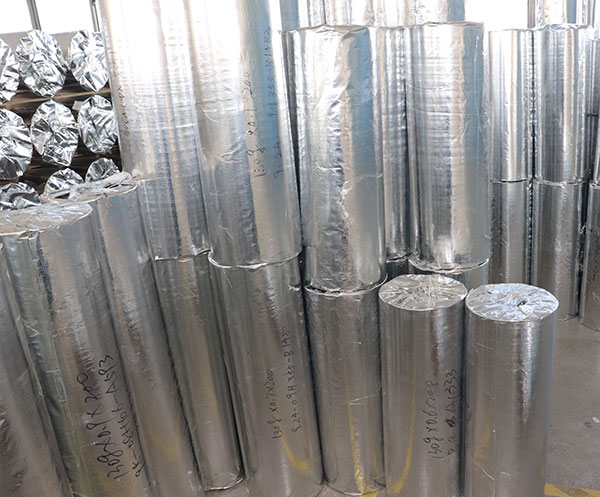
Upgrades in composite technology have driven the development of woven films towards "multi-functional integration," expanding into new demand areas. Multi-layer composite technologies (such as PP/PE/PET/aluminum foil) enable woven films to simultaneously possess functions such as moisture resistance, high barrier properties, and high-temperature resistance, meeting the packaging needs of pharmaceutical raw materials and new energy battery materials. In 2023, global consumption of multi-layer composite woven films reached 150,000 tons, a 125% increase compared to 2018. Plasma surface treatment technology improves the surface adhesion of woven films, allowing for better bonding with printing layers and coatings, meeting the printing and barrier requirements of high-end food packaging. In 2023, consumption of food-grade composite woven films using this technology reached 120,000 tons, a 90% increase compared to 2018.
The maturity of biodegradable technology is driving the demand for biodegradable woven films from "policy-driven" to "market-driven." PLA/PP blending technology has reduced the cost of biodegradable woven film by 30% while maintaining good mechanical properties. Global consumption of biodegradable woven film reached 100,000 tons in 2023, a 400% increase compared to 2018. Biodegradation technology has shortened the degradation cycle of woven film in the natural environment from non-degradable to 6-12 months, meeting the environmental protection requirements of agricultural mulch films and disposable packaging. Global consumption of biodegradable woven film reached 80,000 tons in 2023, a 500% increase compared to 2018. Technological innovation has not only solved the performance shortcomings of traditional woven film but also opened up new demand markets, becoming the core driving force for the growth in demand for woven film.
Frequently Asked Questions (FAQs):
1. How does Woven Membrane provide protection during transportation and warehousing?
Woven membrane primarily provides moisture-proof, rust-proof, UV-resistant, and impact-resistant protection for equipment through its multi-layered structure (such as a waterproof membrane, a VCI vapor phase inhibitor layer, and an aluminized layer). Its high barrier properties effectively isolate moisture, oxygen, and corrosive gases, preventing rust on metal parts or oxidation of precision electronic components, making it suitable for complex transportation and storage environments.
2. How to select the appropriate woven membrane for different equipment?
When selecting woven membrane, the basis weight, thickness, and functional layers of the membrane need to be determined based on the weight, size, transportation method, and storage environment of the equipment. Heavy equipment should use high-strength membranes of 150g/m² or higher, while precision instruments require membranes with high barrier and rust-proof functions, such as composite aluminum foil membranes or VCI rust-proof membranes.
3. How is the tear resistance and durability of woven membrane guaranteed?
The tear resistance of woven membranes stems from its strong polypropylene (PP) or polyethylene (PE) woven fabric substrate. The substrate utilizes a precision weaving process to enhance the material's mechanical strength, while the composite membrane layer process improves its puncture and compression resistance, enabling it to withstand external physical impacts during transportation and storage.
4. What storage environments is this material suitable for?
Woven membranes are suitable for various storage environments, especially open-air storage scenarios with high humidity and strong ultraviolet radiation. In indoor storage, it effectively prevents moisture and dust, maintaining the long-term stability of equipment. In open-air environments, the addition of a weather-resistant coating and an aluminized layer gives it the ability to resist corrosion from rain, snow, salt spray, etc.
5. How environmentally friendly and recyclable is the woven membrane?
The woven membranes we provide are recyclable, aligning with the trend of green industrial development. The membrane material is made from environmentally friendly materials, reducing the carbon footprint during transportation. After use, some products can be recycled and reused, reducing resource waste and promoting sustainable development.
This website uses cookies to ensure you get the best experience on our website.
 Español
 Pусский
 Deutsch
 العربية



 WhatsApp
 Phone
Phone