


I. Rust Prevention Mechanism and Material Structure
The protective effectiveness of rust-proof aluminized Woven Bags stems from their multi-layered material structure. The inner layer uses a specially treated non-woven fabric, which is impregnated with a vapor-phase rust inhibitor, allowing it to continuously and slowly release rust-inhibiting molecules. These molecules form a protective atmosphere inside the packaging, effectively inhibiting electrochemical corrosion reactions on metal surfaces. Experimental data shows that this treatment method can maintain the concentration of rust-inhibiting molecules inside the packaging space above 15 mg/m³, creating an ideal storage environment for metal products.
The middle layer is the crucial aluminized barrier layer. This aluminum film, formed through a vacuum evaporation process, has a thickness strictly controlled between 500-700 angstroms. The continuity of the aluminum film is rigorously tested to ensure it forms a complete gas barrier. The oxygen permeability of this metal film is controlled below 0.5 cm³/m²·day, and the water vapor permeability does not exceed 0.8 g/m²·day, effectively blocking the two main factors leading to metal corrosion: oxygen and moisture.
The outer layer uses high-strength polypropylene woven fabric, which not only provides the necessary mechanical strength but also enhances abrasion resistance and puncture resistance through a special coating treatment. The warp and weft density of the woven fabric is precisely designed to ensure both strength and appropriate flexibility. This structural design allows the packaging bag to withstand various stresses during transportation while also conforming well to the shape of the packaged product.
II. Production Process and Technical Characteristics
The production process of rust-proof aluminized woven bags involves several precision-controlled steps. In the substrate pretreatment stage, the woven fabric undergoes rigorous cleaning and surface activation treatment. Corona treatment brings the surface tension of the material to above 42 dyn/cm, ensuring the bonding strength for subsequent lamination processes. The treated substrate must immediately proceed to the next process to prevent surface activity from decaying over time.
The aluminizing process is carried out in highly automated vacuum equipment. The equipment maintains a vacuum level above 10⁻² Pa, and the aluminum wire evaporation temperature is controlled within the range of 1400-1500℃. The deposition rate is monitored in real time by precision sensors to ensure the uniformity and consistency of the aluminized layer. This stage requires extremely high environmental cleanliness; even the slightest dust can affect the quality of the aluminum plating.
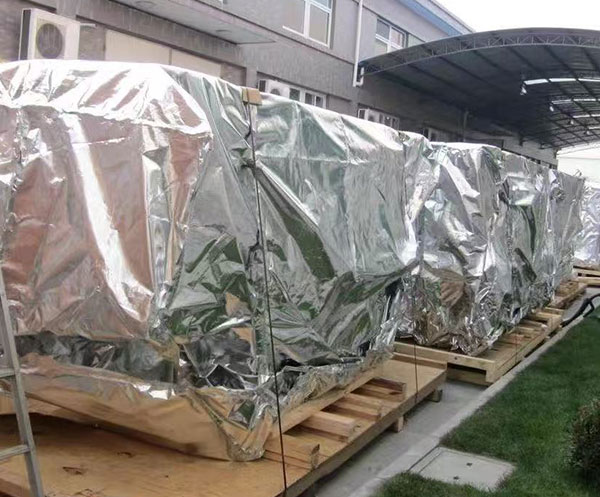
Rust prevention is the core step in the production process. An impregnation-drying process is used, where the non-woven fabric substrate is immersed in a specially formulated rust-inhibiting solution. By precisely controlling the impregnation time and solution concentration, the rust-inhibiting agent load is ensured to meet standard requirements. The impregnated material is then dried in a three-stage drying tunnel, with the temperature gradually increasing from 60℃ to 85℃, allowing the rust-inhibiting agent to be evenly fixed on the fiber surface.
The lamination process employs multi-layer co-extrusion technology to firmly bond the various functional layers. An online detection system monitors the lamination quality in real time and automatically adjusts process parameters. Finished bag production uses a fully automated production line, achieving continuous operation from material unwinding to finished bag output. Quality monitoring points are set up at each production stage to ensure that the product meets design standards.
III. Performance Characteristics and Protective Effect
The rust-proof aluminum-plated woven bags exhibit excellent performance in many aspects. Regarding rust prevention, salt spray testing verified that the metal samples inside the packaging, sprayed at 35°C with a 5% sodium chloride solution, showed initial rust formation within over 240 hours. This data indicates that the packaging provides reliable long-term rust protection for metal products.
Mechanical performance testing showed that the material's tensile strength exceeded 55 MPa, and its bursting strength was no less than 800 kPa. These mechanical properties ensure the packaging remains intact during loading and transportation, effectively protecting the contents. A specially designed sealing system further enhances the overall strength of the packaging, and tests have shown it can withstand various stresses generated during normal handling and stacking operations.
Environmental adaptability testing results indicate that the product maintains stable performance within a temperature range of -30°C to 70°C. After 1000 hours of UV aging testing, the material's main performance indicators retained over 80%. This weather resistance makes the packaging suitable for use in various climatic conditions, including hot and humid coastal areas.
Sealing performance was verified through multiple tests. Using the pneumatic method, the packaging bag was held at 0.03 MPa pressure for 30 seconds, with a pressure drop not exceeding 8%. Simultaneous water vapor transmission rate tests showed values consistently below 0.8 g/m²·day. These data demonstrate the packaging's excellent sealing properties, effectively maintaining an internal rust-proof environment.
IV. Application Practices and Case Studies
In the automotive manufacturing industry, rust-proof aluminized woven bags have been successfully applied. An automotive parts manufacturer used this packaging to export engine parts; after 60 days of sea transport, unpacking and inspection revealed that all metal surfaces remained bright and new. The rust-proof effect of the packaging allowed products to proceed directly to the assembly process, eliminating the need for additional surface treatment.
The use cases in the machinery and equipment industry are equally representative. A machine tool manufacturer used rust-proof aluminized woven bags to package precision guideways and lead screws; even under relatively rudimentary storage conditions, the products remained in factory condition after a year of storage. This not only reduced product scrap due to rust but also significantly improved the flexibility of inventory management.
The electronics and electrical appliance industry has also begun to widely adopt this packaging. A micro-motor manufacturer used rust-proof aluminized woven bags to package finished motors, effectively preventing rust on the metal casing and components during transportation and storage. Of particular note is that the packaging also provides adequate electromagnetic shielding, protecting the product's sensitive electronic components.
In the tool manufacturing sector, rust-proof aluminized woven bags demonstrate unique value. A hardware tool company used this packaging to export various hand tools, and after sea freight and multiple transshipment points, the tools remained completely rust-free. The transparent window design of the packaging also facilitates inventory counting and quality inspection, improving logistics management efficiency.
V. Usage Guidelines and Operational Points
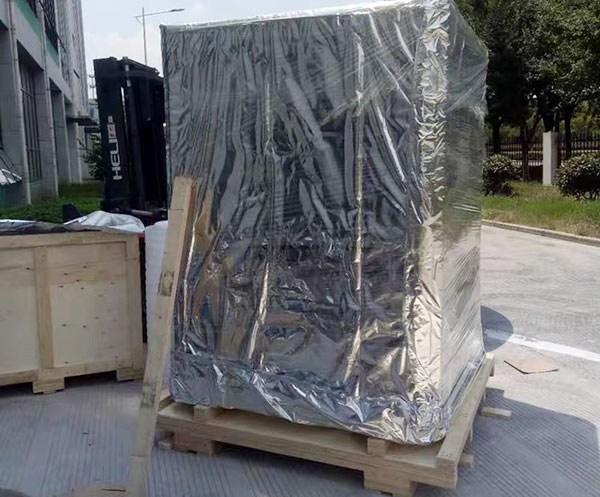
Correct usage is key to ensuring rust prevention. Before packaging, metal products need to be cleaned to remove surface oil, dust, and fingerprints. It is recommended to conduct packaging operations in an environment with a relative humidity below 60% to avoid introducing excessive moisture during the packaging process.
Packaging operations must follow standard procedures. First, check that the packaging bag is intact, confirming there is no damage or poor sealing. When placing the product inside the bag, care should be taken to avoid sharp edges scratching the inner material. For irregularly shaped products, it is recommended to use special corner protectors or cushioning materials for protection.
Special attention is required during the sealing process. During heat sealing, ensure the sealing area is clean and dry, and set heat sealing parameters appropriately based on material thickness. It is generally recommended to control the heat sealing temperature between 170-180℃, the pressure at 0.4-0.5MPa, and the time at 1.5-2 seconds. After sealing, a seal check is recommended to ensure the packaging system is intact and reliable.
Management during storage and transportation is equally important. Although the packaging itself has rust-proof properties, it is still recommended to store it in a dry and ventilated environment. Pay attention to weight distribution when stacking to avoid excessive local pressure. When transporting in containers, appropriate securing measures should be taken to prevent damage to the packaging during transportation.
VI. Quality Assurance and Performance Verification
Quality control of rust-proof aluminized woven bags covers every stage from raw materials to finished products. Raw materials undergo rigorous testing upon arrival, including indicators such as the mechanical properties of the woven fabric, the barrier properties of the aluminized layer, and the volatility of the rust inhibitor. A complete test report must be provided for each batch of raw materials to ensure compliance with production requirements.
Quality monitoring during the production process is achieved through an online monitoring system. Real-time monitoring of various process parameters, including key indicators such as temperature, pressure, and speed, is conducted. Regular sampling and laboratory testing verify the rust-preventive and physical properties of the products. This data is used not only for quality control but also to provide a basis for process optimization.
Finished product inspection includes multiple tests. Rust-preventive performance is verified through standard damp heat and salt spray tests; mechanical properties are evaluated through tensile and burst strength tests; and sealing performance is confirmed through airtightness tests. Only products that pass all tests are delivered.
A continuous quality improvement mechanism ensures continuous improvement in product performance. By collecting user feedback and test data, product performance is regularly evaluated, and material formulations and production processes are optimized. A comprehensive quality traceability system is established to ensure traceability at every stage.
VII. Innovation and Future Trends
Advances in materials technology drive product upgrades. The development of new corrosion inhibitors makes rust prevention more durable and stable, and the application of environmentally friendly rust-preventive materials reduces environmental impact. The exploration of smart materials brings new possibilities to products; for example, packaging materials with humidity indication functions are already being tested.
Innovations in manufacturing processes continuously improve production efficiency and quality levels. Increased automation reduces the impact of human factors on quality, and the application of digital quality control systems enables more precise process control. The development of new processes is also constantly advancing, such as improvements in multi-layer co-extrusion technology, which makes the bonding of functional layers more robust.
Green and environmentally friendly practices have become an important direction for industry development. The proportion of recyclable materials used is continuously increasing, and clean production processes are constantly being optimized. Progress has been made in the research and development of biodegradable materials, and more environmentally friendly rust-proof packaging solutions may emerge in the future. These innovations not only improve product performance but also respond to the requirements of sustainable development.
VIII. Selection Guidelines and Precautions
When selecting rust-proof aluminized woven bags, multiple factors need to be considered comprehensively. First, the rust-proof level requirements of the product must be clearly defined, including the rust-proof period and storage environment. At the same time, the specific usage conditions of the packaging must be considered, such as transportation methods, loading and unloading conditions, and stacking requirements. These factors will directly affect the choice of packaging materials and structural design.
When communicating with suppliers, it is necessary to confirm the key technical parameters of the product, including the rust-proof validity period, barrier performance indicators, and mechanical performance data. It is also necessary to understand the supplier's quality assurance system and confirm whether its production process meets relevant standards. For special needs, such as the requirement for antistatic or high-temperature resistance functions, detailed specifications need to be provided in advance.
Sample testing is an important step in verifying product performance. It is recommended to conduct thorough packaging tests under actual usage conditions to simulate real storage and transportation environments. The testing period should be long enough to evaluate the long-term rust-prevention effect of the packaging. The tests should be comprehensive, including multiple aspects such as rust prevention performance, physical strength, and sealing reliability.
Anti-rust Aluminum-coated Woven Bags: The Preferred Choice for Moisture-proof and Rust-proof Export Packaging
Anti-rust Aluminum-coated woven bags, with their excellent combined moisture-proof and rust-resistant properties, have become the preferred solution for export packaging. They are especially suitable for metal components, precision electromechanical equipment, hardware parts, and other rust-prone products, providing full protection against the complex environmental challenges of international transportation and ensuring that goods arrive safely at their destination.
The core protective advantage lies in the scientifically designed composite structure and manufacturing process. The outer layer, made of polypropylene woven fabric, provides high tensile strength and puncture resistance, capable of withstanding the stacking pressure and impact during shipping and handling, preventing package damage. The middle vacuum aluminum-coated layer forms a dense barrier with a water vapor transmission rate as low as 0.5–1.5 g/m²·24h, effectively isolating moisture, oxygen, and ultraviolet light, thereby blocking the pathway of oxidation and rust at the source. Some high-end products integrate VCI (Vapor Corrosion Inhibitor) technology, allowing inhibitor molecules to form a nanoscale protective film on metal surfaces, achieving dual protection through contact and vapor phase, with an anti-rust period of 1–3 years.
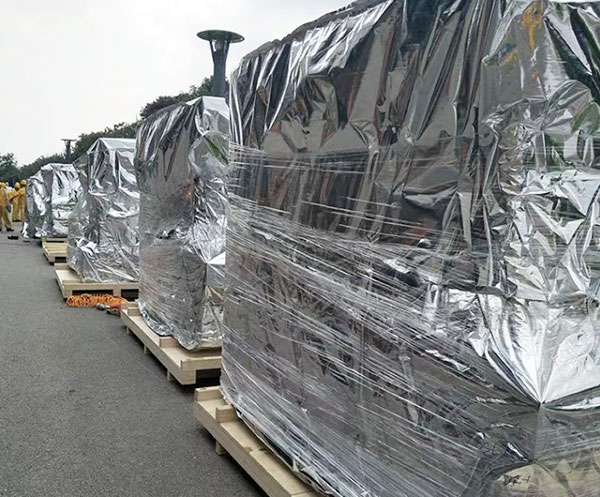
These packaging bags are highly adaptable to export requirements and comply with international environmental regulations such as RoHS and REACH, as well as general export packaging standards, avoiding the risk of returns due to non-compliance. They can be custom-sized according to the shape and dimensions of the goods and, combined with precise heat-sealing technology, achieve vacuum sealing. Additional features include anti-static and dust-proof performance, reducing dust accumulation and static damage. Compared to traditional anti-rust packaging, these bags offer cost advantages and lighter weight, reducing logistics costs. They represent the optimal solution for balancing protective performance, compliance, and cost-effectiveness in moisture-proof and rust-resistant export packaging.
Frequently Asked Questions (FAQs)
1. What types of export goods are suitable for rust-proof aluminized Woven Bags?
Rust-proof aluminized woven bags are suitable for export goods such as metal components, precision electromechanical equipment, hardware accessories, and other goods susceptible to moisture or corrosion. Their multi-layer composite structure and vacuum sealing process effectively prevent oxidation, corrosion, and moisture damage during sea and road transport and multiple transshipment stages.
2. How long does the bag's moisture-proof and rust-proof effect last?
High-end rust-proof aluminized woven bags combine a vacuum aluminizing layer and VCI vapor phase corrosion inhibition technology, providing rust protection for 1–3 years. The aluminum film layer blocks moisture, oxygen, and ultraviolet rays, while the VCI corrosion inhibitor forms a nano-protective film on the metal surface, achieving dual protection through "contact + vapor phase," ensuring the long-term safety of goods during transportation and storage.
3. Can packaging bags be customized according to the size of the goods?
Yes. Rust-proof aluminized woven bags can be flexibly customized according to the specific size and shape of metal components or equipment, ensuring a tight fit and reducing the risk of item shifting and collision during transportation. They also offer excellent heat-sealing performance, enabling vacuum sealing, and provide dustproof and anti-static functions.
4. Do they comply with international export and environmental standards?
Yes. Our rust-proof aluminized woven bags comply with international environmental regulations such as RoHS and REACH, and meet general export packaging standards. The products can pass authoritative testing, ensuring that exported goods meet compliance requirements during transportation and customs clearance in multiple countries, avoiding returns or delays due to substandard packaging.
5. What are the advantages compared to traditional rust-proof packaging?
Compared to traditional rust-proof paper, plastic, or ordinary aluminum foil packaging, rust-proof aluminized woven bags offer advantages such as light weight, pressure and puncture resistance, customization, high durability, and strong moisture and rust prevention capabilities. They are also more cost-effective, reducing additional transportation costs, and their metallic appearance enhances the professional image and grade of exported goods.
This website uses cookies to ensure you get the best experience on our website.
 Español
 Pусский
 Deutsch
 العربية



 WhatsApp
 Phone
Phone