

I. The Core Value of Custom PE Film: Why Choose Customization Over Standard Options
Custom PE film is not simply about "size adjustment," but rather a comprehensive performance optimization based on specific application needs. Its core value lies in three aspects: adaptability, functionality, and cost control, addressing pain points that standard PE films cannot cover.
(I) Adaptability: Precisely Matching Product and Application Requirements
Different industries and products have significantly different requirements for the form and size of PE film. Customization allows for a "tailor-made" solution, avoiding the "mismatch" problems of standard options.
For example, in the food packaging industry, small snack packaging (such as individually packaged nuts) requires narrow, thin PE film (10-15cm wide, 8-12μm thick) to reduce packaging costs and improve portability; while large fresh food tray packaging (such as pork and seafood trays in supermarkets) requires wide, high-toughness film (50-80cm wide, 20-30μm thick) to ensure sufficient coverage and puncture resistance. Using standard 30cm wide film for small snacks would lead to material waste (reducing the number of packages per roll); using thin film for fresh produce would easily lead to spoilage due to punctures and damage.
In the agricultural sector, the needs for mulch film vary even more significantly for different crops: cotton cultivation requires black light-blocking mulch film (to inhibit weed growth), and the width needs to match the planting row spacing (e.g., 60cm, 80cm); rice seedling cultivation requires transparent, moisture-retaining mulch film (to increase soil temperature and maintain humidity), with a thickness controlled at 15-20μm (too thick will affect light transmission, too thin will easily break). Customization allows for adjusting the width, color, and thickness of the film according to crop variety and planting methods, avoiding yield losses caused by using a single type of standard mulch film for multiple purposes.
(II) Functionality: Strengthening Key Performance Indicators as Needed
Standard PE films often have "balanced" performance, unable to meet the specific "needs" of certain applications. Customization, through raw material formulation and process adjustments, can strengthen one or more core performance indicators to address functional shortcomings. Taking pharmaceutical intermediate packaging as an example, these products have extremely high requirements for the "barrier properties" of PE film – it needs to block oxygen (to prevent oxidation) and moisture (to prevent deliquescence). General-purpose PE film typically has an oxygen transmission rate (OTR) of 500-800 cm³/(m²·24h·0.1MPa), which is insufficient. Customization can achieve this by using a "PE + EVOH (ethylene-vinyl alcohol copolymer)" composite structure, reducing the oxygen transmission rate to below 5 cm³/(m²·24h·0.1MPa), while also adding a desiccant to reduce the water vapor transmission rate (WVTR) to below 1 g/(m²·24h), ensuring stable product performance during storage.
In electronic component packaging (such as chips and circuit boards), PE film needs to have "antistatic properties" to prevent electrostatic attraction of dust or damage to components. General-purpose PE film typically has a surface resistance of 10¹²-10¹⁴Ω, which easily generates static electricity. Customization can involve adding antistatic agents (such as quaternary ammonium salts) to reduce the surface resistance to 10⁸-10¹⁰Ω, while maintaining the film's transparency and heat-sealing properties, making it suitable for automated packaging production lines for electronic components.
(III) Cost Control: Avoiding Waste and Improving Efficiency
While seemingly "higher cost," customization can actually reduce overall costs through "precise material usage" and "efficiency improvements," avoiding the hidden waste of general-purpose products.
On the one hand, customization allows for adjusting the film width and thickness according to product dimensions, reducing "cutting waste." For example, a home appliance company used general-purpose 1.2m wide PE film to package washing machine parts (dimensions 0.8m × 0.5m), resulting in 0.4m of waste material per cut, a waste rate of 33%; customizing a 0.8m wide film reduced the waste rate to below 5%, saving over 200,000 yuan in film costs annually.
On the other hand, customization can optimize the "processing adaptability" of the film, improving subsequent production efficiency. For example, when a certain express delivery company used general-purpose PE stretch film for automated wrapping and packaging, the production line downtime rate reached 15% due to the unstable friction coefficient of the film (sometimes too high, causing the film to jam, and sometimes too low, resulting in loose packaging). Through customization, by adjusting the amount of slip agent added, the friction coefficient was stabilized at 0.3-0.35, reducing the downtime rate to below 3%, and increasing daily packaging efficiency by 20%.
II. The Core Process of PE Stretch Film Customization: From Demand Analysis to Finished Product Delivery
PE stretch film customization is a closed-loop process of "demand - solution - verification - production - delivery." Each link requires precise coordination to avoid discrepancies between the finished product and expectations due to information errors. A standard customization process usually includes six core steps, and each step requires close cooperation between the customer and the manufacturing company.
(I) Demand Analysis: Clarifying Core Requirements and Scenario Parameters
Demand analysis is the foundation of customization. It requires clarifying information in four dimensions: "usage scenario, performance requirements, form parameters, and compliance standards," to avoid ambiguous descriptions that lead to deviations in the solution. Manufacturers guide customers in clarifying their needs through a "Demand Survey Form," which includes key information such as:
**Usage Scenario:** This should specify the type of packaged product (e.g., food, electronic components, agricultural products), packaging method (e.g., heat sealing, stretch wrapping, protective covering), storage environment (e.g., room temperature, low temperature, high humidity), and transportation conditions (e.g., long-distance transportation, cold chain transportation);
**Performance Requirements:** Key indicators should be quantified, such as tensile strength (≥20MPa), heat seal strength (≥15N/15mm), oxygen transmission rate (≤10cm³/(m²・24h・0.1MPa)), and temperature resistance range (-20℃ to 50℃), avoiding vague descriptions like "needs to be strong" or "needs to be moisture-proof";
**Morphological Parameters:** This includes film width (e.g., 50cm, 1.2m), thickness (e.g., 15μm, 30μm), length (e.g., 1000m/roll, 2000m/roll), color (transparent, black, custom color), and surface treatment (e.g., printing, no printing, anti-slip treatment);
**Compliance Standards:** The applicable industry standards must be clearly stated, such as GB 4806.7-2016 "National Food Safety Standard for Plastic Materials and Products for Food Contact" for food packaging, YBB 00132003 "Polyethylene Film for Pharmaceutical Packaging" for pharmaceutical packaging, and EU CE, US FDA, and other certification requirements for export products.
For example, a bakery company Customized PE film for bread packaging. After clarifying their needs, the requirements were defined as: Scenario: "Room temperature storage (30 days), heat sealing packaging (automated production line)"; Performance requirements: "Tensile strength ≥18MPa, heat seal strength ≥12N/15mm, oxygen transmission rate ≤50cm³/(m²・24h・0.1MPa)"; Morphological parameters: "Width 30cm, thickness 18μm, length 1500m/roll, transparent without printing"; Compliance standards: "Complies with GB 4806.7-2016". These clear requirements provide a solid basis for subsequent solution design. (II) Solution Design: Balancing Raw Materials, Process, and Cost
Solution design must be based on requirements, selecting suitable raw material formulations and production processes, and calculating costs and delivery times. This results in a "Technical Solution Proposal" for customer confirmation, which primarily includes three parts: raw material selection, process route design, and cost accounting.
1. Raw Material Selection: Matching Resins and Additives Based on Performance Requirements
Raw material selection is crucial for achieving desired performance. It requires selecting the appropriate polyethylene resin type and combining it with auxiliary additives.
For high flexibility (e.g., food wrap), select LDPE resin (over 70%), combined with a small amount of LLDPE (to improve tear resistance);
For high strength (e.g., industrial stretch film), select HDPE resin (over 60%), mixed with 30% LLDPE (to balance flexibility);
For specific functions (such as anti-static or light-blocking), add corresponding additives, such as anti-static agents (0.1%-0.3%) or carbon black masterbatch (for black mulch film, added at 3%-5%).
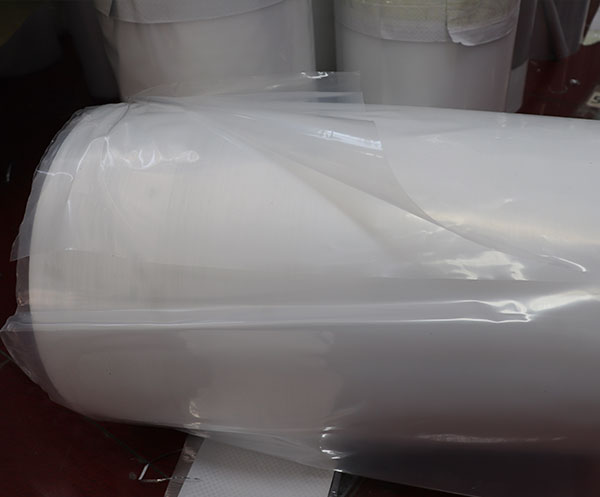
Customized PE roll film with Adjustable Size and Thickness
PE roll film, known for its excellent flexibility, moisture resistance, and safety, is a widely used material in the packaging industry. Customization services that support flexible adjustment of size and thickness further enable precise adaptation to the diverse and personalized packaging needs of different industries. Made from food-grade or industrial-grade polyethylene, customized PE roll film is produced through modular manufacturing processes, allowing key parameters to be adjusted according to specific customer requirements and effectively addressing the limitations of traditional standardized products.
Size customization covers a full range of application scenarios. Film width can be precisely tailored from 0.1 meters to 3 meters, with 5 cm increments, making it suitable for everything from small individual food packaging to large-scale industrial material wrapping. Length can also be customized on demand, ranging from several hundred meters for small-batch use to several thousand meters for large-volume orders. In addition, the roll core diameter can be customized to ensure compatibility with various automated packaging equipment and feeding systems. Thickness adjustment is equally flexible, based on protection and load-bearing requirements. Common thickness options range from 0.03 mm to 0.2 mm: thinner films are ideal for lightweight daily-use products, while thicker films offer enhanced puncture and tear resistance for heavy industrial components or sharp items.
During the customization process, additional processes such as lamination, printing, and coating can be integrated as needed. For example, aluminum foil lamination can be used to enhance barrier performance, while UV-resistant additives can be incorporated for outdoor storage applications. This comprehensive customization capability makes PE roll film widely applicable in food, electronics, industrial manufacturing, and logistics sectors. It not only ensures effective product protection but also improves packaging efficiency and product identification, providing businesses with a packaging solution that balances practicality and cost efficiency.
Frequently Asked Questions (FAQs):
1. What are the customizable size and thickness ranges for your PE Film rolls?
We support customized width, length, and thickness for PE film rolls according to your needs. Width, roll length, and core specifications can be adjusted based on packaging equipment and application scenarios. Thickness ranges from lightweight packaging to industrial protective applications, ensuring a reasonable balance between strength, flexibility, and cost.
2. Will customizing PE film rolls affect delivery time and supply stability?
We utilize standardized raw materials and a modular production process to maintain production efficiency while customizing sizes and thicknesses. Delivery times for standard customized specifications are stable, and we can plan batch production based on customers' annual usage to ensure continuous and predictable supply.
3. What application scenarios are suitable for different thicknesses of PE film rolls?
Thin PE film rolls are more suitable for lightweight products, moisture-proof inner packaging, and automated high-speed packaging; medium thickness is suitable for daily necessities and logistics packaging; and thicker specifications are used for industrial parts or heavy materials packaging requiring higher puncture and tear resistance.
4. Are your PE film rolls compatible with automatic packaging equipment?
During the customization process, we will simultaneously confirm the core inner diameter, winding method, and film flatness to ensure compatibility with your existing or planned automatic packaging equipment, reducing commissioning time and improving overall packaging efficiency.
5. How do you guarantee the quality consistency of Customized PE film rolls?
From raw material selection and extrusion molding to slitting and rewinding, we implement a stable quality control process. Key indicators such as thickness uniformity, tensile performance, and appearance are monitored throughout the process to ensure consistent and reliable performance across different batches of customized products.
This website uses cookies to ensure you get the best experience on our website.
 Español
 Pусский
 Deutsch
 العربية



 WhatsApp
 Phone
Phone