

I. Raw Material Selection for PE roll film Production: From Composition Characteristics to Screening Standards
Raw materials are fundamental to the performance of PE roll film. Polyethylene (PE), as the core raw material, directly affects the physical strength, chemical stability, and application compatibility of the finished product due to its type, purity, and auxiliary additives. In the production process, raw material selection must consider both performance requirements and production feasibility to avoid process failures or substandard product quality caused by raw material compatibility issues.
(I) Core Raw Material: Type and Characteristics Compatibility of Polyethylene Resin
Polyethylene resins can be classified into low-density polyethylene (LDPE), high-density polyethylene (HDPE), and linear low-density polyethylene (LLDPE) based on density differences. Different types of resins differ in molecular structure and crystallinity, resulting in different performance characteristics in the PE roll film produced.
Low-density polyethylene (LDPE): With more molecular branches and lower crystallinity (approximately 50%-60%), it possesses good flexibility, transparency, and heat-sealing properties. It has good melt flowability and is suitable for producing thin PE roll films, such as food packaging films and lightweight item packaging films. In production, the melt flow rate (MFR) of LDPE resin is typically controlled between 2-10 g/10 min. Too high a MFR leads to decreased film strength, while too low a MFR increases extrusion difficulty.
High-density polyethylene (HDPE): With a regular molecular structure and high crystallinity (approximately 80%-90%), it possesses excellent tensile strength, puncture resistance, and chemical stability. It also has a wide temperature range (usable from -40℃ to 60℃), making it suitable for producing industrial packaging films and thick agricultural mulch films. When selecting HDPE resin, its molecular weight distribution is crucial; a narrow distribution helps improve film thickness uniformity and reduces film breakage during production.
Linear low-density polyethylene (LLDPE): Introduced through copolymerization with short branches, it combines the flexibility of LDPE with the strength of HDPE. It exhibits outstanding tear resistance and a lower heat-sealing temperature, making it suitable for producing packaging films that require frequent opening (such as snack packaging). In production, LLDPE and LDPE are often mixed in a certain proportion to balance the flexibility and processing stability of the film material. The mixing ratio needs to be adjusted according to the requirements of the finished product. For example, for films requiring high tear resistance, the proportion of LLDPE can be increased to over 50%.
Furthermore, the purity of raw materials must be strictly controlled. If the polyethylene resin contains impurities (such as metal particles or low-molecular-weight volatiles), it will cause "crystal points" (white spots on the surface of the film material) to appear during extrusion, affecting the transparency and sealing performance of the film. Therefore, reputable manufacturers will select raw materials that meet national standards (GB/T 11115-2009 "Polyethylene (PE) Resin") and conduct sampling tests before the raw materials are put into storage to ensure that the impurity content is below 0.01%.
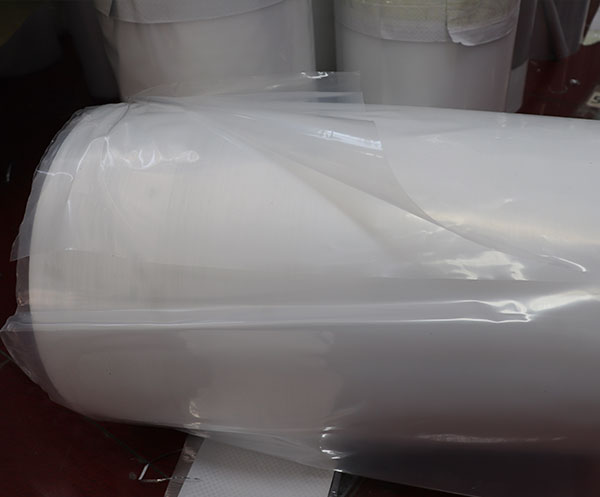
(II) Auxiliary Additives: Functional Optimization and Safety Control
To improve the performance of PE roll film or meet specific application requirements, appropriate auxiliary agents need to be added during production. However, the type and amount of additives must strictly follow industry standards to avoid impacts on human health or the environment.
Antioxidants: Polyethylene is prone to oxidative degradation during high-temperature extrusion, leading to film aging and embrittlement. Commonly used antioxidants are hindered phenols (such as 1010) and phosphites (such as 168), used in a 1:2 ratio to effectively inhibit oxidation. The addition amount is typically 0.1%-0.3% of the resin mass. Note that excessive antioxidant addition can cause "blooming" (additive migration to the surface forming a white powder), affecting appearance and heat-sealing performance.
Slip Agents: PE roll film is prone to sticking due to excessive surface friction during winding, affecting subsequent use. Slip agents (such as erucamide and oleamide) can form a lubricating layer on the film surface, reducing the coefficient of friction (usually controlled at 0.2-0.4). The addition amount is 0.05%-0.1%. When selecting a slip agent, its migration rate must be considered. Excessive migration leads to overly strong initial slip properties in the membrane, followed by performance degradation later; insufficient migration prevents it from functioning effectively. Experimental testing is necessary to determine the appropriate type.
Opening Agent: Used in conjunction with the slip agent, this agent creates micro-textures on the membrane surface, reducing the contact area between membrane layers and preventing adhesion. A commonly used opening agent is silica (SiO₂), with a particle size controlled between 2-5 μm. Excessively large particle sizes result in a rough membrane surface, affecting transparency; excessively small particle sizes lead to poor opening. The addition amount is typically 0.2%-0.5%, and it must be thoroughly mixed with the resin to avoid localized agglomeration.
Masterbatch: For colored PE roll films (such as black agricultural mulch film and warning films for industrial packaging), masterbatch is required. The carrier resin of the masterbatch must be compatible with polyethylene (usually PE carrier) to ensure uniform color dispersion and avoid color differences or spots. Meanwhile, PE roll film for food contact applications must be made from masterbatches conforming to GB 4806.6-2016 "National Food Safety Standard - Plastic Resins for Food Contact," ensuring that the content of heavy metals (such as lead and cadmium) is below 10 mg/kg.
II. Core Production Process of PE Roll Film: From Melt Extrusion to Finished Product Rewinding
The production process of PE roll film mainly includes five core stages: raw material mixing, melt extrusion, molding and cooling, stretching and shaping, and winding and slitting. The control of process parameters in each stage directly affects the quality of the finished product. Different molding processes (such as blow molding and casting) have different technical characteristics, and the appropriate process route must be selected according to product requirements.
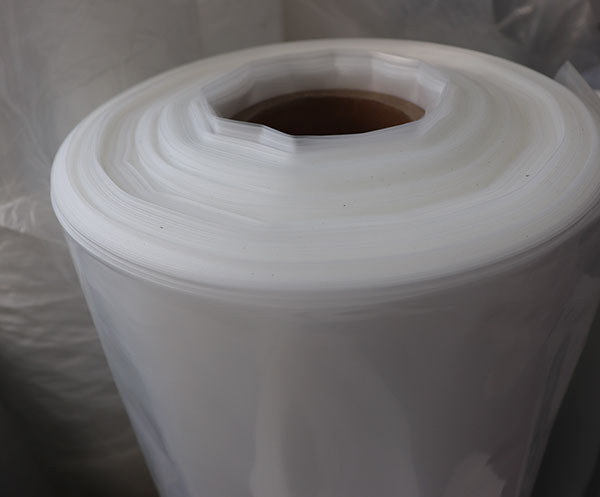
(I) Raw Material Mixing: Uniform Dispersion is Fundamental
The purpose of raw material mixing is to fully integrate polyethylene resin with auxiliary additives, ensuring uniform composition during subsequent extrusion and avoiding fluctuations in film performance. The mixing process must be carried out in a high-speed mixer, and the process parameters must be precisely controlled:
Mixing Temperature: Typically controlled between 80℃ and 100℃. Too low a temperature will result in insufficient dispersion of additives, while too high a temperature may cause the resin to soften prematurely and clump. For example, when mixing LDPE resin, the temperature should be slightly below its softening point (approximately 105℃) to prevent the resin from sticking to the inner wall of the mixer;
Mixing Time: Low-speed mixing (500-800 rpm) for 5-8 minutes to initially disperse the additives; then high-speed mixing (1200-1500 rpm) for 10-15 minutes to break up additive agglomerates using shear force. Insufficient mixing time will cause "stripes" (color differences caused by uneven composition) in the film material, while excessive mixing time will increase energy consumption and may cause localized overheating of the resin due to excessive friction;
Discharge and Storage: The mixed raw material (called the "mixture") must be cooled to room temperature before being fed into the extruder hopper to prevent the hot mixture from clumping in the hopper. During storage, the mixture must be sealed to prevent moisture. If the mixture absorbs moisture, air bubbles will form during extrusion, affecting the film's sealing performance.
Some manufacturers use a "two-step mixing method": first, the additive is mixed with a small amount of resin to form a "masterbatch," and then the masterbatch is mixed with a large amount of resin. This method can further improve the uniformity of additive dispersion, and is especially suitable for additives added in small quantities (such as antioxidants).
(II) Melt Extrusion: Precise Control of Temperature and Pressure
Melt extrusion is the key step in converting a solid mixture into a molten melt. The core equipment is a single-screw extruder, and its process parameters (temperature, screw speed, extrusion pressure) need to be adjusted according to the resin type to ensure stable melt quality.
Professional PE roll film Manufacturer Supporting Both Bulk and Small-Quantity Orders
The professional PE roll film manufacturer leverages a mature production system and flexible service model to precisely meet the demands of both bulk and small-quantity orders, providing stable and reliable packaging material solutions for industries such as food, electronics, industrial, and logistics. By relying on a standardized production base and advanced technology, the manufacturer ensures efficient delivery for large-scale orders while maintaining flexibility for small-batch customization, effectively addressing the procurement needs of businesses of all sizes.
For bulk orders, the manufacturer offers strong Production Capacity. Equipped with multiple high-precision blown film and slitting machines, the automated production lines can achieve an annual output of several thousand tons, producing standard widths of 2–220 cm and thicknesses of 10–60 μm. The strict quality control system guarantees consistent performance indicators such as thickness tolerance and tensile strength for each batch, meeting the demands of large-scale operations like food packaging and logistics wrapping. Additionally, large-scale production reduces unit costs, offering clients a high cost-performance solution.
For small-quantity orders, the manufacturer employs a flexible production approach to respond quickly. Traditional minimum order limitations are removed, supporting custom runs as short as 100 meters, with adjustable specifications, functional coatings, and other personalized requirements. Using modular production processes and rapid changeover technology, sample and production cycles are shortened, with typical small-batch orders delivered in 2–3 days, ideal for product testing or niche packaging. The manufacturer also provides one-stop support services, including specification consultation and process optimization, ensuring delivery quality and efficiency for all order sizes.
Frequently Asked Questions (FAQs)
1. What thickness and width specifications do you support for your PE roll film?
Our PE roll film thickness is customizable from 0.01mm to 0.06mm (1–6 mils), and the width is adjustable from 2–220cm, supporting various packaging needs. Small batch orders can also be flexibly customized to meet customer requirements, perfectly adapting to food, electronics, industrial, or logistics packaging scenarios.
2. What is the minimum order quantity for small batch orders?
We support extremely low minimum order quantities, with custom production available as small as 100 meters. Flexible production lines and rapid changeover processes ensure delivery of small batch orders within 2–3 days, suitable for new product sampling, niche packaging, or special specification requirements, guaranteeing flexible procurement and rapid market response for businesses.
3. Can you guarantee stable delivery for large batch orders?
Yes, we have multiple automated blown film and slitting production lines with an annual capacity of thousands of tons. A strict quality management system ensures consistent thickness, tensile strength, and roll flatness, enabling timely delivery of large batch orders and meeting the continuous production and logistics needs of businesses.
4. Does your PE roll film meet food-grade safety standards?
We provide food-grade PE roll film that meets domestic and international food contact material safety standards (such as GB 4806 series). It is non-toxic, odorless, and heat-resistant, suitable for direct contact with dry goods, snacks, and fresh food, ensuring packaging safety and product preservation.
5. Can you provide customized functions or processing techniques?
Yes. We support customized processes such as functional coatings, composite films, printing, UV protection, and antistatic properties. We can optimize performance according to customer needs to meet different packaging, protection, or brand display requirements. We also provide specification suggestions and process consultation to ensure accurate and reliable customized results.
This website uses cookies to ensure you get the best experience on our website.
 Español
 Pусский
 Deutsch
 العربية



 WhatsApp
 Phone
Phone