

I. Inventory Planning for Metallized Woven Film: A Scientific Layout Based on Demand and Characteristics
Inventory planning is the foundation of metallized woven film inventory management. It requires considering product characteristics (such as storage cycle and environmental sensitivity), market demand (such as seasonal fluctuations and customer order patterns), and the company's Production Capacity to determine a reasonable inventory structure, safety stock level, and storage layout, avoiding blind stockpiling or insufficient inventory.
1.1 Inventory Structure Planning: Layering by Product Type and Demand
The inventory structure of Aluminized woven film needs to be layered based on "product characteristic differences" and "demand urgency" to ensure priority for key products and reasonable inventory levels for general products, avoiding resource waste or missing key demand:
Layering by Product Type: Based on the application scenarios, production difficulty, and value of aluminized woven film, it is divided into three categories: core products, regular products, and special products, each with a corresponding inventory percentage:
Core Products: These refer to standardized products with high market demand and wide application range (such as food-grade "PET/aluminized layer/PP woven fabric/PE" structural film, agricultural-grade UV-resistant aluminized film). These products have short production cycles (usually 3-7 days) and stable customer orders. Their inventory percentage should be controlled at 50%-60% to ensure that bulk order demands can be met at any time (such as quarterly purchases by grain processing plants and spring planting preparations by agricultural input dealers). Core products require a dedicated inventory area, adopting a "first-in, first-out" (FIFO) storage principle, with each batch's inventory turnover cycle not exceeding 3 months.
Standard products: These refer to products with relatively stable demand but small order volumes (such as chemical-grade corrosion-resistant aluminized film and anti-static aluminized film for logistics). These products have a medium production cycle (7-15 days), and customers are mostly small and medium-sized enterprises or those placing scattered orders. Inventory levels should be controlled at 30%-40%. Standard products can adopt a "batch production + batch warehousing" model, such as producing 2-3 batches per month, with each batch in stock to meet 15-20 days of demand, avoiding long-term stockpiling that could lead to aging of the aluminized layer.
Special Products: Products with high customization and low demand frequency (such as multi-layer composite metallized films, biodegradable metallized films, and ultra-wide metallized tarps). These products have long production cycles (15-30 days) and complex processes (such as adding EVOH barrier layers or biodegradable substrates). Customer orders are mostly one-off or small-batch (such as high-end health product packaging and specialty chemical raw material storage). Inventory should be controlled below 10%, and a "production-to-order" model should be adopted in principle, with only a small amount of samples or emergency stock (such as 1-2 rolls/specification) reserved to avoid unsold inventory due to changes in demand. Special products must be stored separately, with the packaging clearly marked "customized" and customer information. The storage period should not exceed 6 months; after this period, the adhesion and barrier performance of the metallized layer must be retested.
Layering by Urgency: Based on customer order delivery cycles, inventory is divided into "Just-in-Time Inventory," "Short-Term Stockpiling Inventory," and "Long-Term Reserve Inventory" to ensure delivery efficiency:
Just-in-Time Inventory: This refers to finished goods inventory that can be shipped within 24 hours. It is primarily for long-term core clients (such as large food factories and agricultural input chain enterprises). This type of inventory must pass pre-inspection (including appearance, physicochemical properties, and hygiene indicators), be properly packaged, and have clear outbound labels (such as "Ready to Ship Immediately"), and be stored near the loading and unloading area for quick loading. The quantity of just-in-time inventory should be determined based on the customer's historical order volume. For example, if a grain customer purchases 50 tons per month, then 10-15 tons of just-in-time inventory should be maintained to ensure same-day response to sudden orders.
Short-term inventory: This refers to inventory that needs to be produced or inspected within 3-7 days. It mainly targets planned orders from regular customers (such as monthly purchases by chemical companies and quarterly replenishments by logistics companies). This type of inventory can be divided into "semi-finished product inventory" and "finished product inventory awaiting inspection." Semi-finished product inventory (such as aluminized substrate and woven fabric) requires sufficient raw materials for production and can be processed into finished products within 3 days. Finished product inventory awaiting inspection must be inspected within 48 hours of receipt. If it passes inspection, it is transferred to immediate shipment inventory; otherwise, rework or destruction procedures are initiated.
Long-term reserve inventory: This refers to inventory reserved to cope with seasonal demand or supply chain risks (such as rising raw material prices or production equipment failures). It mainly targets products with significant seasonality (e.g., agricultural-grade metallized greenhouse film needs to be stockpiled before spring planting, and food-grade metallized film needs to be stockpiled before the Spring Festival). The quantity of this type of inventory needs to be determined based on historical sales data and market forecasts. For example, if the demand for agricultural metallized film in a certain region during the spring planting season is 200 tons, then 50-60 tons should be reserved for long-term reserve inventory, with a storage period controlled at 2-3 months. During this period, monthly random checks are required (focusing on testing UV resistance and tensile strength) to ensure stable quality.
1.2 Safety Stock Level Setting: Balancing Stockout and Overstock Risks
Safety stock refers to a low inventory level reserved to cope with demand fluctuations and supply chain delays (such as raw material shortages and logistical disruptions). The safety stock setting for aluminized woven film needs to consider the "demand fluctuation coefficient," "supply cycle," and "product characteristic decay rate" to avoid being too high or too low.
Core Parameter Calculation: The safety stock level is usually calculated using the formula "demand fluctuation × supply cycle + characteristic decay reserve." Key parameters include:
Demand Fluctuation: Based on sales data from the past 6-12 months, calculate the standard deviation of monthly demand (e.g., if the average monthly demand for the core product is 50 tons, and the standard deviation is 8 tons, then the demand fluctuation is 8 × 1.2 = 9.6 tons; 1.2 is a safety factor, adjusted according to customer satisfaction requirements, typically 1.1-1.3).
Supply Cycle: This refers to the time from placing a production order to the finished product being stored in the warehouse. It includes raw material procurement (2-5 days), production and processing (3-7 days), and inspection and warehousing (1-2 days). The supply cycle for core products is typically 7-10 days, for regular products 10-15 days, and for special products 20-30 days.
Performance Degradation Allowance: Considering the potential performance degradation of aluminized woven film during storage (such as oxidation of the aluminized layer and decreased tensile strength), a certain amount of inventory reserve needs to be reserved, typically 10%-15% of the total safety stock. For example, if the calculated safety stock is 20 tons, then the performance degradation allowance is 2-3 tons, and the actual safety stock is set at 22-23 tons.
Examples of safety stock levels for different products:
Core product (food-grade metallized film): Average monthly demand 50 tons, demand fluctuation 9.6 tons, supply cycle 7 days (0.23 months). Therefore, the basic safety stock = 9.6 × 0.23 ≈ 2.2 tons, and the performance degradation reserve = 2.2 × 15% ≈ 0.33 tons. The actual safety stock is set at 2.5-3 tons to ensure normal delivery even if demand suddenly increases by 10% or supply is delayed by 3 days.
Regular product (chemical-grade metallized film): Average monthly demand 20 tons, demand fluctuation 5.2 tons, supply cycle 12 days (0.4 months). Basic safety stock = 5.2 × 0.4 ≈ 2.1 tons, and the performance degradation reserve = 2.1 × 12% ≈ 0.25 tons. The actual safety stock is set at 2.3-2.5 tons to balance inventory costs and stockout risk.
Specialty products (customized metallized film): Average monthly demand is 5 tons, with a demand fluctuation of 3.8 tons. The supply cycle is 25 days (0.83 months). The basic safety stock is 3.8 × 0.83 ≈ 3.2 tons. However, due to the unstable demand for specialty products, the actual safety stock can be reduced to 1.5-2 tons. An "emergency production channel" has been agreed upon with the production workshop to ensure that production can be completed within 10 days in the event of a sudden surge in demand.
Dynamic Adjustment Mechanism: Safety stock is not a fixed value and needs to be dynamically adjusted based on market changes, seasonal factors, and supply chain stability:
Seasonal Adjustment: Demand for agricultural-grade metallized film surges during spring planting (March-May) and autumn harvest (September-November), requiring a 50%-80% increase in safety stock. Demand for food-grade metallized film increases before the Spring Festival (December-January) and before the Mid-Autumn Festival (August-September), requiring a 30%-50% increase in safety stock. Demand declines during off-seasons (such as summer July-August and winter February), allowing for a 20%-30% reduction in safety stock to avoid stockpiling.
Supply Chain Adjustment: If raw material prices (such as PP particles and aluminum ingots) rise or supply becomes tight (e.g., due to fluctuations in international aluminum prices or environmental restrictions on chemical raw material production), safety stock for core products needs to be increased 1-2 months in advance (e.g., to 1.2-1.5 times the normal level). If logistics are disrupted (e.g., due to pandemic control measures or extreme weather), immediate shipment inventory needs to be increased to ensure customer orders are not affected by transportation.
Quality Adjustment: If the adhesion of the metallized film in a batch decreases due to improper storage conditions (such as excessive humidity), the safety stock of this type of product should be reduced immediately. Simultaneously, the outflow of existing inventory should be accelerated (e.g., through promotions, bundled sales, etc.) to prevent further quality deterioration.
1.3 Inventory Storage Layout: Adapting to Product Characteristics and Turnover Efficiency
The inventory storage layout for aluminized woven film needs to consider both "product characteristics" (sensitive to moisture, scratches, and light) and "turnover efficiency" (fast outbound, first-in-first-out) to rationally plan storage areas and locations, avoiding cross-contamination or inefficient turnover:
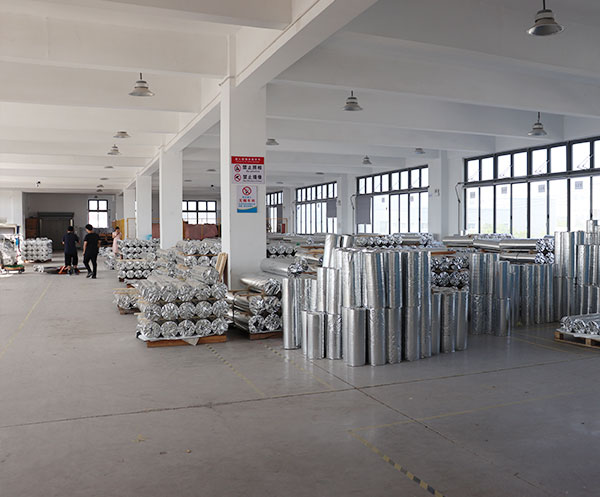
Zone Division Principles: Based on product type and urgency, the inventory area is divided into "Core Product Area," "Regular Product Area," "Special Product Area," and "Emergency Inventory Area." Physical barriers (such as railings and signage) are installed between each area to prevent confusion:
Core Product Area: Located in the center of the warehouse near the loading and unloading area for easy forklift access. This area uses a "pallet stacking + racking" storage method—bulk inventory (50 rolls or more) is stacked on plastic pallets (5 layers per stack, 5 rolls per layer, height ≤ 1.8 meters), stack spacing ≥ 0.6 meters, aisle width ≥ 2.5 meters (suitable for two-way forklift access); loose inventory (1-10... (Rolls) Stored on beam-type shelving (each layer with a load capacity ≥300kg), with specification labels (e.g., "Food Grade - 500mm wide - 100m long") for quick retrieval. The core product area must be equipped with temperature and humidity sensors (temperature 15-25℃, humidity 40%-60%) and dehumidifiers to prevent the aluminized layer from oxidizing due to moisture.
Regular product area: Located on both sides of the core product area, using a "zoning + batch isolation" method. Each type of product (e.g., chemical grade, logistics grade) has an independent area, and each batch of inventory is distinguished by a yellow label (including batch number, warehousing date, and shelf life). Stacking height ≤2 meters, stack spacing ≥0.5 meters. The regular product area must be equipped with light-blocking curtains, and lighting should use warm yellow LED lights (no ultraviolet light) to prevent strong light from causing aging of the aluminized layer.
Special Product Area: Located in a corner of the warehouse, away from entrances and exits, this area uses an "independent shelf + sealed packaging" storage method. Each roll of product is individually wrapped with waterproof and dustproof film. The shelves are labeled "Customized" with customer information (e.g., "XX Chemical - Acid-resistant Aluminized Film - March 2024 Order"). Storage temperature is 15-25℃, humidity 40%-55%. The thickness and barrier properties of the aluminized layer are checked monthly.
Emergency Stock Area: Located near the loading and unloading area, this temporary storage area typically has an area of 20-30㎡. It is used to store emergency replenishment stock (e.g., urgent customer orders, backup stock for production failures). It uses a "single-layer stacking + immediate labeling" method. Each batch of stock is labeled with a red "Emergency Shipment" label, indicating the departure time (e.g., "must be shipped before May 10, 2024"). The emergency stock area requires 24-hour monitoring to ensure it can be shipped out at any time.
Factory-Direct Supply of Aluminized woven film Inventory with Complete Specifications and Stable Delivery
Under a factory-direct supply model, aluminized woven film inventory stands out for its full specification coverage, precise performance matching, and efficient, stable delivery. It is an ideal choice for large-scale procurement and urgent replenishment in electronics, industrial, and logistics sectors. Inventory products use polypropylene (PP) or polyethylene (PE) woven fabric as the base, laminated with a high-barrier aluminized layer. End-to-end quality control ensures consistent performance, fundamentally addressing common procurement challenges such as specification mismatches and uncertain lead times.
Comprehensive specifications are the core strength of factory-direct inventory, enabling multi-dimensional, precise adaptation. Basis weights range from 70–180 g, corresponding to thicknesses of 0.08–0.2 mm, meeting load requirements from lightweight electronic components to heavy industrial equipment protection. Widths span 0.2 m to 2.6 m in graded increments, refined at 10 cm intervals. Cut-to-size rolls are also stocked, supporting both standardized packaging and ultra-wide, one-piece wrapping for large machine tools and new energy equipment—eliminating seams and potential protection gaps. In addition, the inventory includes multiple structures, such as standard three-layer and high-strength four-layer constructions, covering basic protection through advanced needs like high puncture resistance and enhanced moisture barriers.
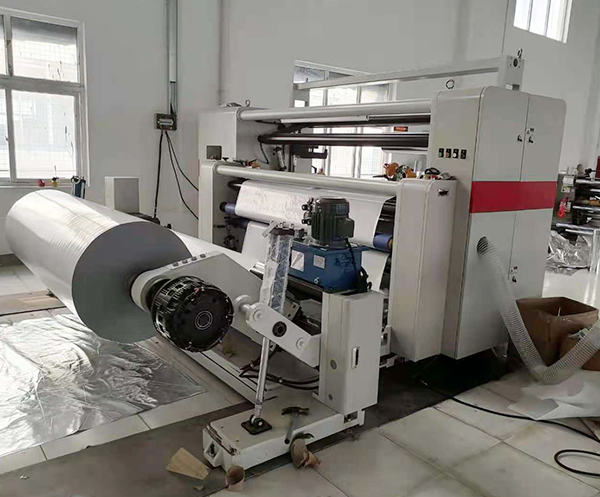
Stable delivery and controllable performance further strengthen procurement assurance. With a dynamic inventory management system, manufacturers maintain ample stock of standard specifications, enabling same-day shipping for in-stock orders; small-batch custom slitting can be delivered within 1–2 days, and large-volume orders are fulfilled within one week—significantly shortening procurement cycles. All inventory products undergo rigorous testing: moisture resistance exceeds industry standards with water vapor transmission ≤0.5 g/(m²·24 h), and antistatic versions maintain surface resistivity at 10⁶–10⁸ Ω. These specifications precisely meet the core requirements of antistatic protection for electronic components and moisture/rust prevention for industrial materials, providing reliable support for efficient production and logistics operations.
Frequently Asked Questions (FAQs):
1. What are the specific aspects of your direct-from-factory metallized woven film supply?
We adopt a direct-from-factory supply model. From raw material weaving and metallization to slitting and inspection, everything is completed within our own production system, eliminating intermediaries. Customers can directly connect with our production and technical teams, ensuring transparent pricing, controllable specifications, and stable delivery times. This is especially suitable for long-term bulk purchases and project-based orders.
2.What is the range of specifications covered by your inventory of metallized woven film? Does it support rapid matching?
Our regular inventory covers a variety of weights, thicknesses, and widths to meet the needs of different application scenarios such as electronics, industry, and logistics. For commonly used specifications, we can ship directly from our inventory. For non-standard sizes, we can also quickly slit from our inventory master rolls to shorten the delivery cycle.
3. How do you guarantee the consistency of quality in your factory-stocked products?
All our inventory of Aluminized woven film undergoes standardized production processes and quality standards. Each batch is tested for tensile strength, barrier properties, and appearance to ensure consistent performance across batches, preventing quality fluctuations from affecting our customers' packaging and transportation safety.
4. What advantages does the direct supply model offer customers in terms of delivery time?
Leveraging stable inventory and our own production scheduling system, we can achieve fast delivery for standard specifications and flexible response to urgent orders. Compared to non-direct supply channels, we can effectively reduce production waiting time and logistics transit time, helping customers mitigate operational risks caused by uncertain delivery dates.
5. Which industries are your aluminized woven film best suited for long-term cooperation?
Our products are widely used in moisture-proof and anti-static packaging for electronic products, protection of industrial equipment and components, and export logistics packaging. For customers with continuous usage and high requirements for specification consistency and delivery stability, we can provide long-term supply and specification management support to ensure sustainable cooperation.
This website uses cookies to ensure you get the best experience on our website.
 Español
 Pусский
 Deutsch
 العربية



 WhatsApp
 Phone
Phone