


I. Planning and Design of the Metallized Woven Film Factory and Warehouse: Spatial Layout Adapted to Product Characteristics
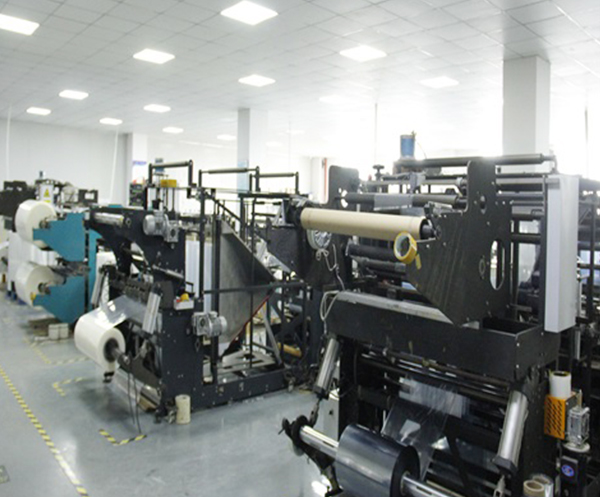
The planning and design of the metallized woven film factory and warehouse must prioritize the physical and chemical characteristics of the product – the metallized layer is susceptible to oxidation and moisture, the woven base fabric is easily damaged by sharp objects, and the finished product must be protected from compression and deformation. Simultaneously, the efficiency of raw material, semi-finished product, and finished product flow must be considered, avoiding cross-contamination and redundant processes. Rational planning is the foundation of subsequent management, mainly including two core aspects: site selection and zoning design, and facility configuration.
1.1 Factory and Warehouse Site Selection and Zoning Design
Factory and warehouse site selection should be away from high humidity, high pollution, and strong ultraviolet radiation environments, while ensuring convenient transportation to reduce logistics costs; zoning design should follow the principles of "functional independence, smooth workflow, and risk isolation," dividing different functional areas:
Core requirements for site selection: Prioritize areas with higher elevation (to avoid flooding during the rainy season), good ventilation (relative humidity consistently controlled at 40%-60%), away from chemical industrial parks (to avoid corrosion of the metallized layer by harmful gases) and strong electromagnetic fields (to prevent static electricity accumulation). Sufficient loading and unloading space should be reserved around the factory and warehouse (at least enough to accommodate two 10-ton trucks simultaneously), and the distance from the production workshop should not exceed 1 kilometer to reduce the transportation distance of semi-finished products; if storing food-grade metallized woven film, it must be away from pollution sources such as waste treatment plants and farms, with a distance of ≥500 meters, complying with GB 14881-2013 "National Food Safety Standard - General Hygienic Practice for Food Production" requirements.
Functional zoning design: According to the production and storage process, the factory and warehouse are divided into five areas: raw material area, semi-finished product area, finished product area, non-conforming product area, and auxiliary area. Clear separation (such as physical barriers and signs) should be set between each area to avoid cross-contamination and misplacement:
Raw material area: Stores raw materials such as PP/PE particles, aluminum blocks, and functional additives (such as antistatic agents and UV stabilizers). PP/PE particles must be stored in sealed, moisture-proof packaging bags (water vapor transmission rate ≤ 1 g/(m²·24h)), stacked to a height of ≤ 1.5 meters (to prevent damage to the bottom packaging bags due to pressure), and kept away from heat sources (distance from heating equipment ≥ 3 meters); aluminum blocks must be stored on dry pallets (moisture content ≤ 0.1%) to prevent moisture and oxidation, and stored in separate areas (distance from organic additives ≥ 2 meters) to prevent chemical reactions; additives must be stored according to the "one product, one storage area" principle, with labels indicating the name, purity, and expiration date. Flammable and explosive additives (such as some solvent-based antistatic agents) must be stored in explosion-proof isolation rooms equipped with explosion-proof lighting and ventilation systems.
Semi-finished product area: This area stores semi-finished products such as woven base fabrics and aluminized substrates. Emphasis should be placed on preventing damage to the aluminized layer and moisture damage to the base fabric. Woven base fabrics should be hung or stacked on flat pallets (to avoid folding and compression causing wrinkles), and stored for no more than 7 days (to prevent long-term moisture absorption); aluminized substrates (such as aluminized PET film) must be covered with light-blocking film (light transmittance ≤ 0.1%) to prevent ultraviolet radiation from accelerating the aging of the aluminized layer, and the stacking height should be ≤ 1 meter to prevent the aluminized layer from peeling off due to pressure on the bottom substrate; the semi-finished product area must be equipped with a temperature and humidity monitoring device (recorded every 2 hours, temperature 15-25℃, humidity 40%-60%), and dehumidification or ventilation equipment should be activated when the limits are exceeded.
Finished product area: Finished Aluminized woven film products must be stored according to the "batch management, classified storage" principle. The storage area is divided into three sub-areas based on application scenarios: food grade, chemical grade, and agricultural grade. Food-grade finished products must be stored separately in a clean area (air cleanliness level ≥ 100,000, with regular disinfection), and kept at a distance of ≥ 10 meters from chemical-grade products to prevent chemical contamination. Within each sub-area, products are stacked according to production batch numbers, with clear batch identification (including production date, specifications, and inspection status). Stacking uses the "five-by-five stacking method" (5 layers per stack, 5 rolls per layer), with a height of ≤ 2 meters (to prevent deformation of the bottom layer products), a stack spacing of ≥ 0.5 meters, and a channel width of ≥ 2 meters (for easy forklift access). The storage period for finished products must comply with standards: ordinary aluminum-plated woven film ≤ 6 months, and agricultural film with added UV inhibitors ≤ 12 months. Products exceeding these periods require re-inspection of barrier properties and mechanical performance.
Non-conforming product area: This area is set up separately in a corner of the warehouse (at least 5 meters away from other areas) for storing products that fail inspection (e.g., aluminum plating peeling off, tensile strength not meeting standards). Non-conforming products must be marked with red signs, indicating the reason for non-conformity and proposed treatment (rework, destruction). Storage time should be ≤ 7 days (to avoid long-term occupation of space). Food-grade non-conforming products must be separately sealed to prevent environmental contamination, and their destruction must comply with environmental requirements (e.g., incineration by a qualified company), with destruction records kept.
Auxiliary area: This includes the office area, inspection area, and loading/unloading area. The office area is for warehouse management personnel and is equipped with computers (for inventory system operation) and filing cabinets (for storing storage records and inspection reports). The inspection area must have a physical laboratory equipped with a tensile testing machine (to test tensile strength), an oxygen permeability tester (to test barrier properties), and a constant temperature and humidity chamber (to simulate storage environment) for sampling and testing of raw materials, semi-finished products, and finished products. The loading/unloading area must have anti-slip flooring (friction coefficient ≥ 0.6), a canopy (to prevent moisture damage during loading/unloading in rainy weather), and weighing equipment (accuracy ≤ 0.1 kg) to ensure traceability of product weight during loading and unloading. 1.2 Factory and Warehouse Facility Configuration
Facility configuration must revolve around four key requirements: moisture protection, damage prevention, light protection, and efficiency. It should include three core types of facilities: storage, protection, and monitoring, to ensure product quality and operational efficiency:
Storage Facilities: Focusing on "protecting the aluminum plating layer and woven base fabric," select appropriate storage equipment:
Pallets: Prioritize plastic pallets (made of HDPE, moisture-resistant, and without sharp edges), with dimensions of 1200mm × 1000mm (suitable for standard truck compartments). The bottom of the pallets should have anti-slip pads (to prevent sliding during stacking); when storing food-grade finished products, pallets must be regularly disinfected (wiped monthly with a chlorine-based disinfectant, concentration 500mg/L) to prevent microbial contamination.
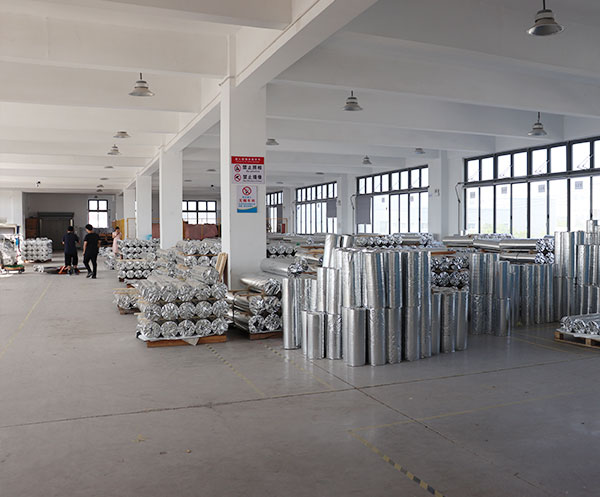
Shelving: Used for storing small semi-finished products (such as aluminum-plated PET film rolls) and high-value finished products (such as multi-layer composite aluminum-plated film), use beam-type shelving (load capacity ≥ 500kg/layer). The shelves should be covered with cushioning pads (made of EVA, 5mm thick) to prevent sharp edges from scratching the film; the shelf height should be ≤ 6 meters (to accommodate forklift operation height), with limit blocks on each layer (to prevent film rolls from sliding off), and a distance of ≥ 0.5 meters from the roof (for ventilation).
Moisture Protection Facilities: The ground should be covered with a moisture-proof layer (such as polyethylene moisture-proof film, thickness ≥ 0.2mm), and the walls and roof should be waterproofed (using polyurethane waterproof coating, thickness ≥ 1.5mm); industrial dehumidifiers (dehumidification capacity ≥ 50L/day) should be installed in the raw material and finished product areas, automatically activating when humidity exceeds 60%; drainage channels (width ≥ 10cm) should be installed in the corners of the walls to prevent water accumulation during the rainy season. Protective Measures: Considering the characteristics of aluminized woven film – its susceptibility to scratches, light, and static electricity – specialized protective equipment is provided:
Anti-scratch facilities: All columns and corners in the factory and warehouse must be fitted with anti-collision strips (made of rubber, thickness ≥10mm), 1.2 meters high (in areas prone to forklift collisions); the loading and unloading area is equipped with soft loading and unloading tools (such as nylon slings, load capacity ≥2 tons, without metal hooks) to avoid scratching the film with metal tools; personnel entering the finished product area must wear non-slip shoes without nails (no sharp particles on the soles), and are prohibited from carrying scissors, blades, or other sharp objects.
Light protection facilities: Factory and warehouse windows must be fitted with blackout curtains (light blocking rate ≥99%) to prevent direct sunlight from causing aging of the aluminized layer; the finished product area uses warm yellow LED lights (wavelength ≥550nm, no ultraviolet light), with illumination controlled at 50-100 lux (sufficient for operational needs, avoiding strong light exposure); the UV aging test equipment in the inspection area must be isolated to prevent ultraviolet light leakage from affecting products in other areas.
Anti-static facilities: The factory and warehouse floors are covered with anti-static flooring (surface resistance 10⁶-10⁹Ω), and grounding is regularly tested (once a month, grounding resistance ≤10Ω); areas storing chemical-grade aluminized woven film are equipped with static eliminators (ion air guns, elimination efficiency ≥90%), and personnel must touch a static discharge ball before entering (to release body static electricity); all equipment (such as forklifts, dehumidifiers) must be grounded (grounding resistance ≤4Ω) to prevent static electricity accumulation from causing fires (especially in areas storing flammable and explosive additives).
Monitoring Facilities: To achieve "full process traceability and timely anomaly warnings," an intelligent monitoring system is configured:
Temperature and humidity monitoring: Temperature and humidity sensors (accuracy: temperature ±0.5℃, humidity ±3%) are installed in each functional area, and data is uploaded to the management system in real time. Automatic SMS alerts are sent when thresholds are exceeded (to the factory and warehouse manager's mobile phone); in areas storing food-grade products, a dew point sensor is additionally installed (to prevent condensation from causing moisture damage to the film), and the dew point temperature must be at least 5℃ lower than the ambient temperature. Video Surveillance: High-definition cameras (resolution ≥ 1080P, night vision range ≥ 10 meters) are installed inside the factory and warehouse, covering all entrances, exits, storage areas, and loading/unloading areas. Video recordings are stored for at least 30 days. The cameras must have motion detection capabilities and automatically trigger an alarm (audible and visual alarm, volume ≥ 80dB) when abnormal personnel activity is detected.
Inventory Management System: A WMS (Warehouse Management System) is used to implement "one item, one code" management for raw materials, semi-finished products, and finished goods – each batch of products is labeled with a QR code (containing batch number, specifications, storage location, and inspection results), allowing for information retrieval by scanning the code. The system automatically generates inventory reports (such as inventory turnover rate and expiration warnings) and is integrated with the production workshop and sales department to achieve "on-demand replenishment and rapid outbound delivery," preventing inventory accumulation or shortages.
Aluminum-coated woven film available from manufacturer stock, suitable for electronic and industrial packaging
The aluminum-coated woven film manufacturer maintains a diverse, full-specification stock tailored to the core requirements of electronic and industrial packaging. With precise specification coverage and consistent performance, these stocked products reliably support both large-scale production and urgent order fulfillment. The stock uses polypropylene (PP) or polyethylene (PE) woven fabric as the base, laminated with a high-barrier aluminum coating, combining mechanical strength with protective functionality to perfectly meet the packaging demands of electronics and industrial applications.
Stocked specifications provide comprehensive coverage to precisely meet various packaging needs. Standard stock ranges from 70–180g in basis weight, 0.08–0.2mm in thickness, and widths from 0.2–2.6 meters, segmented in 10 cm increments. This allows direct adaptation from micro-packaging for electronic components to full coverage for large industrial equipment. The inventory includes both standard flat films and customizable rewound rolls, supporting small-batch slitting and large-batch full rolls, balancing flexible procurement for small orders with large-scale production requirements.
The performance of stocked products is precisely suited to the core demands of electronics and industrial applications. For electronic products, Antistatic aluminum-coated woven films with surface resistances of 10⁶–10⁸Ω are available, effectively dissipating static and shielding against electromagnetic interference, while their excellent moisture and oxygen barrier properties prevent component oxidation or electrostatic damage. For industrial packaging, high basis weight stock offers tensile strength of 30–50 N/mm², outstanding puncture resistance, and corrosion resistance, protecting chemical materials and heavy machinery parts during storage and transportation. Reliable manufacturer stock enables same-day order processing and shipment, significantly shortening delivery cycles and ensuring efficient production flow for electronic and industrial enterprises.
Frequently Asked Questions (FAQs):
1. What specifications of Aluminized woven film are available in your inventory?
Our inventory covers weights from 70-180 grams, thicknesses from 0.08-0.2 mm, and widths from 0.2-2.6 meters, subdivided in 10 cm increments, meeting a variety of needs from small packaging for electronic components to large packaging for industrial equipment. In addition, we offer flat film and custom-cut rolls for convenient small-batch or large-volume purchasing.
2. Is the aluminized woven film in your inventory suitable for anti-static requirements of electronic products?
Our inventory includes anti-static aluminized woven film with a surface resistivity controlled at 10⁶–10⁸ Ω. It can quickly dissipate static electricity, shield electromagnetic interference, and, combined with moisture-proof and oxygen-barrier properties, effectively prevent electronic components from being damaged by moisture, oxidation, or static electricity, ensuring safe storage and transportation.
3. How durable is aluminized woven film in industrial packaging?
Our high-grammage products have a tensile strength of 30–50 N/mm², possessing excellent puncture resistance and corrosion resistance. They can withstand the compression, friction, and chemical erosion during the storage and transportation of heavy machinery parts and chemical raw materials, ensuring the packaging remains intact.
4. What is the delivery time after an order is placed?
We provide factory-stock inventory. Standard specifications can be ordered and shipped on the same day, shortening procurement and production waiting times and ensuring efficient operation of the production and supply chain for electronics and industrial companies.
5.Does our stock of aluminized woven film support customized processing?
Yes. Customers can customize the roll width, length, and thickness based on our inventory to meet special packaging needs. Furthermore, it can be combined with composite PE Film, printed markings, or processed with UV-resistant and anti-static properties to ensure precise performance matching for specific application scenarios.
This website uses cookies to ensure you get the best experience on our website.
 Español
 Pусский
 Deutsch
 العربية



 WhatsApp
 Phone
Phone