

I. Basic Understanding of Customized Woven Film: Why is Customization Necessary?
1.1 Limitations of General-Purpose Woven Film
General-purpose woven films are mostly produced using standardized methods, following industry standards in raw material selection, size specifications, and performance parameters. While they can meet basic usage needs, they have significant limitations in specific scenarios.
From a performance adaptation perspective, the performance of general-purpose woven films is "averaged," making it difficult to enhance performance for individual needs. For example, woven films used in greenhouses at high altitudes in agriculture need to possess both excellent UV resistance and low-temperature toughness. However, the amount of UV inhibitor added to general-purpose PE greenhouse films is usually only sufficient for ordinary areas, making them prone to aging and damage in high-altitude, high-UV environments. In the industrial sector, woven films used for packaging sharp mechanical parts require extremely high puncture resistance. General-purpose PP woven films often lack sufficient puncture resistance, making them easily torn by the edges of parts, leading to packaging leakage.
From a size compatibility perspective, general-purpose woven films typically come in fixed widths and lengths (e.g., 1m or 2m wide, 100m or 200m long). If a customer requires non-standard sizes (e.g., 1.5m wide, 150m long), the film must be cut. This not only wastes material (the cut edges cannot be reused) but may also result in rough edges, affecting subsequent use (e.g., wrinkling during wrapping).
From a functional compatibility perspective, general-purpose woven films have limited functionality and lack targeted design. For example, woven films used in the pharmaceutical industry for packaging flammable and explosive intermediates require antistatic properties, but general-purpose woven films lack antistatic agents and cannot meet safety requirements. Similarly, woven films used in the food industry for packaging microwave-heated semi-finished products require heat resistance and hygiene safety, but general-purpose PE woven films have a low heat resistance temperature (typically ≤80℃) and cannot withstand microwave heating environments.
1.2 Core Value of Custom Woven Film
Custom woven film, through "design and production on demand," precisely solves the compatibility issues of general-purpose films. Its core value is reflected in three aspects: precise performance matching, cost optimization, and improved application efficiency.
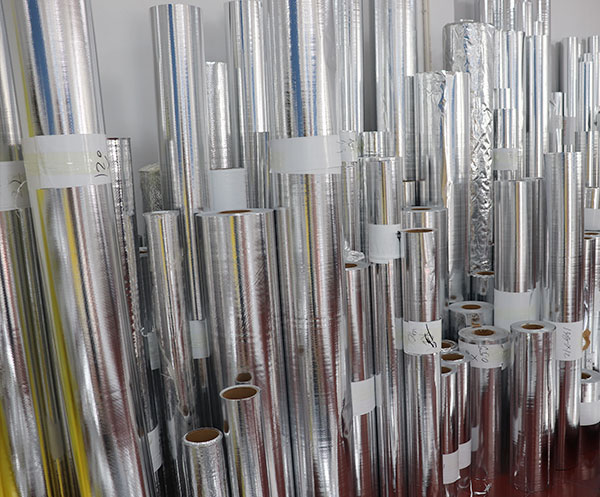
Precise performance matching is the core advantage of the customization service. During the customization process, the manufacturer will adjust the raw material formula and production process according to the customer's specific application scenario, ensuring that the performance parameters of the woven film perfectly match the requirements. For example, for chemical companies needing to package highly corrosive liquids, HDPE raw materials with stronger chemical resistance can be selected, and the film thickness can be increased through multi-layer co-extrusion, improving corrosion resistance and sealing performance; for the need for bird netting in windy areas in the agricultural sector, high-strength fibers can be added to the PE raw material to improve the net's wind resistance and prevent damage from strong winds.
Cost optimization is reflected in "avoiding waste" and "reducing losses." On the one hand, customized sizes can be designed entirely according to customer needs, eliminating the need for cutting and reducing material waste. On the other hand, performance-adapted customized films can reduce wear and tear during use. For example, customized high-puncture-resistant woven films used for packaging machinery parts significantly reduce breakage rates, minimizing part loss or damage due to packaging damage, and indirectly lowering customer production costs.
Improved application efficiency is achieved through customized functional design. For instance, for the needs of automated packaging lines in logistics companies, customized woven films with moderate surface friction can be used, allowing them to pass smoothly through the traction system of automated equipment and preventing equipment jamming due to excessively slippery or rough film. For the needs of on-site construction in the building industry, customized waterproof woven films that are easy to cut and adhere can be used, shortening construction time and improving construction efficiency.
II. Core Process of Woven film customization: The Entire Chain from Needs to Delivery
Woven film customization is a systematic project that requires five core stages: "Needs Matching and Analysis → Solution Design and Confirmation → Raw Material Procurement and Pre-treatment → Customized Production and Process Control → Finished Product Inspection and Delivery." Each stage requires close cooperation between the customer and the manufacturer to ensure the product meets expectations.
2.1 Requirements Alignment and Analysis: Clarifying Core Customization Parameters
Requirements alignment is the starting point of the customization process and a key factor in determining the accuracy of subsequent solution design. In this stage, the manufacturer needs to comprehensively collect information from the customer through detailed communication, including application scenarios, performance requirements, size requirements, quantity, and delivery cycle, transforming vague requirements into clear technical parameters.
Application scenario analysis is the foundation of requirements alignment. The manufacturer needs to understand the specific uses of the woven film (e.g., packaging, covering, protection), the usage environment (e.g., outdoor/indoor, high/low temperature, humid/dry, corrosive/non-corrosive), and the usage method (e.g., manual packaging/automated packaging, single-use/reusable). For example, if the customer needs customized woven film for outdoor grain storage, the manufacturer needs to focus on the film material's UV resistance and aging resistance; if the customer needs customized woven film for automated production line wrapping, the manufacturer needs to focus on the film material's tensile strength, elasticity, and surface friction.
Performance requirements confirmation needs to be translated into quantifiable parameters. Common performance requirements include tensile strength, puncture resistance, sealing performance, temperature resistance, chemical resistance, antistatic properties, and light transmittance. Manufacturers need to translate the customer's qualitative description (e.g., "a very strong membrane is required") into quantitative indicators (e.g., "longitudinal tensile strength ≥ 30 MPa, transverse tensile strength ≥ 25 MPa"). For example, if a customer states that "the membrane material must not be corroded when packaging acidic liquids," the manufacturer needs to further confirm the acid concentration and operating temperature of the liquid to determine the membrane material's raw material (e.g., acid-resistant HDPE) and thickness (e.g., thickness ≥ 0.15 mm).
Dimension and quantity confirmation must be based on the customer's usage habits and production plan. Regarding dimensions, the width, length, and thickness of the woven film must be specified (e.g., width 2.2m, length 300m, thickness 0.12mm). If it is bag-shaped woven film, the bag dimensions (e.g., length 50cm, width 30cm, side seam height 10cm) and opening method (e.g., flat opening, self-sealing opening, zipper opening) must also be confirmed. Regarding quantity, the total order quantity and batch delivery requirements must be confirmed (e.g., total quantity 10 tons, delivered in 3 batches, each batch 15 days apart) so that the manufacturer can arrange the production plan. Regarding delivery time, the customer's late delivery time must be specified, and sufficient time must be allowed in conjunction with the production cycle (usually the production cycle for customized woven film is 7-15 days, depending on the complexity of the process) to avoid delays.
2.2 Solution Design and Confirmation: Forming a Customized Technical Solution
After the requirements analysis is completed, the manufacturer needs to design a customized solution based on the collected information. The solution includes raw material formula, production process, performance testing methods, cost quotation, delivery plan, etc., and communicate and confirm with the customer to ensure that both parties have a consistent understanding of the solution.
Raw material formulation design is the core of the solution. The manufacturer needs to select the base resin type (such as PE, PP, HDPE, LLDPE) based on performance requirements and determine the types and proportions of additives. For example, for a customer's need for customized antistatic woven film, the raw material formulation should include PE base resin (97%), antistatic agent (2%), and antioxidant (1%). For a customer's need for customized high-transmittance greenhouse film, the formulation should use high-transmittance LLDPE resin (80%), EVA resin (18%, to improve light transmittance and flexibility), and UV stabilizer (2%). Simultaneously, the manufacturer needs to explain the rationale for the raw material selection to the customer (e.g., "EVA resin is used to increase the film's light transmittance to over 90%, meeting the photosynthetic needs of greenhouse crops"), ensuring the customer understands the rationale for the solution.
Production process design must match the characteristics and performance requirements of the raw materials. Different performance requirements correspond to different production processes. For example, custom-made multi-layer composite woven films (such as PE/aluminized/PP composite films) require multi-layer co-extrusion; custom-made high-tensile-strength woven films require optimization of the temperature and stretching ratio during the stretching process; custom-made woven films with surface-printed patterns require determination of the printing process (such as gravure printing, flexographic printing) and ink type (such as food-grade ink, abrasion-resistant ink). The manufacturer needs to clearly define the key parameters of each process step in the plan, such as extrusion temperature (e.g., 180-190℃), stretching ratio (e.g., 3 times longitudinally, 2.5 times transversely), and lamination temperature (e.g., 70-80℃), and explain the impact of process parameters on performance (e.g., "Setting the stretching ratio to 3 times allows the longitudinal tensile strength of the film material to reach over 28MPa").
Clear performance testing methods are crucial to ensuring product compliance. The proposal must list the performance testing items and standards for customized films. These tests must cover the client's core needs. For example, customized food packaging woven films must include hygiene and safety testing (such as heavy metal content detection and volatile organic compound detection, conforming to GB 4806.7-2016 standard) and sealing testing (such as negative pressure sealing test, maintaining a leak-free state under 0.09MPa negative pressure for 30 seconds); customized waterproof woven films must include hydrostatic pressure resistance testing (such as hydrostatic pressure resistance ≥0.4MPa, conforming to GB/T 19250-2013 standard). Simultaneously, the sampling method for test samples must be clearly specified (such as randomly selecting 3 rolls from each batch, with 5 samples from each roll) and the handling method for non-conforming products (such as re-production and free replacement for non-conforming products).
Cost quotations and delivery plans must be transparent and clear. The quotation should clearly list raw material costs, processing costs, testing costs, and transportation costs to avoid hidden charges. The delivery plan should specify the production start time, production cycle for each batch, logistics method (e.g., road transport, rail transport), delivery address, and contact person to ensure a smooth delivery process. During the solution confirmation stage, the customer can propose modifications to the solution (e.g., adjusting the raw material type, optimizing dimensions). The manufacturer must adjust the solution according to the feedback until both parties sign and confirm, forming a formal customization contract.
High-strength woven film customization supply: multi-specification packaging solutions for diverse needs
High-strength Woven film customization supply focuses on “precise adaptation and comprehensive protection,” leveraging flexible specification customization to provide tailored packaging solutions for industrial, logistics, agricultural, and other sectors. It effectively addresses protection challenges during storage and transportation of various goods, making it the preferred choice for diverse cargo packaging. Key advantages and solution highlights include:
The high-strength characteristics of the customized products form the core protection guarantee. Made from premium HDPE/PP materials through precise weaving and laminated coating processes, some products incorporate anti-aging and wear-resistant additives. The films offer excellent tear resistance and puncture strength, capable of withstanding heavy cargo compression, long-distance transport friction, and harsh outdoor conditions. They also provide moisture-proof, leak-proof, and acid-alkali resistant properties, effectively blocking water vapor, dust, and corrosive substances, creating a protective barrier for machinery, construction materials, and agricultural products.
The multi-specification customization dimensions enable tailored packaging solutions. Widths range from 0.2m to 13m, lengths can be cut to order or supplied in rolls, and extra-large sizes can be joined through heat-sealing, covering everything from small item packaging to full-size equipment wraps. Weights of 70g–240g and thicknesses of 0.08mm–0.25mm are adjustable, with heavier versions suitable for heavy cargo and lighter versions for smaller products. Additionally, color options (black/white, stripes, etc.) and functional upgrades (anti-aging, anti-static, high light transmittance) are available to meet the needs of cross-border shipping, greenhouse cultivation, and other specialized scenarios.
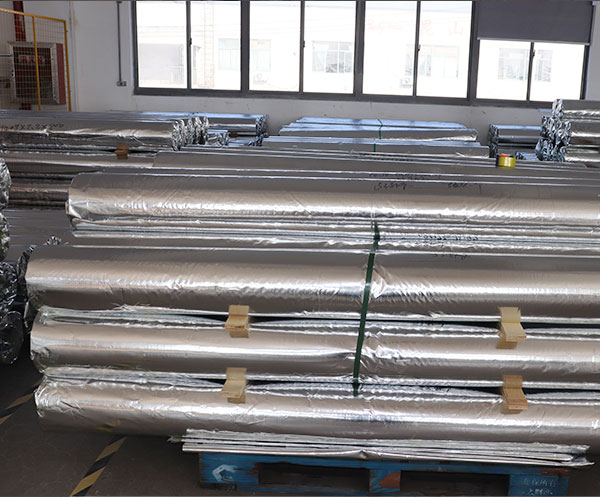
The customization supply model precisely matches packaging parameters based on cargo characteristics and transportation conditions, providing full-chain services from specification design and prototyping to mass delivery. Products comply with industry quality and environmental standards, offer excellent cost performance, and are widely used in industrial packaging, logistics tarpaulins, and agricultural coverage. They deliver efficient and reliable multi-specification Woven film packaging solutions for a wide range of users.
Frequently Asked Questions (FAQs):
1.What specifications of your high-strength Woven Membrane can be customized?
Our high-strength woven membrane supports full customization. Widths range from 0.2m to 13m, lengths can be cut to customer requirements or supplied in rolls, thicknesses can be adjusted between 0.08mm and 0.25mm, and weights range from 70g to 240g. Whether it's packaging small parts or covering large equipment, we can provide precisely matched solutions.
2. How are the tear resistance and abrasion resistance of the woven membrane?
We use high-quality HDPE/PP raw materials and process them through precision weaving and composite coating processes. Some products add anti-aging and abrasion-resistant additives. It has excellent tear strength and puncture resistance, and can withstand the compression of heavy goods, friction during long-distance transportation, and the effects of outdoor environments, ensuring the safe protection of goods throughout the entire transportation chain.
3. Can functions and colors be customized?
Yes. We offer customized features, including upgrades such as anti-aging, anti-static, and high light transmittance. We also support multiple color schemes, such as black and white double-sided and striped designs, which can be customized according to customer industries and transportation scenarios to meet different application needs such as cross-border transportation, agricultural coverage, or industrial packaging.
4. What about delivery time and mass Production Capacity?
We have a mature production system and supply chain management, enabling us to respond quickly to customized needs. From sample confirmation to mass production, the entire process is executed efficiently. Regular bulk orders can be delivered within 7–15 working days. Special specifications or large-volume orders can be negotiated based on order details, ensuring timely and stable supply.
5. Do our products meet environmental and quality standards?
Our High-strength woven film meets industry quality standards and environmental requirements. Some products have passed third-party testing and certification such as SGS and are recyclable. The material is safe and non-toxic, and can be used directly without additional pretreatment of goods, providing customers with reliable, environmentally friendly, and cost-effective packaging solutions.
This website uses cookies to ensure you get the best experience on our website.
 Español
 Pусский
 Deutsch
 العربية



 WhatsApp
 Phone
Phone