


I. Packaging Sector: Core Application Scenarios of Woven Film
Packaging is a fundamental and widespread application area for woven film, covering multiple sub-sectors such as food, pharmaceuticals, chemicals, building materials, and daily necessities. In this field, woven film primarily serves functions such as protecting products, facilitating storage and transportation, and enhancing packaging aesthetics. Its performance needs to be specifically matched to the characteristics of the packaged contents (such as weight, corrosiveness, fragility, and preservation requirements).
1.1 Food Packaging: Dual Guarantee of Safety and Freshness
In the food packaging sector, the application of woven film must primarily meet two core requirements: hygiene and safety, and freshness preservation and moisture protection. Common application scenarios include grain packaging, food ingredient packaging, and outer packaging bags for snack foods.
For grain packaging (such as rice, wheat, and corn), PP woven film or PE/PP composite woven film is typically selected. These woven films possess high tensile strength (longitudinal tensile strength ≥25MPa) and puncture resistance, enabling them to withstand the pressure of grain stacking and preventing leakage due to packaging bag breakage. Simultaneously, the film's sealing properties effectively block moisture and impurities from the air, preventing grain from becoming damp and moldy. Some high-end grain packaging uses woven films with added UV stabilizers, which can delay film aging and extend grain storage time even when stored outdoors. For example, during the corn harvest season in Northeast China, farmers commonly use ton bags made of PP composite woven film to package corn, facilitating mechanical loading and unloading while maintaining packaging integrity in low winter temperatures, reducing corn frost damage.
In food raw material packaging (such as flour, starch, and sugar), woven films need to have dust-proof properties. This type of packaging often uses inner-layered Woven Bags (outer layer of PP woven fabric, inner layer of PE Film). The sealing properties of the inner PE film prevent fine raw material dust from leaking through the gaps in the woven fabric, while also preventing external contaminants from entering the bag. Some food ingredients require transparent packaging. For example, transparent PE woven film is used for sugar packaging to allow consumers to easily observe the color and condition of the ingredients, improving product identification.
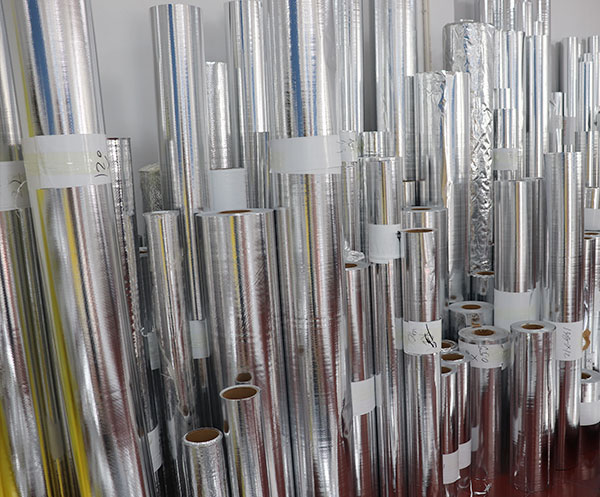
Snack foods (such as potato chips and nuts) often use Aluminized woven film for their outer packaging. The aluminized layer not only enhances the gloss and aesthetics of the packaging but also provides excellent barrier properties, effectively blocking oxygen, light, and moisture, delaying food oxidation and spoilage, and extending shelf life. For instance, some nut brands use aluminized PP woven film for their packaging bags. Its barrier properties extend the shelf life of nuts to 6-12 months, while the film's oil resistance prevents nut oils from penetrating and causing packaging damage.
1.2 Pharmaceutical Packaging: Strict Adherence to Hygiene and Protection Standards
Pharmaceutical packaging has much higher requirements for woven films than food packaging. It must comply with relevant national standards for pharmaceutical packaging materials (such as YBB 00132002), with a focus on hygiene and safety, barrier properties, and antistatic properties.
HDPE woven film or PP composite woven film is commonly used in the outer packaging of solid pharmaceuticals (such as capsules and tablets). These woven films undergo strict hygiene treatment to ensure they are odorless and free of harmful substances (such as heavy metals and volatile organic compounds) to prevent contamination of the medicine. Simultaneously, the barrier properties of the film must meet certain standards to block external humidity and microorganisms, preventing the medicine from absorbing moisture, deteriorating, or becoming contaminated by microorganisms. For example, some manufacturers of traditional Chinese medicine decoction pieces use sealed bags made of HDPE woven film to package the pieces; the high sealing performance of the film prevents the loss of the active ingredients and extends shelf life.
For the packaging of pharmaceutical intermediates (such as pharmaceutical powders and granules), woven films must possess antistatic properties. Pharmaceutical intermediates are often flammable and explosive substances; static electricity generated during packaging could lead to safety accidents. Therefore, antistatic agents are added to these woven films to ensure the surface resistance of the film is ≤10¹¹Ω, reducing static electricity accumulation. At the same time, the film's strength must be able to withstand the weight of the intermediate to prevent leakage due to packaging damage during transportation, which could create safety hazards. 1.3 Chemical Product Packaging: Chemical Corrosion Resistance and Safety Protection
Chemical products (such as fertilizers, pesticides, coatings, and resins) have diverse properties. Some products are corrosive, volatile, or toxic, thus requiring extremely high chemical corrosion resistance and sealing performance from the woven film.
Fertilizer packaging (such as urea and compound fertilizers) commonly uses PP woven film or PE/PP composite woven film. These woven films must be able to withstand the slight corrosiveness of fertilizers to prevent chemical reactions between the film material and the fertilizer, which could lead to damage. For example, urea has a certain degree of hygroscopicity, forming acidic substances after absorbing moisture. Using ordinary PE woven film for packaging may accelerate film aging; while PP woven film has strong acid resistance, effectively resisting the corrosion after urea absorbs moisture and extending the packaging's lifespan. Furthermore, the load-bearing capacity of fertilizer packaging woven film must meet standards, typically requiring it to withstand a weight of 50-100 kg and not easily deform during stacking, facilitating warehouse storage and transportation.
Pesticide packaging requires selecting the appropriate woven film based on the type of pesticide (e.g., liquid pesticides, solid pesticides). Liquid pesticide packaging often uses PE composite woven film; the solvent resistance of the inner PE film prevents pesticide solvent penetration and avoids packaging leakage. Simultaneously, the film must be printed with clear warning labels and usage instructions, and the labels must be abrasion-resistant so that they do not rub off and obscure the information even during transportation. Solid pesticide packaging (e.g., pesticide granules) commonly uses PP woven film, whose high strength protects the pesticide granules from crushing during loading and unloading, ensuring pesticide efficacy.
1.4 Building Materials and Industrial Product Packaging: Balancing Load-Bearing Capacity and Protection
The core requirements for packaging building materials (e.g., cement, sand, tiles) and industrial products (e.g., hardware accessories, machine parts) are load-bearing capacity and impact resistance. Woven films must possess high strength and impact resistance.
Cement packaging is a typical application of woven film in the building materials field, commonly using cement bags made of PP woven film. These types of woven films need to meet high tensile strength standards (longitudinal tensile strength ≥30MPa) to withstand the weight of cement (usually 50kg/bag) and be resistant to damage during handling and stacking. Simultaneously, the film material must possess a certain degree of breathability to prevent water vapor from forming inside the packaging, which could lead to clumping. For example, cement bags produced by large domestic cement companies often use high-density PP woven film, whose service life meets the needs of the entire cement production, transportation, and use process. Furthermore, the film material is recyclable, meeting environmental protection requirements.
Packaging for building materials such as sand, gravel, and tiles often uses PE woven film or PE composite woven film. For sand and gravel, woven film is typically used to make ton bags or large packaging bags for easy mechanical loading and unloading, and the puncture resistance of the film prevents sharp particles in the sand and gravel from scratching the packaging. For tiles, woven film is used for wrapping or making packaging bags; the flexibility of the film allows it to conform to the tile surface, reducing bumps during transportation and protecting the tile edges from damage. Some tile manufacturers print their brand logos and product information on the surface of woven film, serving both a protective function and enhancing brand exposure.
Industrial products, such as hardware accessories (e.g., screws, nuts) and mechanical parts (e.g., small gears, bearings), commonly use PP or PE woven film for packaging. These products often have sharp edges, so the woven film needs high puncture resistance to prevent damage and loss of parts. Additionally, some precision mechanical parts are packaged with anti-static woven film to prevent static electricity from attracting dust and affecting the precision of the parts, or to prevent damage caused by static electricity.
II. Agriculture: Supporting Agricultural Production and Crop Protection
Agriculture is one of the important application areas for woven film, with uses including greenhouse covering, mulching, crop protection (bird and insect control), and agricultural product storage and transportation. Different types of woven film need to possess characteristics suitable for agricultural production scenarios, such as light transmittance, aging resistance, and air permeability.
2.1 Greenhouse Covering: Creating a Suitable Environment for Crop Growth
Greenhouse covering is the core application of woven film in agriculture. By covering with woven film, temperature, humidity, and light within the greenhouse can be regulated, creating a suitable environment for crop growth. Depending on the crop type and climate conditions, commonly used greenhouse woven films include PE greenhouse film, PO greenhouse film (a blend of PE and EVA), and functional greenhouse films (such as light-converting films and anti-fog films).
PE greenhouse film has good light transmittance (≥85%) and flexibility, and is relatively inexpensive, making it suitable for growing vegetables (such as cucumbers and tomatoes) and flowers, which have high light requirements. In North my country, PE greenhouse film is widely used in greenhouses for spring cucumber cultivation. The film's light transmittance meets the needs of cucumber photosynthesis, while its flexibility facilitates ventilation during winter, regulating the temperature inside the greenhouse.
PO greenhouse film is made by adding EVA to PE, resulting in superior light transmittance (≥90%) and aging resistance. The film surface is also less prone to fogging and dripping. This type of greenhouse film is suitable for high-value crops (such as strawberries and grapes). Its anti-fogging and anti-dripping function reduces humidity inside the greenhouse, lowering the probability of crop diseases (such as strawberry gray mold). For example, in the rainy regions of southern my country, PO greenhouse film is widely used in strawberry greenhouses. Even in cloudy or rainy weather, the film surface is less prone to fogging, maintaining good light transmittance and ensuring normal strawberry growth.
Functional greenhouse films are designed for specific crop needs. For example, light-converting films can convert ultraviolet light in sunlight into red light needed for crop photosynthesis, increasing crop yield. Aging-resistant greenhouse films contain more UV inhibitors, extending their service life to 3-5 years, making them suitable for long-term use greenhouses (such as fruit tree greenhouses). For example, in Northwest my country, where there is strong sunlight and high levels of ultraviolet radiation, fruit tree greenhouses often use aging-resistant light-converting films, which not only extend the service life of the film material but also improve the sweetness and quality of the fruit.
Multi-Specification Woven Film: Professional Packaging Solutions for Machinery and Building Materials
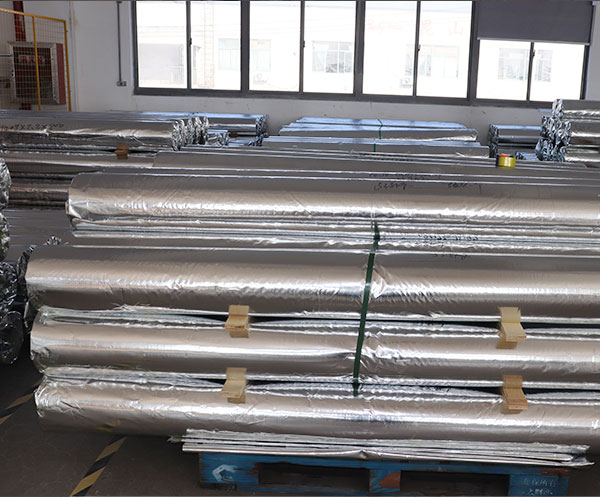
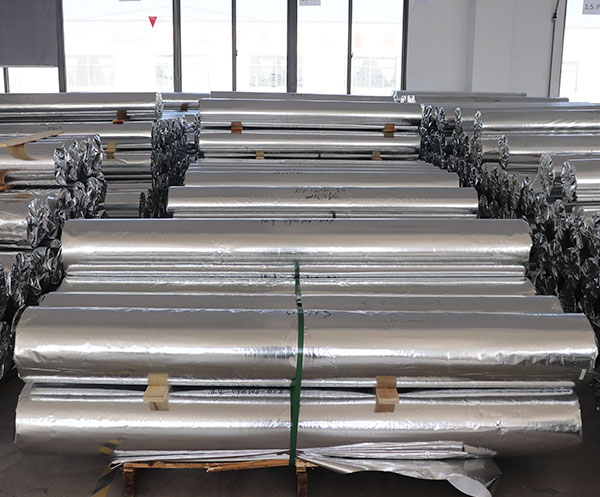
Multi-specification woven film, with its flexible size adaptability and excellent protective performance, has become a core material in the packaging of machinery and building materials. It can be customized to specific dimensions according to the shape and weight of different products, providing comprehensive protective packaging solutions. This effectively addresses common issues such as collisions, moisture, and dust exposure during storage and transportation, ensuring the integrity of the goods.
In machinery packaging, the adaptability and protective properties of multi-specification woven film precisely meet diverse needs. For small precision mechanical components, narrow-width, lightweight woven films (width 0.2–1m, thickness 0.08–0.12mm) can be used for individual wrapping, preventing dust and moisture penetration. For large machines, motors, and other equipment, ultra-wide woven films (width 2–13m) can be customized, and hot-melt splicing can be applied for full coverage or wrap-around packaging. Its high strength (tear-resistant and puncture-resistant) can withstand pressure and friction during transport, preventing surface scratches or component damage. Some anti-aging and moisture-proof variants are also suitable for outdoor storage, extending protection duration.
For building materials, multi-specification woven film can meet various protective requirements. Long items such as pipes and profiles can be packaged with tube-shaped woven films cut to length, effectively preventing deformation or corrosion during transport. Fragile materials such as tiles and boards can be wrapped with thicker films (thickness 0.15–0.25mm) combined with cushioning materials to enhance impact resistance. Bulk materials like sand and cement can be sealed in custom-sized Woven Bags (made from woven film), offering excellent anti-leakage, wear-resistant, and moisture-proof properties.
Additionally, multi-specification woven film supports color and functional customization, such as printed labels for easy classification or anti-static additives for precision machinery packaging. Its lightweight properties reduce shipping costs, and it complies with environmental standards. Widely applied in the full supply chain of machinery and building materials, it provides an efficient and reliable solution for safe handling and transport of these products.
Frequently Asked Questions (FAQs):
1. What types of machinery and building materials can multi-specification woven film be used for packaging?
Multi-specification woven film has a Wide range of applications. It can be used for packaging precision machinery parts, small motors, large machine tools, as well as various building materials such as pipes, profiles, tiles, boards, sand, gravel, and cement. By customizing the width, length, and thickness, it can provide comprehensive protection based on the size and weight of the goods, preventing friction, collisions, and moisture intrusion during transportation and storage.
2. How protective is the woven film? Can it prevent damage and moisture?
High-strength woven film uses HDPE or PP raw materials, combined with precision weaving and composite coating processes, possessing excellent tear resistance, puncture resistance, and abrasion resistance, and can withstand long-distance transportation and stacking pressure. At the same time, the dense molecular structure of the film effectively blocks moisture and prevents seepage, ensuring the integrity of machinery and building materials during storage and transportation.
3. Can woven films of different specifications and functions be customized?
Yes, we support full-specification customization, including widths of 0.2–13 meters, lengths cut to order or supplied in rolls, and thicknesses of 0.08–0.25 mm. Functionally, we can customize features such as anti-static, anti-aging, and high light transmittance. We can also print colors or logos for easy classification management and professional packaging needs.
4. Are multi-specification woven film suitable for outdoor warehousing or long-distance transportation?
Absolutely. High-strength woven film is resistant to high and low temperatures, UV rays, and aging, and possesses moisture-proof, seepage-proof, and abrasion-resistant properties, making it suitable for outdoor warehousing or long-distance transportation. Extra-large sizes can be hot-melt spliced to cover entire machines or large goods, ensuring the safety of machinery and building materials in complex transportation environments.
5. Is there a minimum order quantity (MOQ) for multi-specification woven film, and what is the delivery time?
We adopt a direct-from-factory model, supporting bulk orders and on-demand customization. The minimum order quantity is flexible and negotiable based on specifications and functions. Production cycles are typically 7–15 days, which can be adjusted according to order volume and customization complexity. Samples can be provided to confirm packaging effectiveness and ensure that bulk deliveries meet customer requirements.
This website uses cookies to ensure you get the best experience on our website.
 Español
 Pусский
 Deutsch
 العربية



 WhatsApp
 Phone
Phone