


This multi-layered composite structure endows the packaging bag with superior physical properties. Its water vapor transmission rate can be controlled below 0.5 g/m²·24h, and oxygen transmission rate is also kept at a low level. The unique properties of the aluminum-plastic composite material also provide excellent electromagnetic shielding, effectively preventing static electricity buildup from damaging precision equipment. In terms of temperature resistance, this packaging bag maintains stable performance within a temperature range of -40℃ to 80℃, adapting to transportation and storage needs under various climatic conditions.
The application of vacuum processing technology further enhances the protective effect of the packaging. By removing the air from the packaging bag, a negative pressure environment is created, allowing the packaging material to adhere tightly to the surface of the equipment. This tight fit not only enhances the stability of the packaging but also significantly improves its protective performance against oxidation and moisture. Simultaneously, the smaller volume of the vacuum-sealed packaging improves space utilization in warehousing and transportation.
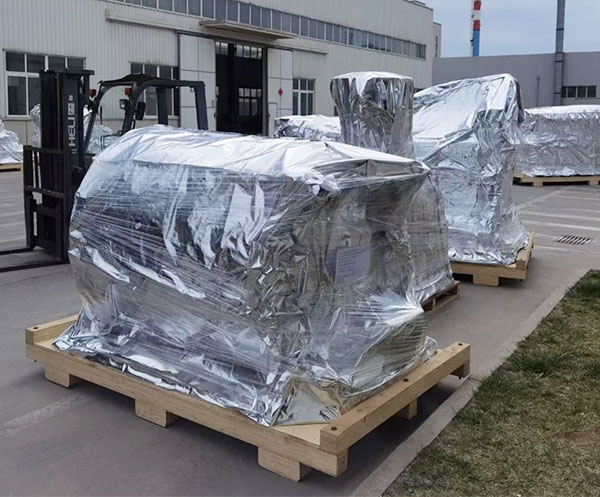
Production Process and Quality Control
The production process of large vacuum Aluminum Foil Packaging Bags requires strict quality control. The selection of raw materials is paramount; the purity, thickness, and surface treatment of the aluminum foil all affect the performance of the final product. Commonly used aluminum foil thicknesses range from 7-12 micrometers. This thickness range ensures both good barrier properties and meets strength requirements under vacuum conditions.
The lamination process is a crucial step in production. High-performance polyurethane adhesives are used for dry lamination to ensure the bonding strength between each layer. After lamination, a curing process of 48-72 hours is required to fully cure the adhesive. Insufficient curing will result in insufficient lamination strength, potentially leading to delamination during vacuuming and affecting packaging performance.
The finished product inspection stage is particularly important. In addition to routine sealing and puncture resistance tests, vacuum holding tests are also necessary. This test simulates actual usage conditions, verifying the performance of the packaging bag under continuous negative pressure. For large packaging bags, the strength test at the seams is paramount, directly affecting the reliability of the packaging system. Furthermore, environmental adaptability tests are required to ensure the stability of the packaging bag under different temperature and humidity conditions.
Application Scenarios and Industry Practices
In the field of industrial equipment, this packaging solution demonstrates broad application value. Precision machine tools and machining centers are vacuum-packed with aluminum foil to effectively prevent corrosion of precision components such as guide rails and lead screws. Electrical control equipment is vacuum-packed to prevent components from oxidizing due to moisture, ensuring optimal operating conditions during installation and commissioning. Large molds in the automotive manufacturing industry use vacuum packaging for rust prevention and long-term storage, extending mold lifespan.
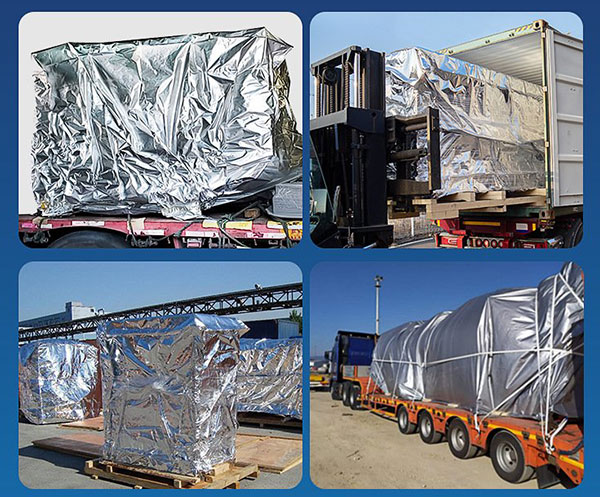
The electronics industry is another important application area. Semiconductor manufacturing equipment uses special vacuum packaging to ensure it is unaffected by environmental factors during transportation and storage. Communication base station equipment uses anti-static vacuum packaging, providing both physical protection and preventing damage to precision circuits from static electricity. Laboratory instruments are vacuum-packed to maintain their measurement accuracy and reliability, ensuring the accuracy of research data.
This packaging solution also performs excellently in protecting equipment in special environments. Marine engineering equipment needs to withstand high salt spray environments; vacuum packaging provides reliable corrosion protection. Outdoor power equipment is vacuum-packed during transportation to avoid the impact of weather factors. Emergency rescue equipment uses vacuum packaging to ensure it remains usable after long-term storage, providing reliable support for disaster relief efforts.
Large Vacuum aluminum foil packaging bags, with their excellent comprehensive protective performance, have become the core packaging choice for high-value and precision goods in long-distance logistics and cross-border transportation. They effectively handle complex environmental challenges during transit, ensuring the safety of goods. The key advantages and application points are as follows:
In terms of protective performance, these packaging bags generally use multi-layer composites of aluminum foil with PE, CPP, or similar materials, with some high-end products featuring four-layer structures. Oxygen transmission rates can be as low as 0.006 cm³/(m²·24h·0.1 MPa), and water vapor transmission rates as low as 0.02 g/(m²·24h), effectively blocking moisture, oxygen, salt spray, and UV exposure. This prevents cargo from dampness, oxidation, or corrosion at the source. At the same time, they offer excellent mechanical strength, with outstanding puncture resistance, tear resistance, and burst strength, capable of withstanding compression and impact during long-distance transport, suitable for both sea and land transport.
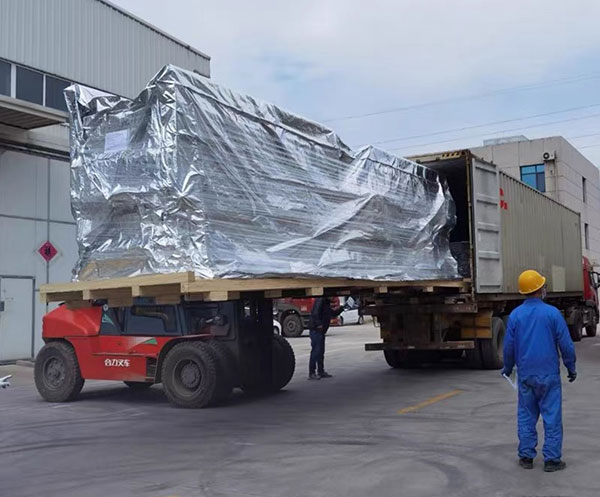
The scope of application is broad, covering large precision machinery, power equipment, automotive parts, electronic components, and medical devices. They can also serve as container liners. For the special requirements of cross-border transportation, the bags can be customized to match cargo dimensions, and even modular or detachable designs can be used for oversized equipment, with length, width, and height unrestricted, providing adaptable packaging solutions for various cargo sizes.
In practical applications, the use of desiccants and humidity indicator cards can further enhance moisture protection. Vacuum sealing combined with reinforcement through corrugated cartons or wooden pallets forms a dual-protection system. After packaging, sealing integrity tests ensure no air leaks. Additionally, these bags are resistant to high and low temperatures, non-toxic, and odorless, meeting international transportation environmental standards. Their surfaces can be marked with standardized labels such as “Keep Dry” and “This Side Up,” supporting regulatory compliance and significantly reducing cargo damage rates during long-distance and cross-border transportation.
Frequently Asked Questions (FAQs):
1. Can large vacuum Aluminum Foil Packaging Bags withstand the impact of long-distance transportation and sea freight?
Yes, these packaging bags use multi-layer composite materials (aluminum foil + PE/CPP, etc.), with some high-end products having a four-layer structure. They possess excellent mechanical strength, including puncture resistance, tear resistance, and burst resistance. They can withstand bumps, compression, and friction during transportation and are suitable for various transportation methods such as sea freight, land transportation, and long-distance logistics.
2.How to select or customize packaging bags according to the size of the goods?
Packaging bags can be customized according to the length, width, and height of the goods to ensure a tight fit without affecting the vacuum seal effect. For extra-large equipment, detachable or spliced designs can be used for flexible adaptation. Before customization, the dimensions and weight of the goods must be provided to ensure that the thickness, strength, and sealing of the packaging bag meet transportation requirements.
3.Is it necessary to use desiccants or other moisture-proof materials?
Yes, using desiccants and humidity indicator cards can further enhance the moisture-proof effect. Desiccants maintain the relative humidity inside the bag below a specified level, and humidity indicator cards facilitate real-time monitoring. Combined with vacuum sealing and external reinforced enclosures, a dual protection system is formed, significantly reducing the risk of goods becoming damp or oxidized.
4.How to ensure sealing after packaging?
After packaging, sampling inspections should be conducted, such as manual squeezing checks or hydrostatic tests, to ensure the bag is leak-free and the seal is intact without cracks. The temperature, pressure, and time of the vacuum heat sealing process must be strictly controlled to ensure a strong and reliable seal, reducing the risk of leakage or protective failure during transportation from the source.
5.What types of export goods are suitable for large Vacuum aluminum foil packaging bags?
This packaging solution is suitable for goods with high requirements for moisture and oxidation prevention, such as precision machinery, power equipment, automotive parts, electronic components, and medical devices. It is especially suitable for long-distance transportation and cross-border logistics, ensuring the safe arrival of goods in complex environments and improving transportation reliability and cargo integrity.
This website uses cookies to ensure you get the best experience on our website.
 Español
 Pусский
 Deutsch
 العربية



 WhatsApp
 Phone
Phone