


I. Concept and Functional Positioning of Vacuum Aluminum Foil Packaging Bags for Marine Transport
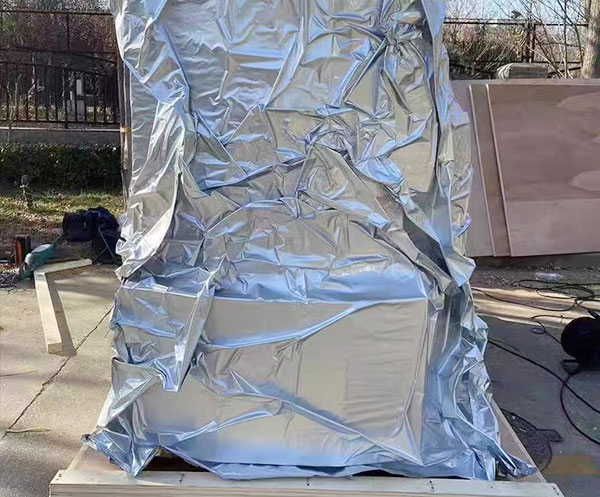
With the rapid development of international trade and maritime logistics, cross-border transportation of goods has become commonplace. However, the maritime transport environment is characterized by high humidity, heavy salt spray, large temperature differences, and long transport times. These factors easily lead to goods becoming damp, rusting, oxidizing, or deteriorating. To effectively address these environmental risks, Vacuum aluminum foil packaging bags for marine transport have emerged.
A Vacuum aluminum foil packaging bag for marine transport is a protective packaging product made from high-purity aluminum foil and multi-layer polymer composite film as the base materials. Through vacuum extraction technology, the air inside the packaging is removed and sealed, creating a low-oxygen, low-humidity enclosed space, effectively blocking the erosion of the contents by air, moisture, light, and corrosive gases.
Compared to ordinary packaging bags, vacuum Aluminum Foil Bags for marine transport not only have excellent moisture-proof, rust-proof, oxidation-proof, and UV-proof properties, but also maintain the quality stability of goods under long-term maritime transport conditions. It is widely used in the protective packaging of precision instruments, electronic equipment, chemical raw materials, metal products, machinery parts, and medical and food export products, and is an indispensable and important link in the cross-border logistics system. II. Challenges to Packaging in the Maritime Environment
To understand the importance of vacuum aluminum foil packaging bags for maritime transport, it's essential to understand the potential threats posed to goods by the maritime environment.
1. High Humidity and Salt Spray Corrosion
The humidity at sea remains above 80% year-round, and sea breezes contain a large amount of salt. When packaging is poorly sealed or the materials lack sufficient moisture barrier properties, moisture and salt spray from the air can seep into the packaging, causing metal corrosion, electronic component failure, or the clumping and deterioration of chemical products.
2. Condensation Effect Due to Temperature Differences
During maritime transport, there are significant temperature differences between day and night, making condensation prone to occur inside cargo holds or containers. When the temperature drops suddenly, moisture in the air condenses into water droplets that adhere to the packaging surface or even penetrate the interior. For metal products, this acts as a catalyst for corrosion.
3. Long Transportation Periods
International shipping typically takes anywhere from ten days to several months. Goods are kept in enclosed spaces for extended periods. If packaging protection is inadequate, oxidation, moisture absorption, and mold growth can easily lead to quality degradation or even spoilage.
4. Mechanical Shock and Stacking Pressure
Dense stacking of goods within containers can easily lead to bag breakage and tearing if the packaging bags are not strong enough, causing the moisture-proof seal to fail and indirectly damaging the goods.
Based on these challenges, companies commonly use vacuum aluminum foil packaging bags for sea transport before exporting goods to ensure the safety and reliability of goods during long-distance transportation.
III. Structural Composition of Vacuum Aluminum Foil Packaging Bags for Sea Transport
Sea vacuum aluminum foil bags typically employ a multi-layer composite structure design, commonly PET/AL/NY/PE or PET/AL/PE. Each layer has a different function:
PET Layer: The outer layer is a polyester film with good abrasion resistance and printability, effectively resisting external mechanical friction and scratches.
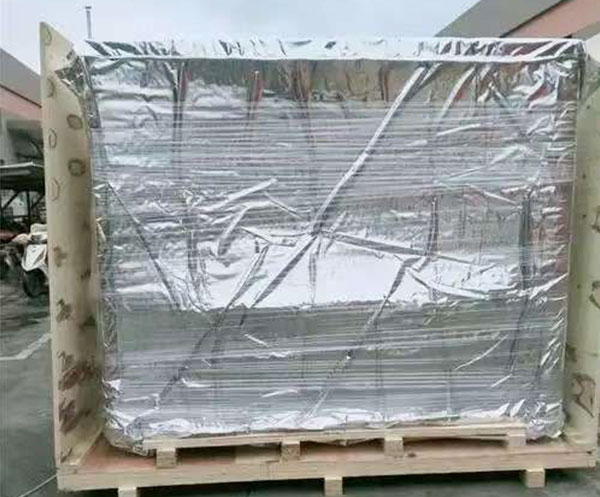
AL Layer (Aluminum Foil Layer): The core barrier layer, completely isolating light, oxygen, and moisture, is crucial for moisture and oxidation prevention.
NY Layer (Nylon Layer): A reinforcing layer that provides the bag with toughness and puncture resistance, preventing damage from transport compression.
PE layer: The inner layer is a heat-sealable layer, possessing excellent sealing and leak-proof properties, and can withstand the high temperatures of vacuum heat sealing.
This multi-layered composite structure forms a comprehensive protective barrier, effectively preventing damage to the packaged contents from external environmental factors. The bag thickness is generally between 0.12mm and 0.18mm, and can be customized according to the type of goods and transportation cycle to achieve better protection.
During sea transportation, cargo is often exposed to complex environments such as high humidity, salt spray, and temperature fluctuations, which can easily lead to moisture absorption and oxidation. Vacuum Aluminum Foil Packaging Bags, with their excellent barrier properties, have become an ideal choice for moisture-proof and oxidation-proof export packaging. The following is a complete export packaging solution using vacuum Aluminum Foil Bags for sea transport.
Vacuum Aluminum Foil Bags
Priority is given to three-layer or four-layer composite structures combining aluminum foil with PE, CPP, or similar materials. These structures feature extremely low moisture vapor transmission rate (MVTR) and oxygen transmission rate, effectively blocking water vapor, oxygen, and ultraviolet light. Bag dimensions should be customized according to cargo size to avoid protection failure caused by oversized or undersized packaging. At the same time, bag thickness should match cargo weight and transport intensity requirements to prevent damage during handling and shipment.
Auxiliary Materials
Marine-grade desiccants, such as montmorillonite or silica gel, are used in combination, with quantities calculated based on cargo volume and environmental humidity. Typically, the internal relative humidity should be maintained below 38%. Humidity indicator cards are placed inside the bag to allow real-time monitoring of internal moisture levels and early identification of potential risks.
Pre-treatment
Clean the cargo surface to remove oil, moisture, and dust. For metal products, additional rust-prevention treatment may be applied, such as spraying a rust inhibitor. Packaging should only proceed after the surface is fully dry.
Bag Loading and Sealing
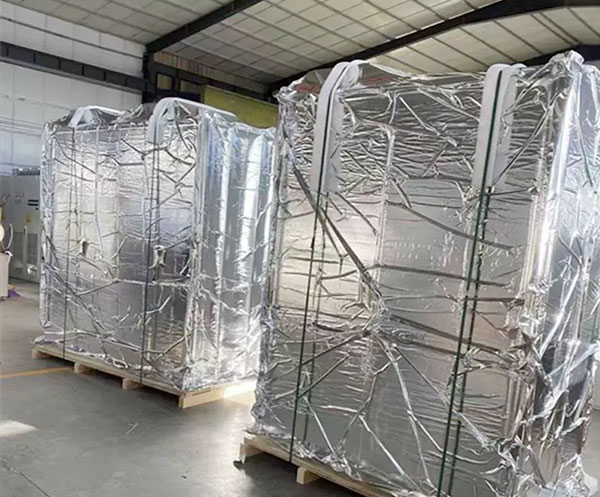
Place the cargo into the customized aluminum foil bag, leaving at least 3 cm of sealing allowance at the opening. Insert the desiccant and humidity indicator card. Use a vacuum sealing machine in “vacuum + heat sealing” mode. After vacuuming, perform heat sealing at a temperature of approximately 180–250°C for 2–3 seconds with appropriate pressure. Ensure the seal is smooth, free of bubbles or wrinkles, and fully airtight.
Outer Carton Reinforcement
Place the sealed aluminum foil bag into a corrugated carton or onto a fumigated wooden pallet. Fill voids with cushioning materials such as EPE foam to prevent compression or impact damage. Finally, seal the outer package and apply moisture-proof handling labels.
After packaging, conduct random inspections, such as checking for air leakage under manual compression or verifying seal strength by pulling tests. Water pressure or leak detection tests may also be used to confirm sealing integrity. During transportation, avoid contact with sharp objects, stack cargo properly, and minimize excessive stress on the packaging to ensure the goods remain in a stable, moisture-proof and oxidation-resistant environment throughout the sea voyage.
Frequently Asked Questions (FAQs):
1.How effective are vacuum Aluminum Foil Bags in high humidity and salt spray environments during sea transport?
These bags utilize a multi-layered, high-barrier composite structure. The aluminum foil layers have extremely low permeability to water vapor and oxygen, effectively isolating the bag from the high humidity and salt spray corrosion of the sea environment. After vacuuming, the oxygen content inside the bag is significantly reduced. Combined with desiccants, this helps maintain a stable internal environment during long-term sea transport, reducing the risk of moisture absorption and oxidation.
2.How are aluminum foil bags matched for goods of different weights and sizes?
Bag specifications need to be customized based on the size, weight, and transport method of the goods. For heavy or angular goods, puncture resistance and abrasion resistance are improved by increasing material thickness and optimizing the composite layer structure. For precision or regular-shaped products, the focus is on controlling the bag size and sealing allowance to ensure vacuum effectiveness and overall protective performance.
3.Do vacuum aluminum foil bags need to be used in conjunction with other protective materials?
In practical export applications, a "multi-layered protection system" is generally recommended. Vacuum aluminum foil bags serve as the core barrier packaging, and can be used in conjunction with desiccants, humidity indicator cards, and necessary rust-preventive materials. Simultaneously, external packaging such as cartons or wooden pallets with cushioning materials enhances overall pressure resistance and transport stability.
4.How to ensure sealing quality and prevent air leakage during transport?
Sealing quality primarily depends on material matching and process control. A stable vacuum heat-sealing process must be used during packaging, with reasonable control of temperature, time, and pressure to ensure a smooth, wrinkle-free, and intact seal. Before shipment, the integrity of the seal can be confirmed through compression testing or random sampling to reduce the risk of air leakage during transport from the source.
5.Which export products are suitable for sea freight vacuum Aluminum Foil Packaging Bags?
This packaging solution is suitable for export goods with high requirements for moisture and oxidation prevention, including machinery, metal parts, electronic products, precision instruments, and some chemical products. It is particularly suitable for sea freight scenarios with long transportation cycles and high humidity at the destination, effectively improving the stability of the goods upon arrival at the port.
This website uses cookies to ensure you get the best experience on our website.
 Español
 Pусский
 Deutsch
 العربية



 WhatsApp
 Phone
Phone