

I. Core Characteristics of Wooden Crate Vacuum Aluminum Foil Packaging Bags
(I) Dual Protection: High-Strength Physical Resistance + High-Efficiency Environmental Barrier
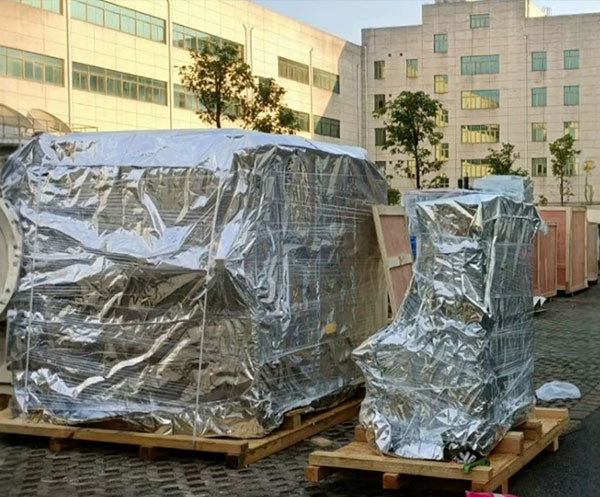
The core advantage of wooden crate Vacuum aluminum foil packaging bags lies in the dual protection system of "wooden crate structure + vacuum Aluminum Foil Bag". The wooden crate is made of solid wood or composite board, possessing excellent physical strength and able to withstand compression, collision, and drop impacts during transportation. Standard wooden crates use 15-25mm thick solid wood boards (such as pine or fir), with a load-bearing capacity of 500-2000kg. In a 1.8-meter drop test, the intact rate of a fully loaded wooden crate can reach over 95%, effectively protecting the internal vacuum aluminum foil bag and its contents from external damage. Simultaneously, the surface of the wooden crate can be treated with waterproofing and anti-corrosion (such as applying environmentally friendly varnish), further enhancing its durability in humid and corrosive environments and extending its service life.
The inner vacuum-sealed aluminum foil bag plays a crucial role in environmental barrier protection. The aluminum foil layer has an oxygen permeability as low as 0.1 cc/(m²・24h・atm) and a water vapor permeability of less than 1 g/(m²・24h), effectively isolating oxygen, water vapor, ultraviolet radiation, and odors. Combined with vacuum sealing technology, the oxygen content inside the bag can be reduced to below 1%, significantly inhibiting microbial growth and material oxidation. For example, in the chemical industry, powdered catalysts packaged in wooden crates with vacuum aluminum foil can have their shelf life extended from 3 months with ordinary wooden crates to 12 months, while maintaining catalyst activity. In the food industry, bulk grains (such as wheat and corn) packaged in vacuum aluminum foil bags can effectively prevent moisture, mold, and insect infestation, reducing the loss rate from 5% to below 1%. This dual protection of "external impact resistance + internal corrosion resistance" allows the wooden crate Vacuum aluminum foil packaging bag to adapt to complex storage and transportation environments.
(II) Stable Structure: Large Capacity Load-Bearing Capacity + Convenient Stacking and Storage
The wooden crate vacuum aluminum foil packaging bag is designed for the needs of bulk materials, featuring a stable, large-capacity structure. The wooden crate volume is typically 50-500L, suitable for packaging materials weighing 500-2000kg, reducing the number of packaging items and handling operations, and improving logistics efficiency. For example, chemical companies using 1000kg wooden crate vacuum aluminum foil packaging bags to package polyethylene granules achieve 20 times higher handling efficiency compared to traditional 50kg Woven Bags, while reducing warehouse space occupancy by approximately 35%. The wooden crates have a square or rectangular structure with reinforced corners (such as metal corner protectors), ensuring even stress distribution during stacking. The stacking height can reach 3-4 meters (traditional unreinforced wooden crates typically stack to a height of no more than 2 meters), significantly improving warehouse space utilization.
The internal vacuum aluminum foil bag fits snugly against the wooden crate, featuring a three-dimensional design that allows it to tightly adhere to the crate's inner wall when opened, preventing damage from impacts caused by movement during transport. Furthermore, the vacuum aluminum foil bag can be customized to fit the crate's dimensions, ensuring no excess space and further enhancing structural stability. For example, in the packaging of precision medical devices, the vacuum aluminum foil bag can completely enclose the device, and combined with the crate's support, effectively prevents vibrations during transport from affecting the device's precision, ensuring product performance.
(III) Safety and Compliance: Environmentally Friendly Materials + Industry Standard Compliance
The wooden crate vacuum aluminum foil packaging bag strictly adheres to environmental and safety standards in its material selection, ensuring safety when in contact with different types of materials. The wooden crate uses FSC-certified solid wood or environmentally friendly composite boards with formaldehyde emissions ≤0.124mg/m³, preventing contamination of food and pharmaceutical materials; the surface coating uses food-grade environmentally friendly varnish, with no irritating odor, and complies with GB 18581-2021 "Limits of Hazardous Substances in Wood Coatings" standard.
The inner vacuum aluminum foil bag uses food-grade or industrial-grade composite materials, with aluminum foil purity ≥99.5%. The inner PE Film meets the requirements of GB 4806.7-2016 "National Food Safety Standard - Plastic Materials and Products for Food Contact," ensuring no harmful substances migrate when in contact with food and pharmaceutical intermediates. For flammable and explosive materials (such as certain organic chemical raw materials), an antistatic layer can be added to the vacuum aluminum foil bag, with surface resistance controlled at 10^6-10^11 Ω, meeting the standard of GB 12476.1-2021 "Electrical Equipment for Combustible Dust Environments," preventing safety accidents caused by electrostatic discharge. This comprehensive safety and compliance design allows the wooden box vacuum aluminum foil packaging bag to meet the stringent requirements of multiple industries such as food, pharmaceuticals, and chemicals.
(IV) Flexible Adaptability: Multi-Specification Customization + Multi-Function Expansion
The wooden box vacuum aluminum foil packaging bag can be flexibly customized according to the characteristics of the materials and the usage scenario to meet diverse needs. In terms of specifications, the wooden crates are customizable in size from 600mm×400mm×300mm (72L volume) to 1500mm×1000mm×800mm (1200L volume), with vacuum-sealed aluminum foil bags matching the dimensions to ensure compatibility. Load-bearing capacity can be adjusted according to requirements, with the thickness of the wooden panels and reinforcement methods ranging from 500kg to 2000kg, suitable for bulk goods of varying weights.
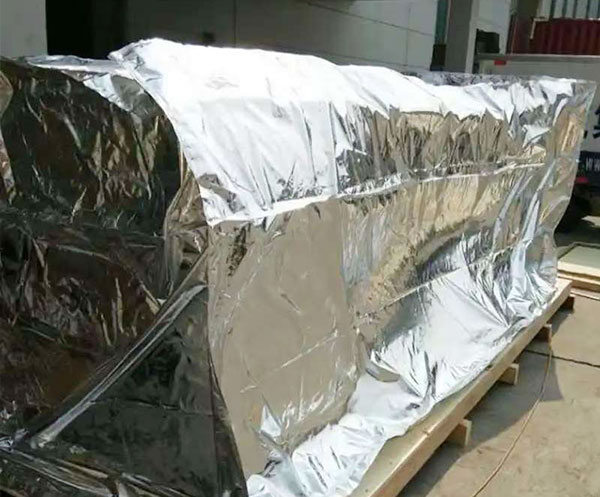
Functionally, it can be expanded according to material needs: For high-humidity environments (such as coastal warehousing), wooden crates can be equipped with a moisture-proof layer (such as PET moisture-proof film), and vacuum aluminum foil bags can be equipped with an EVOH high-barrier layer to further reduce water vapor permeability; for materials that require regular inspection, wooden crates can be designed with movable lids, which, together with the sealing valve of the vacuum aluminum foil bags, facilitate opening for inspection and resealing; for precision electronic components, cushioning materials (such as EVA foam) can be added inside the wooden crate, and an antistatic layer can be added to the vacuum aluminum foil bags to achieve triple protection of "cushioning + antistatic + barrier". This highly flexible adaptability allows wooden crate vacuum aluminum foil packaging bags to meet the personalized packaging needs of different industries and materials.
II. Key Points of the Production Process of Wooden Crate Vacuum Aluminum Foil Packaging Bags
(I) Raw Material Selection and Quality Control
The quality of raw materials directly determines the performance of wooden crate vacuum aluminum foil packaging bags. During the production process, strict screening of wooden crate boards, vacuum aluminum foil bag substrates, adhesives, and auxiliary materials is required. When selecting wooden crate boards, pay attention to material, strength, and environmental friendliness: Solid wood boards should be made of tough, non-deformable woods such as pine and fir, with a moisture content controlled between 12% and 18% (too high a moisture content easily leads to deformation and cracking, too low a moisture content easily leads to brittle fracture). The board's bending strength should be ≥15MPa, and its compressive strength ≥20MPa. Composite boards must comply with GB/T 4897-2015 "Particleboard" standard, with a static bending strength ≥18MPa and internal bond strength ≥0.7MPa.
Vacuum aluminum foil bag substrates include aluminum foil, PE film, and PET film. Aluminum foil thickness is 9-12μm, purity ≥99.5%, surface free of pinholes (≤1 pinhole/m²) and oxide spots, inspected roll by roll using a light inspection method. PE film thickness is 80-120μm, made of linear low-density polyethylene (LLDPE), heat-sealing temperature 120-160℃, heat-sealing strength ≥30N/15mm. PET film thickness is 12-25μm, tensile strength ≥180MPa, temperature resistance ≥120℃, ensuring no deformation during processing and use. Solvent-free polyurethane adhesives are used, meeting food-grade standards, with a bonding strength ≥5N/15mm, preventing delamination between the aluminum foil and plastic layers. Auxiliary materials such as wooden crates, metal corner protectors, and sealing strips must be made of rust-resistant and aging-resistant materials to ensure long-term stability.
(II) Wooden Crate Processing and Structural Optimization
The processing of wooden crates must prioritize structural stability and protective performance. Core processes include board cutting, splicing, reinforcement, and surface treatment. Board cutting utilizes CNC cutting equipment, with dimensional deviations controlled within ±1mm to ensure subsequent splicing accuracy. Splicing employs mortise and tenon joints or bolt connections. For mortise and tenon joints, the gap between the tenon and mortise must be ≤0.5mm. For bolt connections, galvanized bolts (diameter ≥8mm) are used with a spacing ≤200mm to ensure a secure connection. Metal corner protectors (thickness ≥1mm) are added to the edges and corners of the wooden crates and secured with rivets (rivet spacing ≤50mm) to enhance impact resistance. Reinforcing ribs (width ≥50mm) are added to the bottom and lid of the crates to enhance load-bearing capacity and prevent deformation during stacking.
Surface treatment processes should be adjusted according to the usage scenario: wooden crates for humid environments should be coated with 2-3 coats of environmentally friendly waterproof varnish, with a coating thickness ≥50μm, to ensure waterproofing; wooden crates for corrosive environments can be wrapped with galvanized steel sheets for easily corroded parts, or coated with anti-corrosion coatings (such as epoxy resin coatings) to improve corrosion resistance. In addition, wooden crates must have pre-reserved vacuum interfaces and inspection ports. The interface dimensions should match the valves of the vacuum aluminum foil bags, and the inspection ports should be fitted with sealing strips to ensure a tight seal when closed, preventing external moisture from entering.
Precision Electromechanical Equipment Special Wooden Box Vacuum aluminum foil packaging Bag – Detailed Overview
The precision electromechanical equipment special wooden box vacuum aluminum foil packaging bag is a composite protective solution designed specifically for high-value, fragile precision equipment. By combining an inner vacuum Aluminum Foil Bag for barrier protection with an outer wooden crate for structural support, it provides comprehensive protection throughout storage and transportation, particularly suitable for international sea freight, long-distance land transport, and other complex logistics scenarios.
The inner vacuum aluminum foil bag is made of multi-layer composite materials. The aluminum foil layer forms a dense barrier that effectively blocks moisture, oxygen, and UV light. Combined with vacuum sealing technology, it creates a dry, oxygen-free environment that prevents internal components from corrosion, oxidation, or performance degradation. Additionally, it offers excellent anti-static properties to prevent static accumulation from damaging sensitive electronic circuits. The outer wooden crate is constructed from high-strength, compliant plywood and reinforced to withstand stacking pressure and handling impacts, preventing equipment displacement or deformation, while also meeting international sea freight ISPM-15 fumigation-free standards.
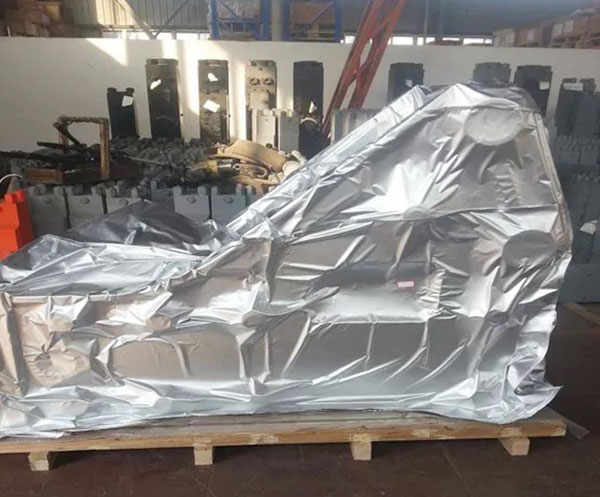
This packaging solution can be precisely customized according to the equipment’s size and shape. The interior can be fitted with cushioning materials to enhance shock absorption. With strong sealing and high adaptability, it effectively mitigates transportation risks, meeting the high-protection requirements of precision electromechanical equipment. It represents an optimal balance of protection, compliance, and customization for professional industrial packaging.
Frequently Asked Questions (FAQs)
1. What types of equipment are these wooden crates and vacuum Aluminum Foil Packaging Bags suitable for?
We are specifically designed for precision electromechanical equipment, high-value electronic components, optical instruments, and fragile hardware. Whether transported internationally by sea or long-distance by land, the packaging bags provide comprehensive protection against moisture, impact, oxidation, and static electricity damage.
2. Can packaging be customized according to equipment size?
Yes. We offer fully customized services, precisely tailoring vacuum Aluminum Foil Bags and wooden crates to the size, shape, and protection requirements of your equipment. This ensures the equipment remains stable and secure during transport, maximizing protection.
3. How does the vacuum aluminum foil bag and wooden crate structure ensure safe transport?
The inner vacuum aluminum foil bag uses multi-layer composite materials to effectively isolate moisture, oxygen, and ultraviolet rays, while also providing anti-static properties. The outer wooden crate is reinforced with high-strength plywood, making it pressure-resistant and stackable. This double-layer combination effectively reduces the risk of collision and compression during transport.
4. Do these packages meet international maritime and environmental standards?
Our wooden crates meet the International Service for Marine Fumigation-Free (ISPM-15) standard, and our aluminum foil packaging complies with export and environmental regulations such as RoHS and REACH, ensuring compliant transportation and avoiding returns and compliance risks.
5. How long does the packaging provide moisture and oxidation protection during long-distance transportation?
Under normal transportation and storage conditions, vacuum-sealed aluminum foil bags provide continuous protection against moisture, oxidation, and dust, maintaining a dry internal environment and effectively protecting precision equipment and sensitive components throughout the journey. Actual protection effectiveness may vary slightly depending on the transportation environment and the sealing of the packaging.
This website uses cookies to ensure you get the best experience on our website.
 Español
 Pусский
 Deutsch
 العربية



 WhatsApp
 Phone
Phone