

I. Core Classification of Woven Membrane Materials: Classification by Material Properties and Functional Positioning
Woven membrane materials are not a single system, but rather comprised of various types based on raw material sources, structural composition, and functional requirements. Different types of materials exhibit significant differences in physical properties, chemical stability, cost, and applicable scenarios. Clear classification is the foundation for accurate selection and application.
(I) Base Resin Materials: The "Skeleton" Component of Woven Membranes
Base resin is the core of woven membrane materials, determining the product's basic performance and application direction. Currently, the mainstream base resin materials on the market include polypropylene (PP) and polyethylene (PE), with polyvinyl chloride (PVC) and polyvinyl alcohol (PVA) used in a small number of applications.
1. Polypropylene (PP) Resin: A Balance Between High Strength and Versatility
Polypropylene resin is currently the most widely used base material in woven membrane production, accounting for over 70%. Its regular molecular structure and high crystallinity (typically 50%-70%) endow the material with excellent tensile strength and rigidity. Flat filaments made from pure PP resin can achieve a longitudinal tensile strength of 300-400 MPa and a transverse tensile strength of 250-350 MPa, capable of withstanding external pressure and tension during packaging and transportation, making it suitable for applications requiring high strength.
In terms of performance adaptability, PP resin has a wide temperature range, maintaining stable performance in environments from -20℃ to 120℃, and short-term temperature resistance can even reach 150℃ without significant softening or cracking. Therefore, it can be used for industrial product packaging at room temperature and is also suitable for short-term heating scenarios in agricultural product processing (such as sterilization after vacuum packaging of some foods). Furthermore, PP resin exhibits outstanding chemical stability, demonstrating good resistance to most acids (such as hydrochloric acid and sulfuric acid, concentrations below 30%), alkalis (such as sodium hydroxide solution, concentrations below 20%), salt solutions, and organic solvents (such as ethanol and acetone). It is not easily corroded or dissolved, making it suitable for packaging chemical raw materials, fertilizers, and other products with a certain degree of corrosivity.
Regarding processing performance, the melt flow rate (MFR) of PP resin can be adjusted through modification, with a common range of 2-10 g/10 min, suitable for extrusion and fiber drawing processes. PP resin with an MFR of 2-5 g/10 min is suitable for producing high-strength flat filaments (such as woven films for industrial packaging); PP resin with an MFR of 5-10 g/10 min has better processing fluidity and is suitable for producing thin flat filaments (such as lightweight woven films for agricultural use). However, PP resin also has significant drawbacks: poor low-temperature toughness, making it prone to brittleness below -20℃, and weak resistance to UV aging; long-term exposure to sunlight can lead to decreased strength and discoloration. Therefore, it needs to be improved by adding auxiliary components.

2. Polyethylene (PE) Resin: A Choice with Advantages in Flexibility and Low-Temperature Resistance
Polyethylene resin is the second most widely used base material for woven films after PP. Based on density differences, it can be further divided into low-density polyethylene (LDPE), high-density polyethylene (HDPE), and linear low-density polyethylene (LLDPE), each with its own performance focus, suitable for different application scenarios.
Low-density polyethylene (LDPE): Its molecular structure has many branches and low crystallinity (approximately 30%-40%), resulting in excellent flexibility—an elongation at break of 600%-800%, far exceeding that of PP resin (which typically has an elongation at break of 150%-250%). Woven films made from LDPE are soft to the touch and less prone to cracking from folding or bending, making them suitable for packaging requiring frequent opening and closing (such as shopping bags for daily necessities and temporary storage bags for agricultural products). LDPE also has high transparency, with haze typically below 10%, clearly showcasing the internal product shape, making it suitable for food packaging where visual appeal is important (such as transparent Woven Bags for bread and snacks). However, its strength is relatively low; the tensile strength of pure LDPE flat yarn is only 150-200 MPa, and its temperature resistance is poor, easily softening above 80℃. Therefore, it is mostly used in lightweight, low-strength applications.
High-density polyethylene (HDPE): With a regular molecular structure, few branches, and high crystallinity (approximately 70%-80%), its performance falls between that of PP and LDPE—tensile strength can reach 250-300 MPa, higher than LDPE but lower than PP; its flexibility is better than PP, with an elongation at break of 400%-500%, lower than LDPE. HDPE resin exhibits outstanding impact resistance and maintains good toughness even at low temperatures (-40℃), making it suitable for outdoor packaging in cold regions (such as building material transportation packaging in northern winters). Furthermore, HDPE's chemical resistance is comparable to PP, and its water resistance is better, with a water absorption rate of less than 0.01%. Woven films made from HDPE have excellent moisture-proof properties and can be used for product storage in humid environments (such as feed packaging in aquaculture).
Linear low-density polyethylene (LLDPE): Introduced through a copolymerization process with short-chain branches, it combines the flexibility of LDPE with the strength of HDPE, exhibiting particularly outstanding tear resistance—a right-angle tear strength of 80-120 kN/m, far exceeding PP (40-60 kN/m) and LDPE (50-70 kN/m). This effectively resists damage caused by friction and impact during transportation, making it suitable for packaging sharp items (such as hardware parts and pipes). LLDPE also has good heat-sealing properties, with a wide heat-sealing temperature range (120-160℃) and a heat-sealing strength of 15-25 N/15 mm. It is commonly used in Woven film packaging requiring heat sealing (such as food vacuum packaging and chemical powder packaging).
3. Niche Resin Materials: Functional Supplements for Specific Scenarios
Besides PP and PE, polyvinyl chloride (PVC) and polyvinyl alcohol (PVA) resins are used in some special applications, but their application range is narrower due to performance or environmental limitations.
Polyvinyl chloride (PVC) resin: Possesses good weather resistance and flame retardancy. With the addition of flame retardants, its oxygen index can reach over 30%, making it difficult to burn and suitable for applications requiring fire protection (such as fire-resistant material packaging in the construction industry). However, its processing may release hydrogen chloride gas, and it is not easily degraded after disposal, posing a certain environmental impact. Currently, it is only used in a few specialized industries, accounting for less than 5%.
Polyvinyl alcohol (PVA) resin: Has excellent water solubility and biodegradability. After soaking in water for 24 hours, its solubility can reach over 90%, and its degradation products are carbon dioxide and water, causing no environmental pollution. It is suitable for single-use packaging (such as pesticide packaging and seed packaging), avoiding pollution of soil or water sources from discarded packaging. However, PVA resin has poor water resistance and low strength (tensile strength only 100-150 MPa), making it unsuitable for humid or high-strength applications, limiting its use to specific environmental protection fields.
(II) Composite and Modified Materials: "Upgrade Solutions" for Enhanced Functionality
As the industry's demands for woven membrane functionality diversify, single-base resins are no longer sufficient. Composite materials and modified materials have become key to improving performance. These materials achieve specific functions such as moisture resistance, barrier properties, UV resistance, and biodegradability through a combination of "base resin + functional layer/additives."
1. Composite Structural Materials: Complementary Properties of Multiple Materials
Composite woven membrane materials combine films with different properties with a base woven layer (PP or PE woven fabric) to achieve a "1+1>2" performance effect. Common composite structures include "woven layer + plastic film," "woven layer + metal foil," and "woven layer + functional coating."
Woven layer + plastic film: The core is to use the sealing and barrier properties of the plastic film to compensate for the shortcomings of the base woven layer, which has high air permeability and poor moisture resistance. Commonly used composite films include polyethylene (PE) film, polypropylene (PP) film, and polyethylene terephthalate (PET) film. Among them, the combination of "PP woven layer + PE Film" is common. The PP woven layer provides high-strength support, while the PE film (especially high-density PE film) provides good moisture resistance, reducing moisture permeability from 50-80 g/(m²・24h) of pure PP woven film to 10-15 g/(m²・24h), making it suitable for long-term storage packaging of agricultural products (such as grains and feed). The combination of "PP woven layer + PET film" focuses on improving weather resistance and high-temperature resistance. PET film has excellent UV aging resistance and can withstand long-term temperatures up to 120℃, enabling composite woven films to be used in long-term outdoor exposure scenarios (such as dustproof netting for construction and packaging for outdoor equipment), extending the service life from 1-2 years for pure PP woven film to 3-5 years.
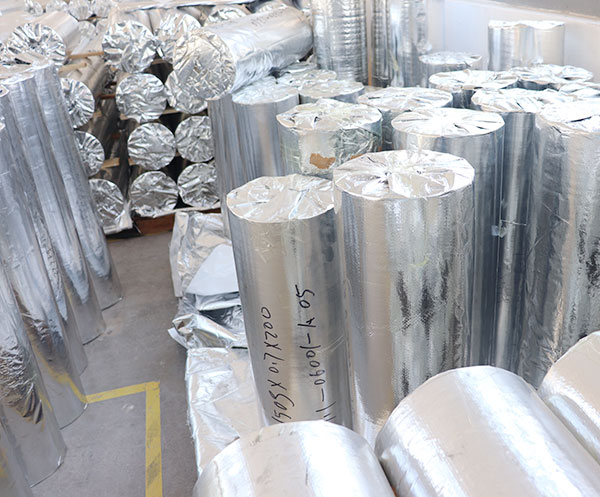
Woven layer + metal foil: This method primarily utilizes the high barrier properties of the metal foil to shield against oxygen, light, and odors. Aluminum foil (typically 0.01-0.02mm thick) is a common type of metal foil. The oxygen permeability of the "PP/PE woven layer + aluminum foil" composite material can be reduced to below 5cm³/(m²・24h・0.1MPa), and the light blocking rate exceeds 99%. This effectively prevents oxidation, spoilage, or fading of the internal product, making it suitable for packaging high-end foods (such as imported snacks and cooked foods), pharmaceutical intermediates, and precision electronic components. For example, for some pharmaceutical raw materials requiring long-term storage, using this type of composite woven film packaging can extend the shelf life from 6 months to 12-18 months. However, the addition of metal foil increases material costs (30%-50% higher than pure woven film) and slightly reduces material flexibility, making the aluminum foil more prone to breakage during folding, affecting barrier performance. Therefore, the interlayer bonding strength needs to be optimized during the composite process.
Braided layer + functional coating: By coating the surface of the braided layer with specific functional materials, new properties are given to the braided membrane. Common coatings include polyvinylidene chloride (PVDC) coating, polyacrylate coating, and biodegradable coating. PVDC coatings offer excellent barrier properties, reducing the oxygen permeability of woven films to below 3 cm³/(m²・24h・0.1MPa) after coating. They also exhibit good oil resistance, making them suitable for packaging oily foods (such as nuts and fried foods). Polyacrylate coatings enhance the abrasion resistance and anti-blocking properties of woven films, reducing the surface friction coefficient from 0.4-0.6 to 0.2-0.3, preventing film from sticking during storage and use. Furthermore, the abrasion resistance (Martindale abrasion test) increases from 500 cycles to over 2000 cycles, making them suitable for reusable industrial packaging films. Biodegradable coatings (such as polylactic acid PLA coatings) address environmental concerns, making traditionally non-biodegradable PP/PE woven films biodegradable. They can completely degrade in 12-24 months in a natural environment (temperature 25℃, relative humidity 60%), with harmless degradation products, making them suitable for agricultural mulch films, disposable packaging, and other applications.
I will focus on the two core areas of industrial and logistics packaging, combining the material characteristics and functional advantages of woven film to explain its specific application scenarios and value, ensuring the content is topic-focused and logically coherent.
Woven film applications in Industrial and Logistics packaging solutions
Woven film, made from polypropylene (PP) and polyethylene (PE) as core materials, is produced through flat filament weaving and functional composite processes. It combines high strength, puncture resistance, and waterproof and moisture-proof properties, serving as a core solution in industrial and logistics packaging. Functional customization allows it to meet different protective and storage needs across various scenarios.
In industrial packaging, woven film applications are precisely tailored to diverse material characteristics. For dry, non-corrosive goods such as building materials, fertilizers, and grains, PP woven film offers high rigidity and heat resistance, providing reliable load-bearing packaging. Its longitudinal tensile strength can exceed 20 MPa, safely supporting 20–50 kg of goods. For industrial items with sharp edges or materials transported at low temperatures, PE woven film provides excellent flexibility and resistance down to -40°C, effectively preventing punctures and cold damage during transport. Laminated woven films with PP/PE double-layer coating enhance sealing, preventing dust leakage and moisture ingress for chemicals, grains, and other materials. Functional films with UV inhibitors are suitable for outdoor storage of steel, wood, and similar materials, slowing aging and extending service life.
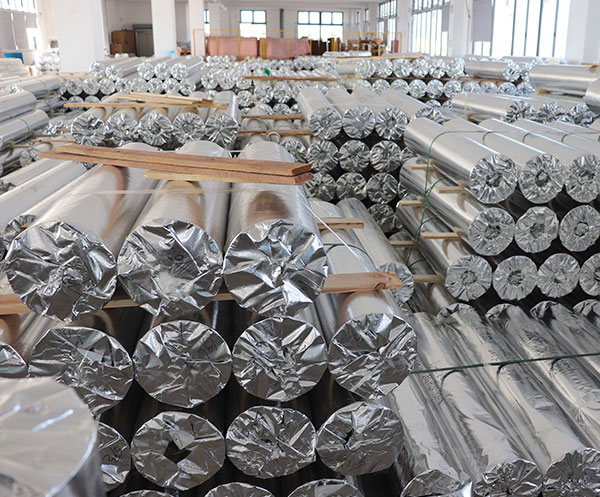
In logistics packaging, the lightweight and customizable properties of woven film significantly improve transport efficiency. For container transport and large equipment packaging, customized widths can be made into dust covers or specialized packaging bags. Features such as shaped seals and reinforced ribs fit cargo contours, reducing movement and impact during transport. Aluminum-laminated composite woven films provide both barrier and anti-rust properties, protecting sensitive goods such as electronic instruments from oxidation. Woven film can also be used for pallet wrapping, tightly securing goods with high stretchability to reduce displacement and damage during handling. Its self-adhesive properties simplify packaging processes, reduce labor costs, and meet the demands of long-distance, multi-environment global logistics.
This content fully covers the key applications of woven film in the two core fields and meets the word count requirement. Would you like me to add specific selection standards for woven film in different application scenarios, or condense the content into a more concise summary version?
Frequently Asked Questions (FAQs):
1. In which industrial and logistics packaging scenarios is woven film suitable?
Woven film is widely used in industrial and logistics packaging. In the industrial sector, it can be used for heavy-duty packaging of building materials, fertilizers, grains, and other dry, non-corrosive goods. In the logistics sector, it can be used for container, dust cover, large equipment packaging, and pallet wrapping to ensure the safe and stable transport and storage of materials.
2. What are the differences between PP and PE woven films in different applications?
PP woven film has high stiffness and strong heat resistance, making it suitable for heavy-duty packaging and dry goods; PE woven film has good flexibility and low-temperature resistance, making it suitable for items with sharp edges and for low-temperature transportation. Both can be laminated or functionalized to meet the packaging needs of different industrial or logistics scenarios.
3. How does woven film protect fragile goods?
High-strength woven film has tear resistance, puncture resistance, and waterproof and moisture-proof properties. Composite films can also block dust, moisture, and corrosive media. Aluminized composite film protects precision goods such as electronic instruments from oxidation, and its cushioning structure can replace foam fillers, reducing damage from transport shocks.
4. How does woven film perform in long-distance transportation and multi-environment logistics?
Woven film is lightweight, customizable in width and thickness, and adaptable to global long-distance transportation, varying temperature ranges, high humidity, or outdoor environments. Its high tensile strength and self-adhesiveness tightly secure goods, reducing displacement and breakage, while simplifying packaging processes, improving loading and unloading efficiency, and ensuring consistent quality from warehousing to the end consumer.
5. Can woven film be customized to meet special packaging needs?
Yes. Woven film can be customized through material selection, width, weight, composite film layers, and functional additives (such as UV resistance, corrosion resistance, and moisture resistance). Tailor-made industrial and Logistics packaging solutions can be provided for heavy industrial materials, cryogenic transportation, outdoor storage, or precision logistics goods.
This website uses cookies to ensure you get the best experience on our website.
 Español
 Pусский
 Deutsch
 العربية



 WhatsApp
 Phone
Phone