

In the modern industrial packaging field, while standardized products can meet most routine needs, customized solutions are particularly important when dealing with equipment of unusual shapes, high value, or extremely high protection requirements. Metallized woven handmade equipment bags are precisely such professional packaging products that integrate modern materials science with traditional craftsmanship. Through tailor-made design and meticulous workmanship, they provide precise and reliable protection for various industrial equipment.
I. The Unique Value of Customized Design
The essential difference between metallized woven handmade equipment bags and standardized products lies in their completely customized nature. Each handmade bag is specifically designed according to the specific shape and protection requirements of the equipment being protected. This customization process begins with precise dimensional measurement. Technicians use 3D scanners or precision measuring tools to measure the equipment from all angles, recording every contour curve, angular feature, and special structure. This data becomes the basis for subsequent cutting and manufacturing.
The factors to be considered during the design phase are extremely complex. In addition to the basic dimensions of the equipment, it is also necessary to analyze various risks that may be encountered during transportation and storage. For equipment with sharp edges, reinforced corner guards need to be designed in the corresponding locations; for precision surfaces, sufficient buffer space needs to be reserved; for equipment requiring regular inspection, reusable windows need to be designed. These detailed considerations reflect the depth of design in handmade bags.
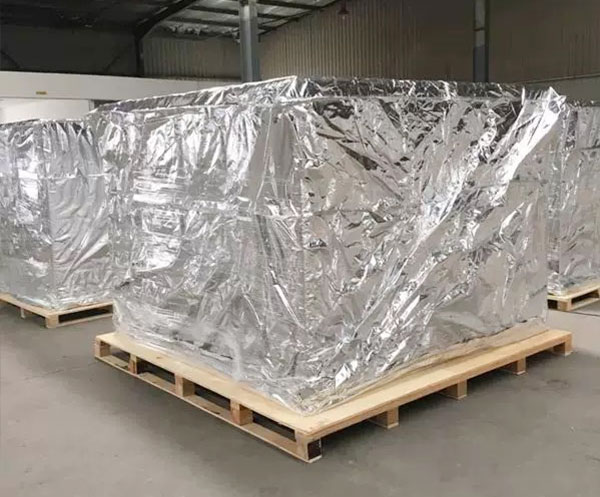
Material selection also requires customization. The strength specifications of the woven fabric are determined based on the weight of the equipment, the thickness and process of the aluminizing layer are selected based on the protection period, and the sealing level and protection requirements are determined based on environmental conditions. This precise material ratio ensures that the packaging bag provides sufficient protection without wasting materials. For example, for equipment stored outdoors for extended periods, materials with stronger UV resistance are chosen; for equipment used in marine environments, special treatments against salt spray corrosion are employed.
II. The Essence of Handmade Craftsmanship
The process of making handmade bags is truly an art. The cutting process requires experienced craftsmen to precisely cut materials according to the design drawings. Unlike the standardization of machine cutting, hand cutting can better handle curves and irregular shapes, ensuring optimal material utilization. Craftsmen use specialized cutting tools to precisely cut along the drawn lines, while paying attention to keeping the edges of the material neat and preventing the woven fabric from unraveling.
Assembling and stitching are key steps showcasing craftsmanship. For large packaging bags, multiple materials need to be joined together. Skilled workers use specialized hot air welding guns, employing steady techniques and speeds to ensure even and smooth seams. When dealing with corners and complex curved surfaces, manual operation allows for precise adjustments that are difficult to achieve mechanically, ensuring the packaging bag perfectly fits the shape of the equipment. Seams are double-stitched and sealed on the inside to ensure complete protection.
The aluminizing process requires specialized skills. Using manually controlled spraying equipment, a special coating is evenly applied to the woven fabric surface, forming a continuous metallic protective layer. This process demands highly experienced operators who can ensure complete coverage while avoiding excessive thickness in certain areas that could compromise material flexibility. After aluminizing, a curing process is required to ensure a strong bond between the metal layer and the substrate.
The attention to detail highlights the refinement of handmade packaging. Additional sealing at seams, reinforcement at stress points, and special sealing structures at openings are details that are difficult to achieve with standardized products. Handcrafted production also allows for the addition of special features such as observation windows, humidity indicators, and lifting straps to the packaging bags, enhancing their practicality and convenience.
III. Scientific Proportioning of the Material System
The material system of the aluminized woven handmade bags for equipment is meticulously designed and rigorously selected. The base material is high-strength polypropylene woven fabric, with its warp and weft density specifically customized according to load-bearing requirements. For heavy equipment, high-density woven fabric is used, with multiple layers of reinforcement in key areas; for light and precision equipment, a softer woven fabric is selected to avoid abrasion to the equipment surface.
The manufacturing process of the aluminized layer is particularly sophisticated. By controlling the temperature, time, and process parameters of the coating, a dense and uniform aluminum layer is formed. This metallic barrier not only effectively blocks oxygen and moisture but also provides a certain degree of electromagnetic shielding. The thickness of the aluminized layer on the handmade bag can be adjusted according to protection requirements, achieving an optimal balance between protective effect and cost.
The design of the protective system reflects scientific principles. Employing a multi-layered protective structure, the inner layer is a soft protective pad to prevent scratches on the equipment surface; the middle layer is a cushioning material to absorb impact energy during transportation; and the outer layer is an aluminized woven fabric, providing primary environmental protection. This multi-layered structure ensures the safety of the equipment in harsh environments.
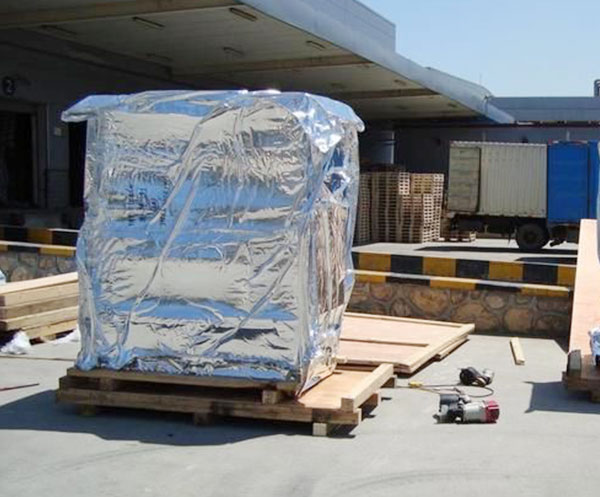
The choice of sealing materials is equally important. Appropriate sealing strips are selected based on the operating temperature range to ensure elasticity in both high and low temperature environments. The sealing structure is designed to accommodate repeated opening and closing; some high-end packaging bags also employ a double-sealing system for even more reliable protection.
IV. Deepening Application Areas
In the energy equipment sector, aluminized woven handmade bags play an irreplaceable role. Large blades and generators in wind turbines are uniquely shaped and expensive, requiring extremely high levels of protection. Handmade packaging bags perfectly conform to the contours of these components, providing precise protection. One wind power equipment manufacturer significantly reduced maintenance costs during outdoor storage after using customized packaging bags.
Precision machine tool packaging also benefits from this customized packaging. High-precision machining centers and CNC machine tools are extremely sensitive to temperature and humidity, and handmade packaging bags can provide a stable internal environment. By precisely controlling the sealing level and protective configuration, the equipment is ensured to remain in good condition during storage and transportation. A machine tool manufacturer reported that after using customized packaging, equipment installation and commissioning time was reduced by 30%.
The needs of the power equipment industry are quite representative. Power equipment such as transformers and switchgear often have irregular shapes and require long-term storage. Handmade packaging bags can be specially designed according to the characteristics of the equipment, ensuring both protection and easy access. A power equipment supplier saw a 20 percentage point increase in product integrity rate after adopting customized packaging bags.
The requirements in the aerospace field are even more stringent. The packaging of satellite components and aerospace instruments must meet special shape requirements and protection standards. Handmade packaging bags, through precise three-dimensional cutting, achieve a perfect fit to irregularly shaped parts. Using special anti-static materials and shockproof design, the safety of precision equipment is effectively protected during storage and transportation.
V. Refined Quality Control Management
Quality control of handmade bags is integrated throughout the entire production process. Raw materials undergo rigorous testing before warehousing, including strength testing of woven fabrics, uniformity checks of aluminized materials, and compatibility verification of auxiliary materials. Each batch of materials must be accompanied by a complete test report to ensure compliance with production requirements.
Quality control points are more densely integrated into the manufacturing process. A first-piece inspection system is implemented for material cutting dimensions to ensure complete consistency with design drawings. All splicing processes are subject to full inspection, with each seam undergoing an airtightness test. Regular sampling and testing are conducted during the aluminizing process to verify the uniformity and adhesion strength of the aluminized layer.
Finished product inspection employs multiple standards. In addition to routine dimensional and visual inspections, functional testing is also performed.
Aluminized woven handbags for equipment are specialized packaging materials designed for industrial equipment transportation protection. Combining the flexible adaptability of handcrafted production with the protective performance of aluminized woven structures, they are widely used for transporting small and medium-sized precision machinery, electrical components, and hardware parts, providing reliable protection throughout the entire logistics process.
Their core protective advantages are significant. Featuring a multi-layer composite structure, the outer woven layer provides high tensile strength, puncture resistance, and tear resistance, effectively withstanding pressure, impact, and abrasion from sharp objects during transportation to prevent packaging damage. The intermediate aluminized layer efficiently blocks oxygen, moisture, and ultraviolet radiation, preventing equipment from moisture absorption, oxidation, corrosion, and degradation. It also offers heat insulation and reflective properties, helping the packaging withstand high temperatures and sun exposure while maintaining stable equipment performance. In addition, the conductive characteristics of the aluminized layer help dissipate static electricity, reducing the risk of static damage to electronic equipment, while also providing dust and contamination protection to keep equipment clean.
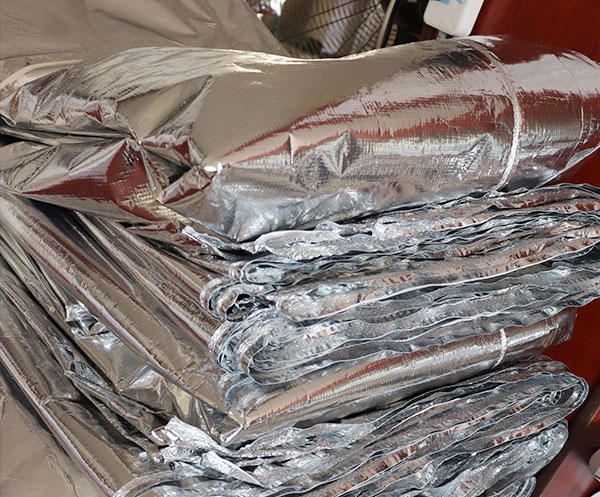
The handcrafted production process offers excellent adaptability, allowing flexible customization based on equipment size and shape without being limited by standardized manufacturing. This ensures a precise fit for irregular or non-standard equipment. The bags feature reliable heat-sealing performance with low leakage risk after sealing and are lightweight, helping reduce additional transportation weight and overall logistics costs. Complying with general industrial transportation packaging requirements, these aluminized woven handbags provide dependable protection for industrial equipment during road, rail, and short-distance transfer transportation, making them a practical and balanced solution that combines protection and usability.
Frequently Asked Questions (FAQs)
1. What industrial equipment are aluminized woven handbags primarily suitable for?
This product is suitable for the transportation and protection of small to medium-sized precision machinery, electrical equipment, automation components, and hardware parts. It is especially suitable for equipment requiring moisture protection, scratch resistance, and anti-static properties, and for equipment with irregular shapes or diverse specifications.
2. What protection do aluminized woven handbags provide during transportation?
The bag body adopts a multi-layer composite structure. The woven substrate has excellent tensile, puncture, and tear resistance, effectively resisting compression and collisions during transportation. The aluminized layer blocks moisture, oxygen, and ultraviolet rays, while also providing heat insulation and anti-static properties, reducing the risk of equipment damage from moisture, oxidation, or static electricity.
3. Does the product support customized sizes and structures?
Customization is supported according to equipment size, shape, and protection requirements. It is not limited by standard specifications and can precisely fit irregular equipment. We will rationally design the bag structure and sealing method based on the transportation method and usage scenario to ensure both protective effectiveness and ease of use.
4. Is this product suitable for long-term or repeated transportation?
Under normal use and standardized operating conditions, aluminized woven handbags possess excellent durability and can be used for multiple transportations or short-term repeated handling. For customers with turnover needs, we can also provide structural and material optimization suggestions based on actual usage frequency.
5. Is the product stable and reliable in transportation regulations and actual applications?
The product meets the general requirements for industrial equipment transport packaging, has stable sealing performance, is lightweight, and easy to handle, making it suitable for road, rail, and short-distance logistics scenarios. We strictly control everything from raw material selection and processing technology to finished product inspection to ensure that each batch of products has stable and consistent protective performance.
This website uses cookies to ensure you get the best experience on our website.
 Español
 Pусский
 Deutsch
 العربية



 WhatsApp
 Phone
Phone