


In the field of modern industrial packaging, there has always been a gap between standardized production and personalized needs. Mechanically vacuum-metallized woven handmade bags, as a special packaging product that combines mechanized production with handcrafted refinement, provide precise packaging solutions for industrial products with special shapes and requirements, thanks to their unique customization features and exquisite craftsmanship. This packaging form retains the efficiency advantages of mechanized production while leveraging the flexibility of manual manufacturing, demonstrating irreplaceable value in specific fields.
I. Process Characteristics and Technical Advantages
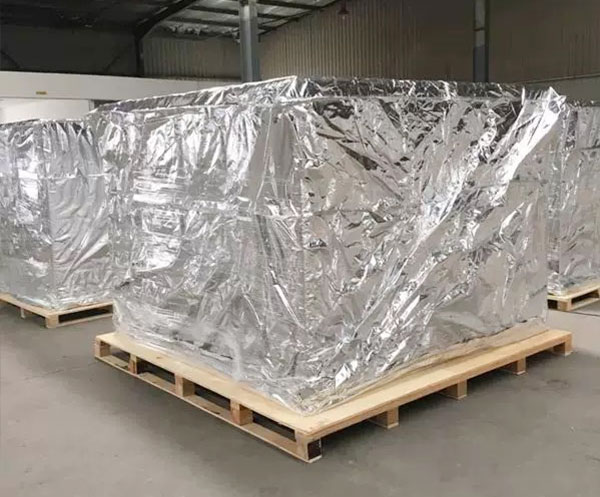
The manufacturing process of mechanically vacuum-metallized woven handmade bags embodies the perfect combination of modern industrial production and traditional craftsmanship. The base material uses mechanically produced metallized woven fabric, which is processed from raw materials to metallized forming using automated equipment. The woven base fabric is made of high-strength polypropylene or polyethylene material, which is precisely woven to form a stable mesh structure. A nano-scale aluminum layer is then deposited on the surface through a vacuum metallization process, resulting in excellent barrier properties.
The manual manufacturing process is the essence of the entire production process. Experienced technicians perform precise dimensional measurements and shape analysis based on product drawings or physical samples provided by the customer. In this process, technicians need to fully consider factors such as the product's structural characteristics, weight distribution, and protection requirements to develop the optimal packaging solution. Compared with purely mechanized production, manual manufacturing can better handle complex curved surfaces and special structures, achieving a precise fit between the packaging and the product.
The cutting process is particularly crucial. Technicians use special cutting tools to precisely cut the material according to the preset cutting lines. For curved parts and irregular shapes, manual cutting allows for more precise processing, avoiding material waste. During the cutting process, technicians also need to pay attention to the texture direction of the material to ensure that the packaging bag can exert maximum strength when bearing weight.
The sewing and splicing process demonstrates the unique value of manual manufacturing. High-strength nylon thread or special sewing thread is used for sewing, employing double-line chain stitching or lock stitching to ensure strong and reliable seams. At the seams, technicians perform additional sealing treatment, using special sealing strips or hot-melt adhesive for reinforcement, which enhances both the sealing performance and the durability of the seams. For critical areas, multi-layer reinforcement is applied to ensure these key parts can withstand greater external forces.
II. Performance Characteristics and Quality Requirements
The performance of mechanically vacuum-metallized woven handmade bags is based on both material properties and manufacturing processes. Its barrier properties benefit from the precise metallized layer, which is strictly controlled to a thickness of 400-600 angstroms, forming a continuous and complete metal barrier layer. Test data shows that the water vapor transmission rate of this structure can be controlled to below 0.8 g/m²·24h, and the oxygen transmission rate does not exceed 0.3 cm³/m²·24h, providing reliable moisture-proof and anti-oxidation protection for the product.
Mechanical strength is another important indicator. Due to the use of manual reinforcement techniques, the strength of the packaging bag at seams and stress concentration points is often superior to purely mechanically produced products. Tests show that the strength of the handmade seams can reach more than 85% of the material itself, effectively preventing seam cracking during loading, unloading, and transportation. For heavier products, the load-bearing capacity can be further enhanced by adding reinforcing straps and reinforced corners.
Sealing performance is rigorously tested. Handmade packaging bags usually adopt a multi-layer sealing design, including a basic heat-sealed layer, auxiliary sealing strips, and an external protective layer. This design ensures that the packaging bag maintains good sealing performance under various environmental conditions. Verified through negative pressure testing and helium mass spectrometry leak detection, its sealing performance meets the requirements for long-term storage and long-distance transportation.
Ease of use is also an important consideration. Handmade packaging bags can be designed with different types of closures according to usage needs, such as zipper type, self-adhesive type, and drawstring type. At the same time, auxiliary components such as handles, hanging rings, and viewing windows can be added as needed to improve convenience. These personalized designs allow the packaging bag to better adapt to the needs of actual use scenarios.
III. Application Fields and Use Value
In the field of precision instrument packaging, mechanically vacuum-metallized woven handmade bags demonstrate unique advantages. A packaging bag customized by a research institution for astronomical instruments successfully protected valuable precision optical components through precise shape design and multi-layer protective structure. The inside of the packaging bag uses a soft non-woven fabric lining, and the key stress points are reinforced manually on the outside, ensuring that the instrument is protected from vibration and impact during transportation. The demands in the aerospace field are even more stringent. The packaging of aircraft engine components needs to meet special shape requirements and protection standards. Handcrafted packaging bags, through precise three-dimensional cutting, achieve a perfect fit with irregularly shaped parts. The use of special anti-static materials and shock-absorbing designs effectively protects precision components during storage and transportation.
The field of cultural heritage preservation also benefits from this type of packaging. Packaging bags used by museums for transporting artifacts are specially designed according to the shape of the artifacts, using pH-neutral cushioning materials internally and a stable protective structure formed by hand-stitching externally. This customized packaging ensures the safety of the artifacts while facilitating handling and display, playing a crucial role in numerous international exhibitions.
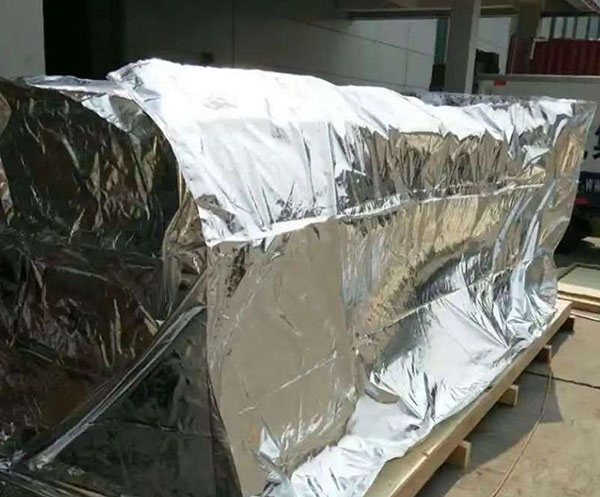
The industrial equipment sector has large and diverse needs. The packaging of large mechanical parts often requires special shapes and sizes, and the flexibility of handcrafted packaging demonstrates a significant advantage in this regard. Through on-site measurement and precise manufacturing, the packaging bags can perfectly adapt to various uniquely shaped equipment, providing reliable protection. Feedback from a heavy machinery manufacturing company shows that the product transportation damage rate decreased by approximately 40% after using customized packaging.
IV. Quality Control and Testing Standards
Raw material testing is the primary step in ensuring product quality. Each batch of incoming aluminized woven fabric undergoes rigorous performance testing, including base fabric strength, aluminized layer thickness, and barrier properties. Particular attention is paid to testing the uniformity and consistency of the materials to ensure stable performance across different batches. Auxiliary materials such as sewing threads and sealing strips also undergo corresponding quality inspections.
The quality control points in the production process are more detailed. In the cutting process, the dimensional error is required to be within ±2mm, and the cuts must be flat and free of burrs. The sewing process requires uniform stitch spacing, typically between 3-5 stitches per centimeter, with straight stitches and no skipped stitches. Sealing treatment requires uniform application of the adhesive strip, without leakage or accumulation. Each process has a dedicated quality inspector for real-time monitoring and recording.
Finished product inspection employs multiple standards. In addition to conventional size and appearance checks, functional testing is also performed. The sealing performance test uses a negative pressure method, requiring no leakage for 30 minutes under a certain negative pressure. Strength testing simulates the transportation environment to test the load-bearing capacity and durability of the packaging bag. For packaging bags intended for special purposes, environmental adaptability testing is also required to verify their performance in specific environments.
Mechanical vacuum-plated aluminum woven handmade bags are customized protective packaging materials designed specifically for industrial equipment applications. Leveraging the flexible adaptability of handcrafted production and the outstanding protective performance of vacuum-plated aluminum, these bags are an ideal solution for transporting small and medium-sized machinery, precision components, electrical equipment, and other industrial products, ensuring precise fit for various equipment specifications.
Their core advantage lies in customizable adaptability. Using handcrafted techniques, the bag dimensions can be adjusted according to the exact size and shape of the industrial equipment. Whether for irregular components or specially sized machinery, the packaging achieves a snug fit, preventing equipment movement or collisions during transportation. The multi-layer composite structure features an outer woven layer with excellent tensile and puncture resistance, while the inner aluminum-plated layer effectively blocks moisture, oxygen, and ultraviolet radiation. Combined with vacuum sealing, this prevents equipment from moisture damage, oxidation, or corrosion, while also offering anti-static and dust-resistant properties to maintain the stability and performance of precision machinery.
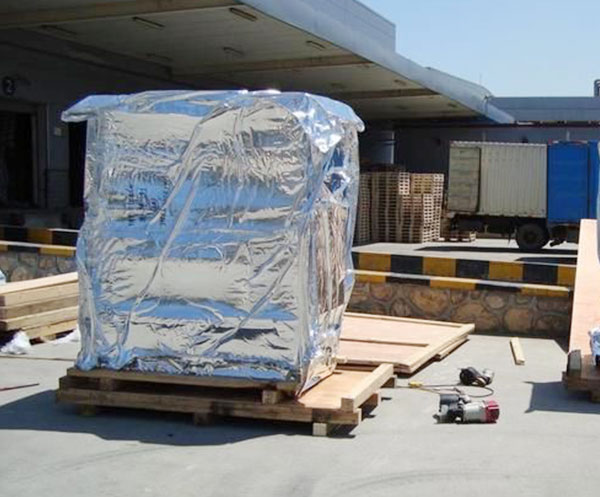
These bags provide excellent sealing performance; after heat sealing, they maintain strong airtightness. Lightweight construction reduces additional shipping costs and complies with general industrial packaging standards. Suitable for road, rail, and short-distance transfer transportation, mechanical vacuum-plated aluminum woven handmade bags offer reliable full-process protection for custom industrial equipment, balancing professional protection with flexible size adaptability. They are an excellent choice for custom industrial equipment packaging solutions.
Frequently Asked Questions (FAQs)
1. What types of industrial equipment are these vacuum-sealed aluminized woven handbags suitable for?
This product is suitable for small to medium-sized machinery, precision parts, electrical equipment, and hardware components. It is especially suitable for transporting industrial equipment with high requirements for moisture protection, anti-static properties, and scratch resistance, and can precisely fit irregularly sized or specially sized equipment.
2. What protective properties does the bag provide during transportation?
The bag uses a multi-layer composite structure. The outer woven fabric is tensile, puncture-resistant, and tear-resistant, resisting collisions and compression during transportation. The inner vacuum-sealed aluminized film effectively blocks moisture, oxygen, and ultraviolet rays, providing heat insulation, anti-static, and dustproof functions, effectively protecting precision equipment from moisture, oxidation, or static electricity damage.
3. Does the product support customized sizes and special shapes?
Fully supported. The handcrafted process allows for flexible customization of bag specifications according to the specific size and shape of the equipment, achieving a tight fit and ensuring equipment stability during transportation, preventing displacement or collisions.
4. How is the sealing and durability of the packaging bag?
Mechanically vacuum-sealed aluminized woven handbags offer strong sealing after heat sealing, maintaining an internal vacuum state for extended periods. They are lightweight, highly durable, and suitable for multiple shipments or short-distance reusable transport, meeting general specifications for industrial equipment transport packaging.
5. Is the product reliable in different transportation scenarios?
The product is compatible with various transportation modes, including road, rail, and short-distance transshipment. We strictly control raw materials, processes, and finished product inspection to ensure that each batch provides stable and reliable protection during transportation, storage, and handling.
This website uses cookies to ensure you get the best experience on our website.
 Español
 Pусский
 Deutsch
 العربية



 WhatsApp
 Phone
Phone