


I. Production Process and Technical Characteristics
The production of mechanically aluminized Woven Bags is a precise process integrating mechanical engineering and materials science. Production begins with the preparation of the base material, using high melt index polypropylene or polyethylene as raw material. After being melted and plasticized in an extruder, it is formed into a film through a specific die. These films are cut into flat filaments and subjected to directional stretching in a constant temperature and humidity environment, causing the molecular chains to align orderly along the stretching direction, thereby achieving higher tensile strength. The width and thickness of the flat filaments are precisely controlled according to packaging requirements, with common specifications ranging from 0.025 to 0.045 mm.
The weaving process is completed using advanced circular looms or shuttle looms. Circular looms achieve continuous circular weaving through the coordinated operation of the warp frame, shuttle, and take-up device, resulting in high production efficiency and suitability for mass production. Shuttle looms use a reciprocating weft insertion method, producing a denser and smoother fabric. During the weaving process, a tension control system ensures balanced warp and weft tension, avoiding uneven tension. The fabric density is adjusted according to usage requirements, typically controlled within the range of 40-60 threads per square inch. The metallization process is the essence of the entire production process. In highly automated vacuum coating equipment, aluminum wire evaporates under high temperature and vacuum conditions, and aluminum atoms are uniformly deposited in gaseous form on the surface of the woven substrate. This process requires precise control of parameters such as vacuum level, evaporation temperature, and deposition time. Modern metallization equipment is equipped with an online monitoring system to monitor the thickness and uniformity of the metallized layer in real time, ensuring stable product quality. The thickness of the metallized layer is generally controlled between 400-600 angstroms. This thickness range ensures good barrier performance without excessively affecting the flexibility of the material.
Post-processing is equally important. The metallized material needs to undergo curing treatment to make the aluminum layer bond more firmly to the substrate. Depending on the application requirements, subsequent processing such as antistatic treatment, UV protection treatment, or printing may also be performed. Each process has strict quality inspection points to ensure that the product meets design requirements.
II. Performance Characteristics and Advantages Analysis
The performance advantages of mechanically metallized woven bags are reflected in several aspects. Its mechanical strength is satisfactory, thanks to the biaxially stretched woven structure, which gives this material high tensile strength and tear resistance. Test data shows that standard-sized mechanically aluminized woven bags have a longitudinal tensile strength exceeding 35 MPa and a transverse tensile strength of approximately 30 MPa. This mechanical property allows them to withstand various external forces during loading, unloading, and transportation.
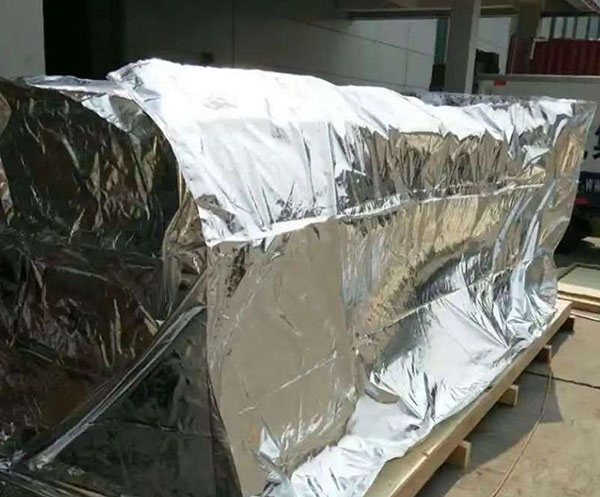
Barrier properties are another outstanding feature. The aluminized layer forms a continuous and dense metallic barrier, effectively blocking the passage of light, oxygen, and water vapor. Experimental data shows that its water vapor transmission rate can be controlled below 1.0 g/m²·24h, and its oxygen transmission rate does not exceed 0.5 cm³/m²·24h. This barrier property provides a good protective environment for the contents, making it particularly suitable for products sensitive to humidity and oxygen.
Weather resistance has been rigorously verified. By adding anti-aging agents and UV absorbers, the material's service life in outdoor environments is significantly extended. Accelerated aging tests show that after 1000 hours of UV irradiation, the material's main performance indicators retain over 80%. This weather resistance allows it to adapt to different storage and transportation environments.
It also has significant advantages in terms of usability. The material possesses a certain degree of flexibility, adapting to the packaging needs of products with different shapes. With appropriate surface treatment, it exhibits good printability, clearly displaying product information and brand logos. Furthermore, this material is heat-sealable, facilitating the production of packaging bags of various sizes.
III. Application Areas and Practical Value
In the chemical industry, mechanically aluminized woven bags demonstrate significant value. Chemical products such as plastic granules and fertilizers have high requirements for moisture resistance and strength in their packaging. This packaging material effectively prevents products from becoming damp and clumping, while also withstanding various stresses during stacking and transportation. One chemical company reported a reduction in product loss rate of approximately 30% and a significant increase in customer satisfaction after using it.
The grain and feed industries also benefit from this packaging. Grain products have strict requirements for storage environments, requiring protection against moisture, insects, and mold. The barrier properties of mechanically aluminized woven bags provide ideal conditions for grain storage. Actual usage data shows that grain packaged in this way, under the same storage conditions, retains its quality for nearly twice as long as grain packaged in this way compared to ordinary packaging.
Applications in the building materials industry are also quite representative. Building materials such as cement and gypsum are prone to hardening due to moisture during storage, affecting their performance. This packaging material can keep the products dry while possessing sufficient strength to withstand stacking pressure. Its durability is particularly advantageous in scenarios with numerous logistics links.
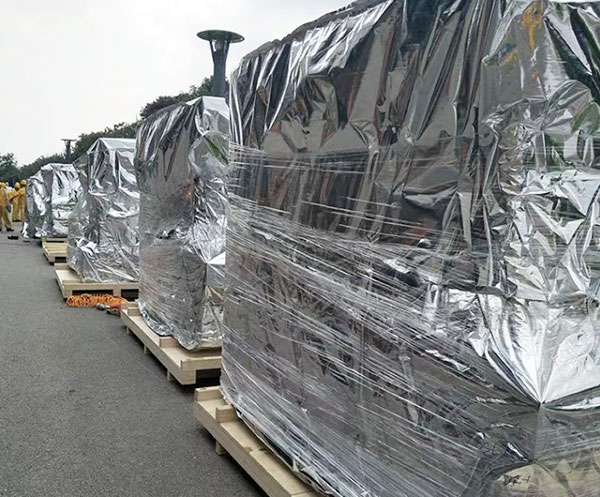
In recent years, this material has also found applications in some emerging fields. In the environmental protection industry, it can be used to package recycled materials; in emergency supplies reserves, it can be used to package relief supplies requiring long-term storage. Its designability allows it to be adjusted according to different usage needs, demonstrating good adaptability.
IV. Quality Control and Standards System
Raw material control is the primary aspect of quality management. Polypropylene raw materials need to be tested for key indicators such as melt flow index and isotacticity to ensure compliance with production requirements. The selection of additives also requires careful consideration, taking into account their compatibility with the base material and their impact on product performance. Each batch of raw materials must be accompanied by a complete test report, and samples must be retained for future reference.
The quality control points in the production process are set up scientifically and rationally. During the flat yarn production stage, the stretch ratio and temperature control are monitored; in the weaving process, fabric density and uniformity are checked; and in the metallization stage, the coating thickness and adhesion need to be carefully controlled. Each process is equipped with online detection equipment to promptly identify and correct deviations.
Finished product inspection standards are rigorous and comprehensive. In addition to routine appearance inspection and dimensional measurement, performance tests are conducted. Mechanical property tests include tensile strength and tear strength; barrier property tests include water vapor transmission rate and oxygen transmission rate measurements; and weather resistance testing is evaluated through accelerated aging tests. Only products that pass all tests are released to the factory.
A comprehensive and reliable quality traceability system is in place. Through a robust information management system, the source of raw materials, production process parameters, and testing data for each batch of products can be traced. This traceability not only facilitates the analysis and improvement of quality issues but also provides customers with confidence. A regular quality review system ensures continuous improvement of the quality management system.
V. Usage Recommendations and Precautions
In actual use, correct operating methods are crucial to maximizing product performance. First, appropriate specifications, including size, thickness, and sealing method, should be selected based on the characteristics of the packaging. For heavier or irregularly shaped products, higher strength specifications should be selected, and reinforcement measures should be taken in critical areas.
Storage conditions need to be properly controlled. Although the material itself has good weather resistance, it is still recommended to store it in a dry, well-ventilated indoor environment. Avoid storing it with sharp objects to prevent scratching the surface. When stacking, pay attention to the height control to avoid excessive pressure on the bottom packaging for extended periods.
Filling operations require standardized procedures. It is recommended to use dedicated filling equipment, control the filling speed, and avoid impacting the packaging. The filling amount should be appropriate, leaving sufficient space for sealing operations. For products that easily generate dust, dust prevention measures should be taken to ensure the sealing area is clean.
Transportation and warehousing are also crucial. Avoid rough handling during loading and unloading, and use appropriate handling tools. When stacking, ensure the bottom layer is stable, and stagger the layers to improve stability. When temporarily storing outdoors, rain protection measures should be taken; although the material is moisture-resistant, prolonged immersion may still affect its performance.
VI. Innovation Development and Future Prospects
Innovation in materials technology continues to advance. Researchers are developing new composite materials to further enhance product performance by adding nanomaterials or using special coatings. For example, self-healing coatings can automatically repair minor damage to the packaging surface, extending its lifespan.
The optimization of manufacturing processes is ongoing. The introduction of smart manufacturing technologies makes production processes more precise and efficient. The application of IoT technology enables data sharing and intelligent decision-making between devices. These technological advancements not only improve production efficiency but also enhance the stability of product quality.
Environmental protection and sustainable development have become important directions. Positive progress has been made in the research and development of biodegradable materials, potentially leading to environmentally friendly alternatives in the future. The promotion of clean production technologies reduces energy consumption and emissions during production. Improved recycling programs also make resource utilization more efficient.
Expanding application areas are promising. With the emergence of new materials and the application of new processes, this packaging material may play a role in more fields. The introduction of the smart packaging concept may endow it with more functions, such as status monitoring and information interaction, transforming it from passive protection to proactive management.
mechanically coated aluminized woven bags are high-performance packaging materials designed specifically for industrial equipment transportation. With excellent protective performance and broad applicability, they have become a core packaging choice for small and medium-sized machinery, precision components, electrical equipment, and other industrial products. These bags can effectively handle road, rail, short-distance transfer, and cross-border maritime transport, providing full-process protection for equipment during transit.
The core protective advantage lies in the multi-layer composite structure. The outer polypropylene woven layer provides high tensile strength, puncture resistance, and tear resistance, effectively preventing damage caused by pressure, impact, or sharp objects during transportation. The intermediate aluminized layer offers outstanding barrier properties, efficiently blocking oxygen, moisture, and ultraviolet radiation to prevent corrosion, oxidation, or degradation of equipment. It also features heat-reflective properties, protecting against high temperatures, direct sunlight, and high humidity. In addition, the conductive property of the aluminized layer dissipates static electricity, reducing the risk of static damage to electronic equipment. Combined with excellent heat-sealing performance, it further enhances dust and leak protection.
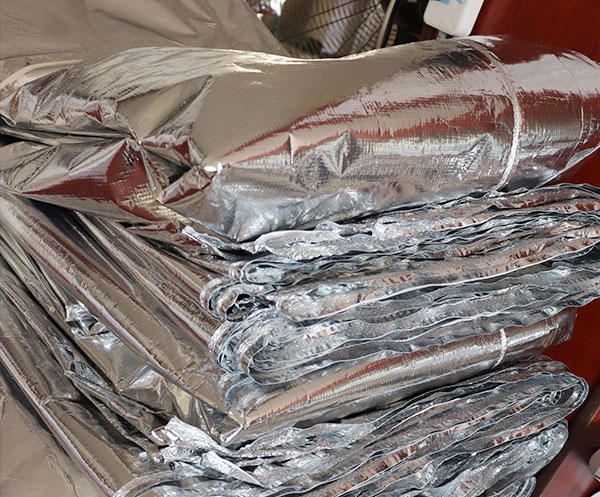
These woven bags offer exceptional adaptability, allowing flexible customization for industrial equipment of various sizes and shapes, ensuring a snug fit for irregular components or specialized machinery. Lightweight construction reduces additional shipping weight and logistics costs while complying with general industrial packaging standards. Whether for in-plant transport, cross-region transfers, or temporary pre-export protection, mechanically coated aluminized woven bags provide stable, reliable protection across multiple transportation scenarios. They are an ideal choice for industrial equipment packaging, balancing professional protection, multi-scenario adaptability, and cost efficiency.
Frequently Asked Questions (FAQs)
1. What types of industrial equipment are suitable for transporting aluminized Woven Bags?
This product is suitable for transporting small and medium-sized machinery, precision parts, electrical equipment, and hardware components. It is especially suitable for equipment packaging with high requirements for moisture protection, anti-static properties, and scratch resistance, and can handle various transportation scenarios such as road, rail, short-distance transshipment, and cross-border sea freight.
2. What protective functions does the bag provide during transportation?
The bag adopts a multi-layer composite structure. The outer woven substrate is tensile, puncture-resistant, and tear-resistant, effectively resisting transportation compression, collisions, and scratches from sharp objects. The middle aluminized layer blocks oxygen, moisture, and ultraviolet rays, providing heat insulation, anti-static, and dustproof functions, effectively preventing equipment from being damaged by moisture, oxidation, or static electricity.
3. Does the product support customized sizes and special shapes?
Fully supported. The handcrafted process allows for flexible customization of bag specifications according to the size and shape of the equipment, ensuring a tight fit to irregular or special machine models, preventing equipment shifting or collisions during transportation, and meeting the packaging needs of various industrial equipment.
4. How is the sealing and durability of the packaging bags?
The mechanically aluminized woven bags provide a strong seal after heat sealing, maintaining an internal vacuum. They are lightweight, highly durable, and suitable for multiple shipments or short-distance repeated handling. They also comply with industrial equipment transport packaging standards, ensuring equipment safety.
5. Is the product reliable in different transportation scenarios?
The product is compatible with various transportation modes, including road, rail, and short-distance transshipment. We strictly control raw materials, production processes, and finished product inspection to ensure that each batch of products provides stable and reliable protection during long-distance transportation, handling, and storage.
This website uses cookies to ensure you get the best experience on our website.
 Español
 Pусский
 Deutsch
 العربية



 WhatsApp
 Phone
Phone