


I. Special Requirements and Challenges of Packaging for Mechanical and Electrical Equipment
Packaging for mechanical and electrical equipment faces multiple complex challenges. First, the precision of the equipment itself requires the packaging to provide adequate physical protection. Take motors as an example: they contain intricate winding and bearing systems, and vibrations and impacts during transportation can cause internal structural displacement or damage. Data shows that improper packaging accounts for over 35% of motor failures during transportation.
Environmental factors also have a significant impact on mechanical and electrical equipment. Metal components are particularly sensitive to moisture; when relative humidity exceeds 60%, an electrolyte film begins to form on the metal surface, accelerating the electrochemical corrosion process. Motors containing copper windings and iron cores are especially prone to oxidation in humid environments, leading to decreased insulation performance. Temperature changes are equally important; drastic temperature fluctuations can cause condensation inside the equipment, potentially leading to serious problems such as short circuits.
The diversity of mechanical and electrical equipment forms presents additional challenges for packaging design. From micro-control motors to large industrial pumps, the size of the equipment varies greatly, and their external structures are complex. Many devices also contain precision components such as external terminals and bearings, which are easily damaged during transportation. Furthermore, uneven weight distribution and center of gravity shifts in the equipment require careful consideration in packaging design.
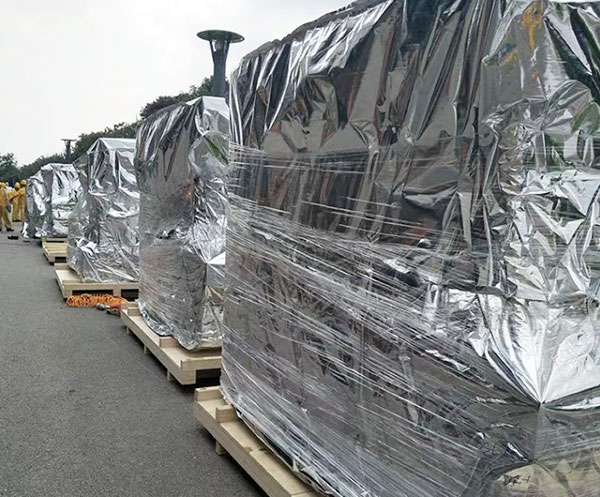
The challenges of long-term storage also necessitate professional solutions. Some electromechanical equipment may need to be stored for months or even longer, during which time the packaging must provide continuous and effective protection. Especially in complex environments such as port warehouses, the packaging needs to withstand various environmental factors, including diurnal temperature variations and seasonal humidity changes.
II. Material Structure and Protection Mechanism
The aluminized woven packaging bags for electromechanical equipment employ a composite layered structure design, with each layer optimized for specific protection needs. The base layer uses high-strength industrial-grade polypropylene woven fabric, whose warp and weft density is precisely calculated to ensure appropriate flexibility while bearing the weight of the equipment. For large equipment weighing over 50 kg, the woven fabric uses a double-layer reinforced structure with special reinforcement at the seams.
The design of the functional layers reflects the scientific nature of the protection. The aluminum plating layer is formed through a vacuum evaporation process, with a thickness controlled between 500-700 angstroms. This thickness range has been extensively validated through experiments, achieving a balance between barrier performance and material flexibility. The surface of the aluminum plating layer undergoes nanoscale treatment to form a dense protective oxide film, further enhancing its corrosion resistance. Test data shows that the treated aluminum plating layer can withstand salt spray for over 800 hours.
The rust prevention system is meticulously designed. Utilizing vapor phase rust prevention technology, the rust inhibitor slowly evaporates inside the packaging, creating a protective atmosphere. This rust prevention method is particularly suitable for complex electromechanical equipment, reaching internal spaces that are difficult to cover with traditional rust prevention methods. The selection of the rust inhibitor takes into account the characteristics of different metal materials, ensuring effective protection for various materials such as copper windings, iron cores, and aluminum shells.
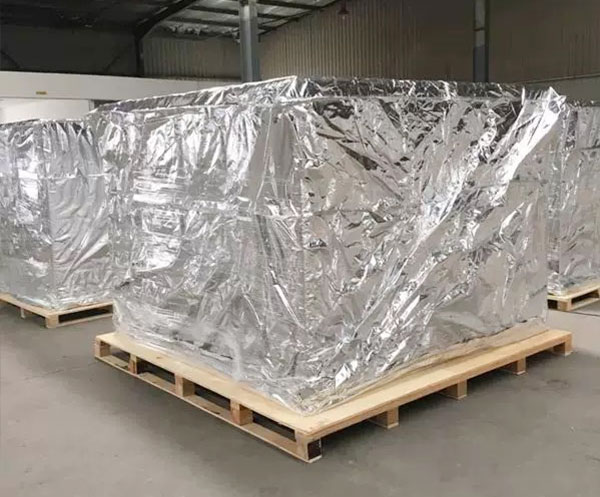
The cushioning system is designed with the characteristics of electromechanical equipment in mind. Elastic cushioning materials are incorporated into the inner layer of the packaging. These materials are custom-cut to fit the equipment's shape perfectly. The density of the cushioning material is precisely calculated to provide sufficient cushioning without causing excessive pressure on the equipment due to over-compression.
III. Performance Characteristics and Technical Parameters
Protective performance has undergone rigorous testing and verification. Moisture-proof performance tests show that in an environment with a temperature of 40℃ and a relative humidity of 90%, the internal humidity of the packaging can be stably maintained below 45%. This index is far below the critical humidity for metal corrosion, ensuring effective protection of the equipment even in harsh environments. Continuous monitoring data indicates that this moisture-proof effect can be maintained for more than 180 days.
Rust-proof performance has been verified through multiple accelerated tests. In standard damp heat tests, the metal samples inside the packaging showed no signs of rust within 480 hours. Salt spray test results were equally satisfactory; under 5% sodium chloride solution spray conditions, the time to first rusting exceeded 360 hours. These data prove that the packaging can provide reliable long-term rust protection for electromechanical equipment.
Excellent mechanical protection performance. Vibration tests simulate transportation environments, placing the packaged electromechanical equipment on a vibration table with a frequency of 5-100Hz for 72 hours continuously, and the internal structure of the equipment remained intact. Impact testing shows that the packaging effectively absorbs impact energy, controlling the impact acceleration transmitted to the equipment to below 15g, a value lower than the tolerance limit of most electromechanical equipment.
High-standard sealing performance. Using helium mass spectrometry leak detection, the leakage rate of the packaging does not exceed 1×10⁻⁶ Pa·m³/s. This level of sealing performance ensures that moisture and contaminants from the external environment cannot enter the packaging, providing a clean and stable storage environment for the equipment. Long-term tracking data shows that the sealing performance remains stable over 6 months.
IV. Production Process and Quality Control
Strict standards are established for raw material inspection. Each batch of woven fabric undergoes 12 performance tests, including key indicators such as tensile strength, tear strength, and air permeability. Aluminum-coated film requires complete material certification, and its composition is verified through spectral analysis. Rust-proof materials must pass volatility and corrosion tests to ensure their safety and effectiveness.
Refined control is achieved in the production process. The cutting process uses CNC equipment, automatically generating layout schemes based on the equipment's 3D data, achieving a material utilization rate of over 92%. The sewing process utilizes industrial-grade sewing equipment, with stitch density strictly controlled at 4-6 stitches per centimeter to ensure seam strength comparable to the material itself.
The rust prevention treatment is particularly crucial. An automated spraying system is employed, precisely controlling the rust inhibitor application rate within the range of 15-20 g/m². Immediately after spraying, drying is performed with segmented temperature control: initial drying at 60℃, followed by curing at 45℃. This process ensures even distribution and strong adhesion of the rust inhibitor.
Quality inspection is integrated throughout the entire production process. An online inspection system automatically scans each finished packaging bag, identifying any potential defects. Sampled products undergo destructive testing, including seam strength and sealing performance tests. All test data is automatically recorded, forming a complete quality archive.
V. Application Practice and Case Analysis
Industrial motor packaging is a typical application scenario. A well-known motor manufacturer exported large asynchronous motors using aluminized woven packaging bags. After 45 days of sea freight and multiple transshipments, unpacking and inspection revealed stable insulation resistance values and no signs of rust on the bearings. The vibration-damping design of the packaging effectively protects the precision internal structure of the motor.
Pump equipment packaging demonstrates professional advantages. A batch of chemical process pumps used customized aluminized Woven Bags. The packaging was specially designed according to the irregular shape of the pump body, with reinforced protection for critical areas such as shaft extensions and flanges. Post-transport inspection showed that the equipment's sealing surfaces and precision-machined surfaces were intact and ready for direct installation and use.
Packaging requirements for precision transmission equipment are even more stringent. A company's exported servo reducers used this packaging solution. The dry and clean environment maintained inside the packaging ensured that transmission accuracy was not affected. A specially designed cushioning system effectively absorbed the impact energy during transportation, protecting the precision gear transmission system.
Power generation equipment packaging verifies protective effectiveness. A batch of diesel generator sets used aluminized woven bags for long-term storage. After 12 months, inspection showed that all metal surfaces of the equipment remained in their factory condition, and the electrical insulation performance showed no degradation. The packaging's durable protective capabilities save users significant maintenance costs.
VI. Usage Specifications and Operating Guidelines
Systematic preparation is required before packaging. First, the equipment must be thoroughly cleaned to remove oil, dust, and other contaminants. Use a specialized cleaning agent to treat metal surfaces, ensuring no fingerprints or sweat residue remain. After cleaning, allow it to dry completely; it is recommended to let it stand for 24 hours in an environment with a temperature of 25℃ and humidity below 40%.
Meticulous equipment protection is essential. Use specialized protective covers to protect precision parts such as shaft extensions and keyways. Seal electrical connections such as terminals with insulating material. Determine lifting points based on the equipment's center of gravity to ensure even stress distribution during transportation. All protective measures must be clearly marked on the equipment drawings.
The packaging process requires professional operation. First, lay the packaging bag flat on a clean platform and check the inner surface for damage. Use specialized equipment to gently place the product in, ensuring full contact between the cushioning material and the equipment surface. Avoid excessive force during sealing to prevent damage to the packaging material. Each operational step must be strictly followed according to the operating instructions.
The sealing process must be precisely controlled. Adjust the heat-sealing parameters according to the ambient temperature, generally controlling them within the range of 160-180℃. After heat sealing, inspect the seal and use professional instruments to test the seal strength. It is recommended to apply protective tape to the sealed areas for extra protection. After sealing, allow the packaging to stand for 2 hours before handling.
Storage and transportation require scientific planning. The warehouse environment should be well-ventilated and dry, with a recommended temperature range of -10℃ to 40℃ and relative humidity not exceeding 65%. Use dedicated pallets when stacking, and ensure the stacking height does not exceed the packaging design standards. Take rain protection measures during transportation and avoid prolonged direct sunlight.
VII. Innovation, Development, and Future Trends
Materials technology continues to advance. The application of new composite materials continuously improves the protective performance of packaging. Significant breakthroughs have been achieved in the research and development of smart materials, potentially leading to packaging solutions that can automatically adjust the internal environment. The development of environmentally friendly rust-proof materials is also attracting attention, and biodegradable packaging has entered the practical application stage.
Detection technology is becoming increasingly sophisticated. The application of non-destructive testing technology enables real-time monitoring of the internal condition of packaging. The use of smart sensors makes environmental parameter monitoring more accurate. Big data analysis provides a scientific basis for packaging optimization. These technological innovations are driving the development of electromechanical equipment packaging towards a smarter and more reliable direction.
Customized services are becoming a development trend. Personalized design based on 3D scanning is continuously improving the compatibility between packaging and equipment. The application of modular design concepts enhances packaging adaptability. The promotion of digital factory technology has significantly reduced the cost of small-batch customized production.
Green manufacturing concepts are being implemented in practice. The use of recyclable materials continues to increase, and clean production processes are constantly being optimized. Packaging recycling solutions are becoming increasingly sophisticated, and life-cycle assessment has become an industry standard. These advancements are driving the sustainable development of the electromechanical equipment packaging industry.
Aluminized woven packaging bags for electromechanical equipment are high-performance protective materials designed specifically for precision machinery and hardware components. With excellent comprehensive protective properties, they have become a core packaging solution for high-value, easily damaged products, providing full protection against environmental hazards during storage and transportation.
The protective advantage comes from a scientifically engineered multi-layer structure. The outer polypropylene woven layer offers high tensile strength and puncture resistance, effectively guarding against compression, collisions, and scratches from sharp objects during handling and transport, preventing damage to precision components and hardware. The intermediate aluminized layer provides superior barrier performance, efficiently blocking oxygen, moisture, and ultraviolet light, preventing corrosion or rust on hardware components and protecting internal elements of precision electromechanical equipment from performance degradation caused by humidity changes or UV exposure. Additionally, the aluminized layer’s anti-static properties dissipate static electricity, reduce dust accumulation, and safeguard sensitive electronic circuits and components.
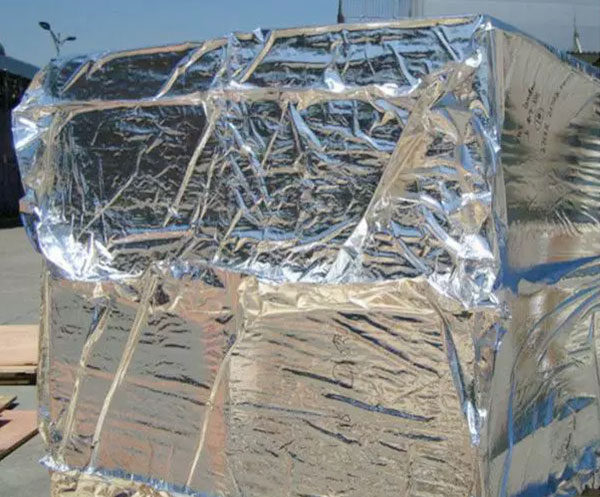
These packaging bags are highly adaptable and can be custom-sized to fit the irregular structures of precision equipment or various hardware specifications, ensuring a snug fit that prevents shifting or collisions during transit. With excellent heat-sealing performance, dust and leak protection, and lightweight construction, they help reduce additional shipping costs while complying with industrial packaging standards. They provide stable, reliable protection for the full lifecycle of precision electromechanical equipment and hardware components.
Frequently Asked Questions (FAQs)
1. What types of equipment or parts are suitable for our aluminized woven packaging bags?
This product is suitable for various precision electromechanical equipment, hardware components, electrical components, and small to medium-sized machinery. It is especially suitable for transporting and storing equipment with high requirements for moisture protection, anti-static properties, and scratch resistance, ensuring the safety of high-value products in various logistics scenarios and export transportation.
2. What are the main protective functions of the packaging bags?
The bag body adopts a multi-layer composite structure: the outer polypropylene woven substrate provides high tensile strength and puncture resistance, preventing compression, collision, and scratches during transportation; the middle aluminized layer blocks oxygen, moisture, and ultraviolet rays, effectively preventing hardware components from getting damp, oxidizing, or rusting, while also providing anti-static and dustproof functions, ensuring the stable performance of precision electromechanical equipment.
3. Do you support customized sizes or special shapes?
Fully supported. Handmade and customizable designs allow for flexible customization of packaging bag specifications according to the size, shape, or irregular components of the equipment, ensuring a snug fit and preventing product shifting or collision during transportation, meeting the packaging needs of different industrial equipment and parts.
4. How airtight and durable are the packaging bags?
The aluminized woven packaging bags provide a strong seal after heat sealing, effectively maintaining a dry internal environment and preventing dust and liquid ingress. The lightweight and durable material can withstand long-distance transportation and multiple transfers, while meeting general industrial packaging standards to ensure the safe arrival of products at their destination.
5. Is the product reliable in different transportation scenarios?
This product is suitable for various transportation modes, including road, rail, short-distance transshipment, and cross-border sea freight. Through strict material selection, production process control, and quality inspection, each batch of products provides stable and reliable protection, ensuring the safety of precision equipment and hardware components during transportation and storage.
This website uses cookies to ensure you get the best experience on our website.
 Español
 Pусский
 Deutsch
 العربية



 WhatsApp
 Phone
Phone