

Equipment Sea Freight Wooden Crate with aluminum-coated woven vacuum packaging: A Comprehensive Integrated Packaging System
In today's increasingly frequent global trade, the sea freight packaging of large equipment faces unprecedented challenges. Equipment sea freight wooden crate with aluminum-coated woven vacuum packaging, as a comprehensive packaging solution integrating multiple protective functions, provides complete safety protection for various large-scale equipment from factory to destination through systematic design and rigorous processes. This packaging method combines the robust structure of traditional wooden crates, the excellent properties of aluminum-coated woven materials, and the advanced concept of vacuum technology, creating a multi-layered protection system.
I. System Composition and Protection Mechanism
The equipment sea freight wooden crate with aluminum-coated woven vacuum packaging is a precise system engineering project, and its protective effect comes from the synergistic effect of its various components. The wooden crate, as the outer layer of protection, is made of carefully treated wood. The moisture content of the wood is controlled below 18%, and it undergoes insect and mold prevention treatment. The crate structure is specially designed according to the center of gravity and shape of the equipment, ensuring stability during lifting and stacking. Reinforced fasteners are used at all connection points of the crate, and cushioning materials are laid on the inner wall to prevent direct contact between the equipment and the wooden crate.
The aluminum-coated woven layer forms the second protective barrier. This material uses high-strength polypropylene woven fabric as the base material, and a dense metal layer is formed on the surface through a vacuum aluminum plating process. The thickness of the aluminum coating is strictly controlled between 500-700 angstroms. This thickness range has been verified through numerous experiments to ensure barrier performance while maintaining the flexibility of the material. The warp and weft density of the woven fabric is adjusted according to the characteristics of the equipment, and reinforcement is applied in areas of stress concentration to ensure that the material remains intact during use.
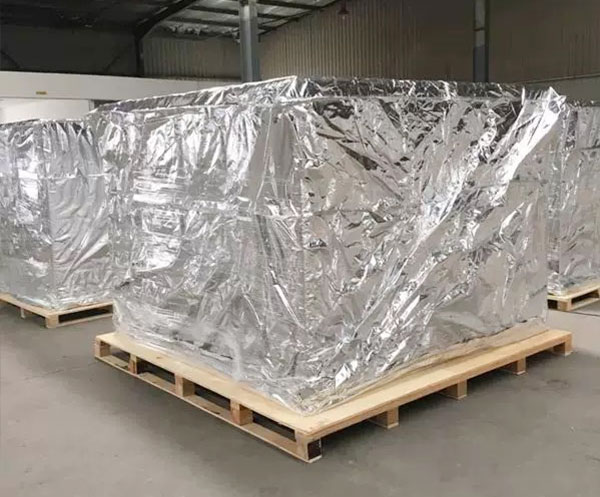
The vacuum system is the core technology of the packaging. The air inside the packaging is extracted through a special vacuum valve, maintaining the internal pressure within the range of 10-30 mbar. This low-pressure environment not only significantly reduces the packaging volume but, more importantly, effectively inhibits oxidation reactions and microbial growth. The design of the vacuum system takes into account temperature changes during sea transportation and is equipped with a pressure balancing device to prevent packaging damage caused by temperature fluctuations.
The sealing system adopts a multi-layered protection design. High-performance sealing strips are installed on the inner side of the aluminum-coated woven layer and combined with the material body through a hot-pressing process. The width of the sealing strip is determined by the packaging size, usually between 20-30mm. Reinforced sealing measures are used at joints and corners to ensure the airtightness of the entire packaging system. The sealing performance is rigorously tested, with a leakage rate not exceeding 1×10⁻⁶ Pa·m³/s.
II. Process Requirements and Technical Standards
Wooden box manufacturing requires adherence to strict technical specifications. The wood used is pine or composite board meeting strength standards and is subjected to drying treatment. The box structure employs a reinforced design, with special reinforcement at the corners and where lifting straps are used. The gaps between the box panels are controlled to within 3mm and filled with sealing strips to prevent moisture penetration. The box surface is treated for moisture resistance and coated with clear shipping markings.
The manufacturing process of the aluminized woven material requires precise control. Substrate treatment includes cleaning and corona treatment to ensure a surface tension of 42 dyn/cm or higher. Vacuum aluminizing is performed in a vacuum environment of 10⁻² Pa or higher, with the aluminum wire evaporation temperature controlled within the range of 1400-1500℃. The thickness of the aluminized layer is monitored in real-time by an online monitoring system to ensure uniformity and consistency. Material lamination uses a hot-melt adhesive process, with a peel strength between layers of no less than 6N/15mm.
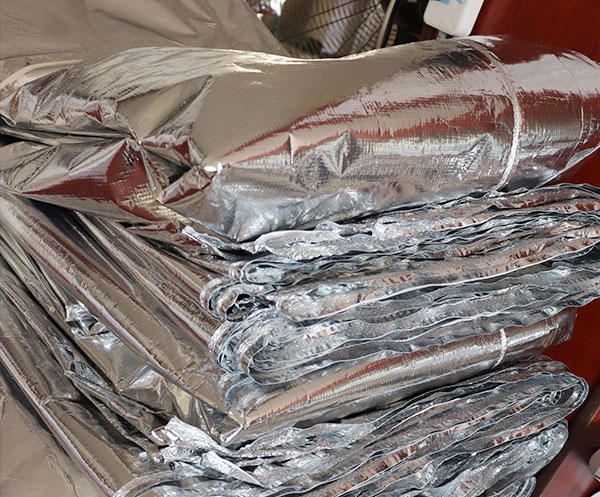
The vacuum packaging process requires professional equipment and technical support. First, the equipment is placed in the aluminized woven bag, and the air inside the bag is extracted using specialized equipment. The air extraction process is controlled in stages, with rapid extraction in the initial stage, switching to slow extraction when approaching the target vacuum level to avoid damaging the packaging material. After reaching the predetermined vacuum level, the valve is immediately closed, and a sealing test is performed. The entire process must be carried out in a temperature and humidity-controlled environment.
Quality testing covers all aspects. Wooden boxes undergo load-bearing tests, stacking tests, and lifting tests. The aluminized woven material undergoes barrier performance tests, strength tests, and weather resistance tests. The vacuum system undergoes pressure retention tests to ensure a stable vacuum level is maintained during transportation. A detailed quality file is created for each completed package, recording all key parameters.
III. Performance Characteristics and Protective Effects
This integrated packaging system demonstrates excellent performance in many aspects. In terms of moisture protection, the system provides significant protective effects. In an environment with a temperature of 40℃ and a relative humidity of 95%, the internal humidity of the packaging can be stably maintained below 30%. This is mainly due to the creation of a vacuum environment and the barrier effect of the aluminum-plated layer, effectively preventing the equipment from being damaged by moisture and corrosion during sea transportation.
The anti-corrosion performance was verified through accelerated testing. A sample of the equipment with complete packaging was placed in a salt spray test chamber. After 500 hours of testing, there were no signs of corrosion on the equipment surface. This indicates that the packaging system provides reliable anti-corrosion protection for the equipment, especially suitable for high-salinity conditions in marine environments.
The mechanical protection performance is outstanding. Vibration tests simulated marine conditions, with the packaged equipment placed on a vibration table at 5-100Hz for 72 hours. Inspection after the test showed that the internal structure of the equipment remained intact, and all key dimensions were within the allowable range. Impact tests showed that the packaging system effectively controlled the impact acceleration to below 15g.
The environmental protection function is comprehensive and reliable. The system not only blocks moisture and salt spray but also effectively prevents the effects of environmental factors such as mold growth and ultraviolet radiation. After verification, the packaging system maintained the internal equipment in its factory condition after 180 days of outdoor storage, with no significant changes in performance indicators.
IV. Application Practices and Case Studies
This packaging system demonstrates significant value in the field of sea transportation of precision machine tools. A machine tool manufacturing company used this packaging solution to export a five-axis machining center weighing 12 tons, with a sea transportation period of 45 days. The equipment was first vacuum-packed in an aluminum-plated woven bag and then placed in a custom-made wooden crate. Upon arrival at the destination, inspection showed no corrosion on the equipment surface, and all precision test indicators met the standards.
Sea transportation of power equipment also benefits from this packaging method. A batch of transformers used wooden crates with aluminum-plated woven vacuum packaging. After 60 days of sea transportation, the insulation resistance value of the equipment remained stable, and the internal windings were dry and intact. The shock-resistant design of the packaging effectively protected the precision structure inside the equipment, and the vacuum environment ensured the stable performance of the insulation materials.
aluminum-coated woven vacuum packaging in wooden crates is a high-end packaging solution that combines the load-bearing strength of wooden crates with the protective performance of aluminum-coated Woven Bags. It is specifically designed for international sea shipment of export equipment, providing comprehensive protection against the complex and harsh environments encountered during ocean transportation. This solution is widely used for precision machinery, electrical equipment, and heavy components, ensuring safe and secure overseas delivery.
The core protective performance is outstanding. The aluminum-coated woven bag is manufactured using a composite process, with the aluminum film layer effectively blocking oxygen, moisture, and ultraviolet radiation. Combined with vacuum sealing, it significantly reduces internal humidity, preventing moisture absorption, oxidation, and corrosion of equipment. The woven substrate provides excellent tensile strength and puncture resistance, and when us
ed together with high-strength wooden crates, it effectively absorbs pressure, vibration, and impact during sea transport, preventing equipment movement or packaging damage. In addition, the anti-static properties of the aluminum layer help prevent static electricity buildup, protecting sensitive electronic components and meeting the protection requirements of precision equipment.
This packaging solution is highly compliant with export regulations. The wooden crates are made of internationally compliant plywood materials, meeting fumigation-free customs clearance requirements. The aluminum-coated woven vacuum packaging has passed authoritative testing and complies with packaging standards in regions such as the European Union and North America, avoiding shipment returns caused by non-compliant packaging. The packaging process is systematic and well controlled: the equipment is first secured inside the wooden crate with proper shock-absorbing materials, then enclosed in a custom-sized aluminum-coated woven bag, vacuum sealed, and reinforced. The compact structure helps reduce shipping volume and weight, effectively lowering logistics costs.
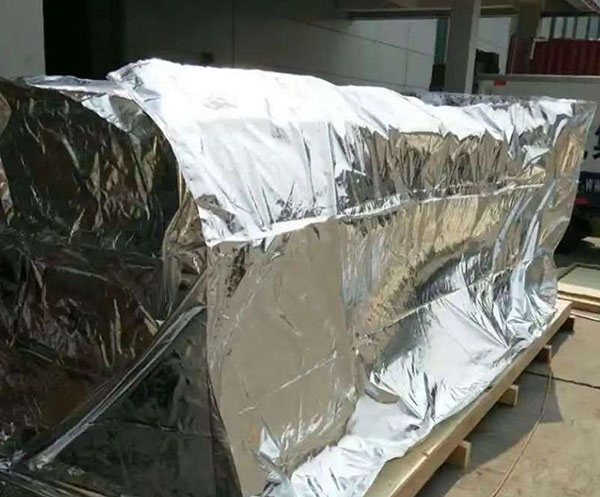
Whether facing long-duration ocean transport, continuous vibration, or harsh conditions such as high temperatures and salt spray, this packaging solution provides stable and reliable protection. It is an optimal choice for export equipment packaging, balancing protection performance, regulatory compliance, and cost efficiency.
Frequently Asked Questions (FAQs)
1. What types of equipment are suitable for the wooden crate + aluminum-plated woven vacuum packaging solution?
This packaging solution is suitable for precision machinery, electrical equipment, automated production line components, heavy metal components, and export equipment requiring high levels of moisture protection, rust prevention, and anti-static protection. It can be customized according to the equipment weight, structure, and transportation method to ensure safety and stability during long-term sea transport.
2. How does this packaging prevent moisture and rust during sea transport?
The aluminum-plated woven bag uses a multi-layer composite structure, where the aluminum film layer effectively blocks water vapor, oxygen, and ultraviolet rays; combined with vacuum pumping technology, it significantly reduces the humidity inside the wooden crate, reducing the risk of equipment dampness, oxidation, and corrosion from the source. This is suitable for long-distance ocean shipping and transit warehousing environments.
3. Do the wooden crates and vacuum packaging meet export and customs clearance requirements?
The wooden crates are made of plywood materials that meet international standards, satisfying fumigation-free customs clearance requirements; the aluminum-plated woven vacuum packaging can pass authoritative testing and complies with packaging specifications in major export markets such as the EU and North America, helping customers reduce customs clearance risks and avoid delays or returns due to packaging issues.
4. Can the packaging size and structure be customized according to the equipment?
We can provide one-on-one customized design based on equipment size, weight, center of gravity, and protection level requirements, including wooden crate structure, inner lining cushioning solutions, and aluminum-plated woven bag specifications, ensuring secure equipment fixation, compact packaging, and balancing transportation efficiency and cost control.
5. What are the advantages of this packaging solution in terms of cost and transportation efficiency?
Compared with traditional multi-layer protection methods, the wooden crate combined with aluminum-plated woven vacuum packaging, while ensuring protective performance, has a more compact structure and more controllable weight, which helps reduce sea freight volume and overall logistics costs. It is an export equipment packaging solution that balances safety, compliance, and economy.
This website uses cookies to ensure you get the best experience on our website.
 Español
 Pусский
 Deutsch
 العربية



 WhatsApp
 Phone
Phone