

I. Material Structure and Composition of Vacuum Bags for Aluminum Foil Equipment
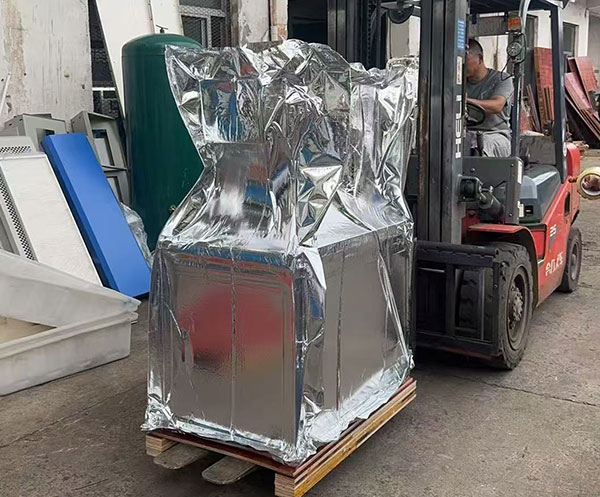
Vacuum bags for aluminum foil equipment are typically made of multi-layer composite materials, including an aluminum foil layer (AL), polyester film (PET), nylon film (NY), and Polyethylene Film (PE). Each layer has a unique function, and through composite bonding, they form a high-performance packaging bag that meets the protective needs of equipment during transportation and storage.
Outer Layer (PET or Nylon)
The outer layer primarily enhances mechanical strength and abrasion resistance, while also providing high-definition printing capabilities for easy printing of company logos, model numbers, and precautions. PET film is not only highly abrasion-resistant but also allows for high-definition printing of patterns and information, while nylon film enhances puncture and tear resistance, making the packaging bag less prone to damage during handling and transportation.
Middle Layer (Aluminum Foil Layer)
The aluminum foil layer is the core functional layer of the vacuum bag for aluminum foil equipment. Its low air permeability and low moisture permeability effectively block air, moisture, light, and odors, ensuring that metal parts do not rust, precision electronic components are protected from moisture, and the performance of instruments and equipment remains stable.
Inner Layer (PE or CPP)
The inner layer, acting as a heat-sealing layer, comes into direct contact with the equipment, providing excellent flexibility and heat-sealing performance. This ensures the packaging bag remains completely sealed during vacuuming and sealing, preventing air ingress or liquid leakage.
Functional Composite Layer (Optional)
For specific equipment needs, antistatic, UV-resistant, or high/low temperature resistant layers can be added to the composite structure to ensure the packaging bag performs its protective function in various environments.
This multi-layered composite structure guarantees the comprehensive advantages of aluminum foil vacuum bags in terms of protection, barrier properties, mechanical strength, and environmental resistance.
II. Core Performance of Aluminum Foil Vacuum Bags for Equipment
Aluminum foil vacuum bags for equipment are widely used in the industrial field. Their core performance is mainly reflected in the following aspects:
Excellent Barrier Performance
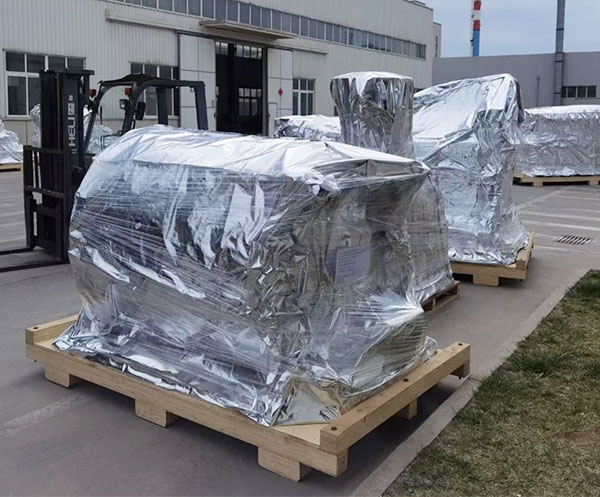
The aluminum foil layer almost completely blocks air and water vapor, preventing metal parts from rusting, electronic components from getting damp, or equipment from oxidizing, extending storage time and improving transportation safety.
Vacuum Sealing Capability
The inner heat-sealing film ensures a tight seal. Vacuum extraction removes air from the bag, further reducing the risk of oxidation and moisture damage, while also minimizing vibration and friction damage during transport.
Anti-static and Anti-contamination
An anti-static layer can be added to protect electronic components and precision instruments from electrostatic damage. The composite structure also blocks dust and impurities, maintaining equipment cleanliness.
High Mechanical Strength and Puncture Resistance
The composite material enhances the bag's tear and puncture resistance, ensuring the integrity of even sharp or heavy equipment.
High and Low Temperature Resistance
Suitable for use in environments ranging from -40℃ to +120℃, suitable for sea transport, cold chain transportation, and high-temperature production environments, ensuring equipment safety.
Chemical Corrosion Resistance and Sunlight Protection
The aluminum foil layer blocks ultraviolet rays and some chemical gases, protecting photosensitive and chemically sensitive equipment from environmental damage.
Environmental Performance
Some aluminum foil vacuum bags use recyclable or biodegradable composite materials, conforming to industrial green packaging principles.
III. Production Process of Vacuum Bags from Aluminum Foil Equipment
The high quality of vacuum bags from aluminum foil equipment stems from a precise production process, including composite material preparation, printing, bag making, and quality inspection:
Composite Material Preparation
Through dry lamination or extrusion lamination processes, PET, aluminum foil, PE, and other materials are combined into a multi-layer composite film. During the lamination process, the amount of adhesive, temperature, and tension must be strictly controlled to ensure uniform bonding and prevent delamination of each layer.
Curing Treatment
The composite film undergoes a constant-temperature curing treatment to fully solidify the adhesive, improving the adhesion and mechanical strength of the composite layers.
Printing and Slitting
The outer PET film can be printed in full color, displaying the company logo, product model, production batch, precautions, and anti-counterfeiting labels. It is then slitted into rolls or semi-finished products according to equipment specifications.
Bag Making Process
Automatic bag making machines are used for three-side sealing, four-side sealing, or three-dimensional bottom sealing to form stand-up or flat-bottom vacuum packaging bags.
Quality Inspection
Strict testing is conducted on heat seal strength, tensile strength, puncture resistance, and sealing performance to ensure that each batch of products meets industrial packaging standards.
IV. Application Scope of Aluminum Foil Vacuum Bags for Equipment
Aluminum foil vacuum bags for equipment are suitable for packaging various industrial equipment and parts. Main application areas include:
Machinery Parts Packaging
Gears, bearings, hydraulic components, metal screws, etc., are susceptible to moisture or oxidation. Vacuum Aluminum Foil Bags effectively prevent rust and performance degradation.
Electronic Components and Precision Instruments
Chips, circuit boards, sensors, CNC instruments, etc., are susceptible to moisture, static electricity, or dust contamination. Anti-static aluminum foil vacuum bags provide complete protection.
Metal Materials and Powder Packaging
Powder metallurgy materials, alloy particles, precision castings, etc., are susceptible to moisture or oxidation. Vacuum aluminum foil bags can extend shelf life and maintain performance stability.
Export Equipment Transportation
Long-distance transportation, sea freight, and high-humidity environments require high-quality packaging. Aluminum foil vacuum bags effectively prevent moisture, salt spray, and shock.
Packaging for Chemical and Pharmaceutical Raw Materials
Powdered chemical reagents and pharmaceutical raw materials are sensitive to humidity. Aluminum foil vacuum bags can maintain the stability of their components and prevent contamination.
V. Specifications and Customization Points for Aluminum Foil Equipment Vacuum Bags
When selecting aluminum foil vacuum bags for equipment, companies should customize them according to the type, size, transportation, and storage conditions of the equipment:
Size and Thickness
The bag size should match the volume of the equipment. The thickness is generally between 0.08mm and 0.25mm. Thicker films are suitable for heavy or sharp parts.
Functional Composite Design
Antistatic, UV-resistant, high and low temperature resistant, and chemical corrosion resistant layers can be added as needed to cope with complex industrial environments.
Sealing Method
Heat sealing, vacuum sealing, nitrogen filling, or double sealing methods can be selected. Some equipment can be equipped with zippers or easy-tear designs to improve operational convenience.
Three-Dimensional Bottom Design
For large or specially shaped equipment, a three-dimensional bottom or side sealing design is used to improve stability and handling convenience.
Printing and Labeling
Company logos, product models, production batches, and precautions can be printed for easy management and brand promotion.
VI. Recommendations for the Use and Storage of Vacuum Bags for Aluminum Foil Equipment
Storage Environment
Maintain a dry, cool environment free of corrosive gases. Avoid direct sunlight and high temperatures.
Operating Precautions
Avoid scratching the bag with sharp objects during filling. Use professional equipment for vacuuming to ensure a tight seal.
Handling and Transportation
Avoid heavy pressure and prolonged compression to ensure the bag and equipment remain intact.
Regular Inspection
For equipment stored long-term, regularly check the sealing and integrity of the packaging bags. Replace packaging materials as needed.
High-strength aluminum foil vacuum bags: Optimal Protection for Precision Equipment Transport
High-strength aluminum foil vacuum bags are specially designed protective packaging for transporting precision equipment. With excellent load-bearing capacity and vacuum-sealed protection, they are suitable for delicate, high-value devices such as precision electromechanical equipment, optical instruments, and electronic components, providing comprehensive protection against compression, moisture, and static during transport.
The core advantages lie in both high strength and precise protection. The bags use a composite structure of aluminum foil and high-toughness plastic film. The reinforced outer layer offers excellent tensile, puncture, and tear resistance, effectively withstanding stacking pressure and handling impacts during transport. Combined with vacuum sealing, the aluminum foil layer efficiently blocks moisture, oxygen, and ultraviolet light, creating a dry, oxygen-free environment to prevent equipment corrosion or performance degradation. The bags also feature excellent anti-static properties, protecting sensitive electronic components from static damage.
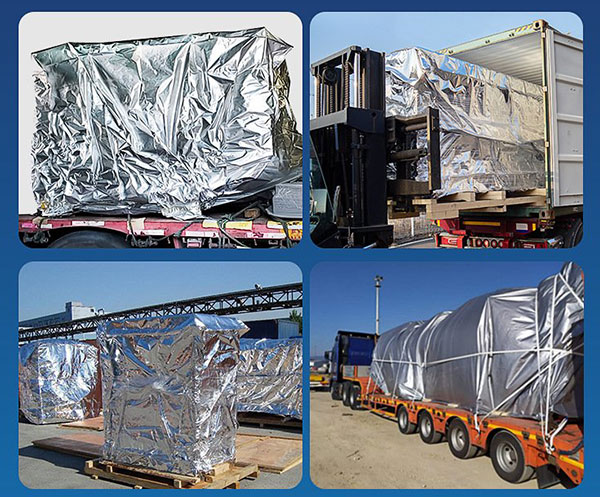
These vacuum bags can be customized according to the size and shape of precision equipment, providing a snug fit and secure seal. They comply with industrial transport packaging standards, are lightweight to reduce shipping costs, and are suitable for road, rail, and cross-border transportation. They offer an ideal balance of protection and adaptability, making them a premium choice for precision equipment transport.
Frequently Asked Questions (FAQs)
1. How much pressure can these aluminum foil vacuum bags withstand?
Answer: Our High-strength aluminum foil vacuum bags use a composite structure of aluminum foil and high-toughness plastic film. After reinforcement treatment, they have excellent tensile strength, puncture resistance, and stacking pressure resistance. They can withstand multi-layer stacking and normal impacts during transportation and handling, ensuring that precision equipment is not damaged by pressure.
2. Are these vacuum bags moisture-proof and oxidation-proof?
Answer: The inner aluminum foil forms a high-barrier barrier, effectively blocking moisture, oxygen, and ultraviolet rays. Combined with vacuum sealing technology, air inside the bag can be expelled, creating a dry and oxygen-free environment, fundamentally preventing equipment from getting damp, oxidizing, or experiencing performance degradation. Suitable for long-distance transportation and cross-border sea freight.
3. Can you customize them according to equipment size?
Answer: Yes. We offer customization services according to equipment size and shape, ensuring a tight fit between the vacuum bag and the equipment. Optional thicknesses, sizes, and protective functions (such as anti-static and dustproof) are available to meet the needs of various equipment, including precision electromechanical, optical instruments, and electronic components.
4. Will the vacuum bags break during transportation?
Answer: Our products undergo rigorous tensile, puncture, and tear resistance tests. The reinforced outer layer design can withstand compression and impacts during transportation. With proper loading and unloading, the risk of breakage is extremely low. Cushioning materials can be added to further enhance safety according to transportation needs.
5. Do they meet industrial transportation and export packaging standards?
Answer: Yes. The vacuum bags meet industrial transportation regulations and export requirements, and are suitable for road, rail, and cross-border transportation. The environmentally friendly materials meet international standards such as RoHS and REACH, ensuring compliant packaging for exported equipment and reducing the risks of returns and customs clearance.
This website uses cookies to ensure you get the best experience on our website.
 Español
 Pусский
 Deutsch
 العربية



 WhatsApp
 Phone
Phone