


In today's increasingly interconnected global supply chains, sea freight, as the primary mode of international transportation, places unprecedentedly high demands on product packaging. sea freight vacuum metallized woven packaging bags, a composite packaging solution combining vacuum technology, metallization processes, and woven materials, are providing reliable protection for various products requiring high-standard protection during transoceanic transport. This packaging format, through its unique combination of technologies, effectively addresses the multiple challenges of the marine environment, becoming a significant innovation in modern logistics packaging.
I. The Rigorous Challenges of the Marine Environment and Technological Solutions
The marine transportation environment poses a comprehensive test for packaging materials. The corrosive effects of the high-salinity air environment are paramount; data shows that the concentration of chloride ions in the marine atmosphere is 10-20 times higher than in inland areas, accelerating the corrosion process of most materials. The consistently high humidity environment is also a significant factor; relative humidity during sea transport remains between 80% and 95%, and the "container rain" phenomenon, particularly when passing through different climate zones, exposes packaging to continuous moisture threats.
The long transportation cycle is another important consideration. A typical international shipping route usually takes 30-90 days, during which the packaging needs to continuously withstand environmental factors. The severity of temperature changes is also striking; from temperate ports to tropical waters, the diurnal temperature difference can exceed 25°C, and this frequent thermal expansion and contraction significantly impacts the stability of packaging materials. Furthermore, goods undergo multiple mechanized loading and unloading operations, including port hoisting and ship securing, and the impacts, vibrations, and compression during these processes place strict demands on the mechanical strength of the packaging.
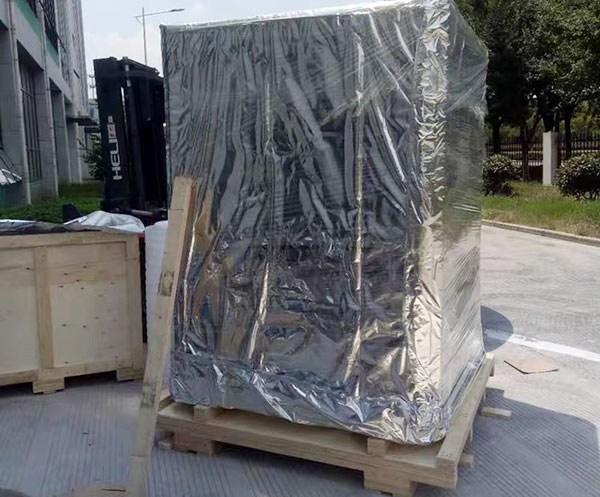
To address these complex environmental factors, sea freight vacuum metallized woven packaging bags offer a systematic solution. The application of vacuum technology fundamentally alters the microenvironment inside the packaging, the metallized layer provides multiple barrier protection, and the woven substrate ensures the mechanical strength of the packaging. The organic combination of these three technologies creates an ideal packaging form adapted to the marine environment.
II. Material Structure and Technical Principles
The material structure of this packaging bag is meticulously designed and scientifically formulated. The base layer uses marine-grade reinforced polypropylene woven fabric. This material incorporates UV-resistant and anti-aging components during production, increasing its service life in the marine environment by approximately 40% compared to ordinary materials. The warp and weft density of the woven fabric is precisely calculated, ensuring the necessary strength while maintaining the material's adaptability in a vacuum environment.
The design of the functional layer reflects cutting-edge technology. The aluminum coating is formed through a precisely controlled vacuum evaporation process, with the thickness strictly controlled between 400-600 angstroms. This metal barrier not only provides excellent light blocking but, more importantly, offers superior gas barrier properties. Test data shows that the oxygen transmission rate of the specially treated aluminum coating can be controlled to below 0.5 cm³/m²·day, and the water vapor transmission rate does not exceed 0.8 g/m²·day, laying a solid foundation for maintaining a vacuum environment.
The sealing system employs a multi-layered design. The main sealing layer uses a high-temperature heat sealing process to ensure basic sealing strength; the auxiliary sealing layer uses elastic sealing materials to adapt to material deformation caused by temperature changes; in some special models, a self-checking sealing strip is added to visually display the sealing status. This multi-layered sealing design ensures the reliability of the packaging during long-distance sea transportation.
The vacuum maintenance system is particularly precisely designed. A specially developed bidirectional valve is used, ensuring both efficient vacuum pumping and stable maintenance of the vacuum state. The valve's interior uses special composite materials with good anti-aging and sealing properties. Tests have proven that it can effectively maintain a vacuum state for more than 90 days under standard sea transportation conditions.
III. Production Process and Quality Control
The production process begins with strict raw material selection. The woven fabric substrate undergoes 21 indicator tests, including tensile strength, weather resistance, and UV resistance. Only materials that meet all indicators can enter the production process. This rigorous selection ensures the quality stability of the basic materials.
The aluminum plating process is carried out in a Class 10,000 clean room. The vacuum degree must be maintained above 10-2 Pa, and the aluminum wire evaporation temperature is controlled within the range of 1350-1450℃. During production, a laser thickness gauge is used to monitor the thickness of the aluminum coating in real time, ensuring its uniformity and consistency. Each batch of products is sampled for energy dispersive spectroscopy analysis to verify the composition and structure of the aluminum coating.
The lamination process uses multi-stage precision control. The different layers of materials are laminated using hot-melt adhesive. The lamination temperature is controlled in stages according to the material characteristics, gradually decreasing from 180℃ to 120℃. The lamination pressure is adjusted in real time based on the material thickness to ensure a strong bond between layers without deformation. An online detection system monitors the lamination quality.
The installation of vacuum valves is a critical step in the production process. Robotic arms are used for precise positioning, with installation position errors controlled within ±0.5mm. After installation, a negative pressure test is performed to ensure the bonding strength between the valve and the bag. Each valve undergoes an opening force test to guarantee ease of use.
Finished product testing includes multiple specialized tests. The vacuum retention test simulates a marine shipping environment, checking the vacuum level change of the packaging over 90 days; the seal strength test uses professional equipment to ensure the seal can withstand the required force; and the environmental adaptability test places the packaging in a temperature cycling chamber to verify its performance stability under temperature changes.
IV. Performance Characteristics and Protective Effectiveness
The application of vacuum technology brings revolutionary protective effects. By reducing the internal pressure of the packaging to 10-30 mbar, it not only significantly reduces the packaging volume but, more importantly, fundamentally improves the microenvironment inside the packaging. The low-oxygen state effectively inhibits oxidation reactions and microbial growth, providing ideal storage conditions for the product. Actual test data shows that the oxygen concentration inside the vacuum packaging can be controlled below 0.5%, a level difficult to achieve with traditional packaging.
The moisture-proof performance is excellent. In tests simulating a marine shipping environment, the internal humidity of the packaging consistently remained below 15%, far lower than the external environment humidity. This excellent moisture-proof performance makes the packaging particularly suitable for humidity-sensitive products, such as precision instruments, electronic components, and high-quality chemical raw materials.
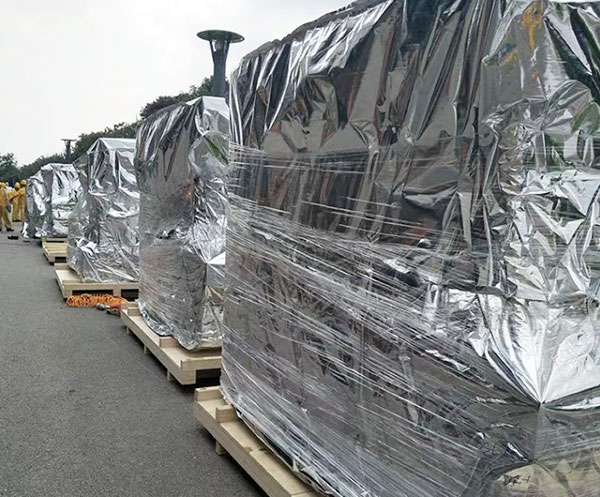
Sea freight vacuum metallized woven packaging bags are high-strength protective packaging materials specifically designed for long-distance maritime transport. With excellent compression resistance and moisture-proof performance, these bags are ideal for industrial equipment and precision components, effectively withstanding salt spray, high humidity, stacking pressure, and collision during sea transport, ensuring safe cross-border shipping.
The core protective advantages are precisely tailored for sea freight. For high-strength compression resistance, the outer layer is made of reinforced, thickened polypropylene woven fabric, treated with warp and weft strengthening processes, significantly improving tensile strength and load-bearing capacity. This design withstands stacking pressure and handling impacts during loading and unloading, preventing deformation or damage. For moisture protection, a dual barrier structure is formed by the aluminized film combined with an inner PE layer. The aluminized layer efficiently blocks moisture, oxygen, and UV light. Coupled with vacuum sealing, the bag removes air to create a dry, sealed environment, preventing salt spray and humidity from penetrating and protecting goods from corrosion, rust, or quality degradation.
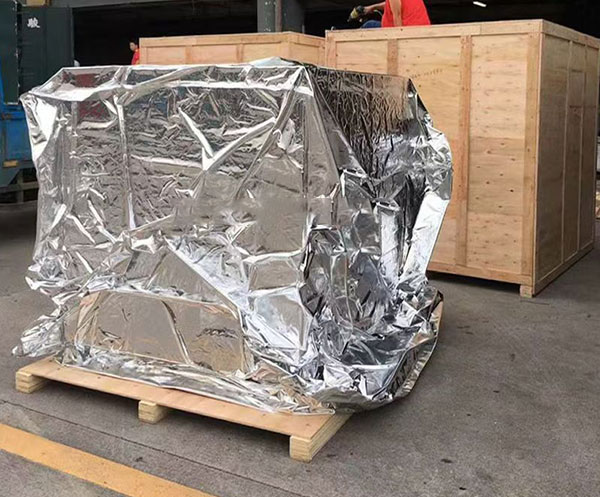
These packaging bags offer high adaptability, with customizable sizes to fit different cargo shapes. Excellent heat-sealing ensures airtight closure, while anti-static and dust-proof properties protect sensitive items. Compliant with international maritime packaging standards, they are lightweight to reduce logistics costs. Whether for large machinery components or small precision parts, these bags provide full-process protection, making them an optimal choice that balances strength, moisture resistance, and compliance for sea freight applications.
Frequently Asked Questions (FAQs)
1. What types of goods are suitable for sea freight vacuum-sealed aluminum-coated woven packaging bags?
This product is suitable for the sea freight packaging of various industrial equipment, precision machinery, electronic components, and hardware parts. Its high-strength compression resistance, moisture resistance, and anti-static properties protect goods from moisture, salt spray, stacking pressure, and collision damage during long-distance sea transportation and multi-stage handling.
2. Can the packaging bags be customized according to the size of the goods?
We provide customized services and can flexibly adjust the specifications of the packaging bags according to the size, shape, and weight of the customer's goods. Whether it's large mechanical components or small precision parts, we can achieve a tight-fitting packaging to enhance protection and ensure transportation safety.
3. How is the moisture resistance of the packaging bags guaranteed?
The packaging bags adopt a multi-layer composite structure, with the inner PE Film and the middle aluminum-coated film forming a double barrier to effectively isolate moisture, oxygen, and ultraviolet rays. Vacuum sealing removes air from the bag, creating a dry and sealed environment to prevent goods from getting damp, oxidizing, or rusting.
4. How much pressure or impact can the packaging bags withstand during sea transportation?
The outer layer uses thickened polypropylene woven fabric and is reinforced in both warp and weft directions, possessing excellent tensile strength and compression resistance. It can withstand heavy stacking pressure and impacts during loading and unloading, reducing the risk of packaging damage and cargo displacement, ensuring the equipment remains intact.
5. Do the packaging bags comply with international sea freight standards?
Our sea freight vacuum-sealed aluminum-coated woven packaging bags comply with international sea freight packaging regulations and can pass export inspections and customs requirements. They are also lightweight, save on logistics costs, and have anti-static and dustproof functions, meeting the safety and compliance needs of industrial equipment throughout the entire sea freight process.
This website uses cookies to ensure you get the best experience on our website.
 Español
 Pусский
 Deutsch
 العربية



 WhatsApp
 Phone
Phone