

I. Production Process and Technical Characteristics
The production of waterproof aluminized Woven Membrane is a precision manufacturing process integrating multiple modern technologies. Production begins with the preparation of the substrate, typically using high molecular weight polypropylene or high-density polyethylene as raw materials. These raw materials are precisely proportioned by an automated batching system and then melted and plasticized in a twin-screw extruder at a temperature of 180-220 degrees Celsius. The melt is filtered to remove impurities and then formed into a tubular film through an annular die. This tubular film is inflated at a specific temperature and simultaneously stretched longitudinally to form a bidirectional oriented film structure. This process requires precise control of temperature, stretching speed, and stretch ratio to ensure that the film has uniform molecular orientation and stable mechanical properties.
The weaving process utilizes computer-controlled intelligent weaving equipment. The flat yarns are controlled by an automatic tension control system to ensure constant tension during weaving. Modern looms are equipped with automatic warp breakage detection systems and real-time monitoring devices, enabling timely detection and handling of abnormalities during production. The fabric density is precisely adjusted according to usage requirements, typically controlled within the range of 48-64 threads per square inch. This precise weaving process ensures the substrate has a uniform structure and excellent mechanical properties.
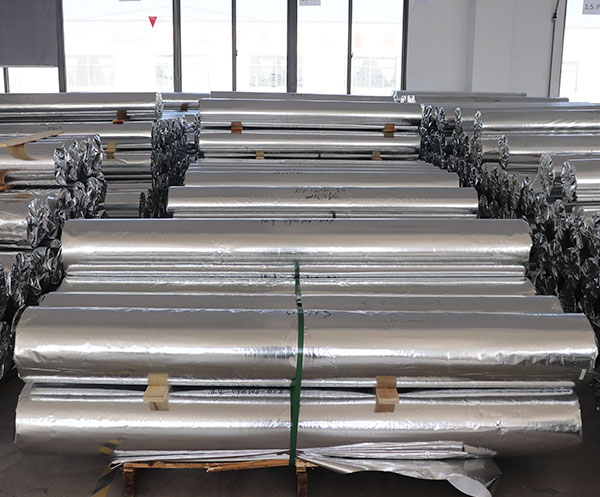
The vacuum metallization process is a key technology in the manufacturing process. In a highly automated multi-chamber continuous coating equipment, high-purity aluminum wire is heated to 1400-1500 degrees Celsius in a vacuum environment above 10⁻³ Pa. Aluminum atoms are uniformly deposited in gaseous form on the surface of the woven substrate, forming a metal layer with a thickness of 400-600 angstroms. This process is monitored in real time by an online film thickness monitor to ensure the uniformity and consistency of the metallized layer thickness. The metallized material immediately enters a curing chamber for treatment at a specific temperature to enhance the bonding strength between the aluminum layer and the substrate.
Waterproofing is a critical step. A specially formulated waterproof coating is uniformly applied to the surface of the metallized layer using precision coating equipment. The main components of the coating include fluorocarbon resin, crosslinking agent, and nano-scale waterproofing agent. During the coating process, the coating thickness is monitored in real time using a laser thickness gauge to ensure coating uniformity. After coating, the material enters a three-stage drying tunnel where the temperature gradually increases from 80 degrees Celsius to 120 degrees Celsius, allowing the coating to fully cure and form a dense waterproof layer. The entire production process takes place in a cleanroom to ensure product quality stability.
II. Material Structure and Performance Characteristics
The Waterproof aluminized woven membrane adopts a multi-layer composite structure, with each layer having a specific function. The substrate layer is a biaxially stretched plastic woven membrane, which gives the material excellent tensile strength and tear resistance. Test data shows that the longitudinal tensile strength of standard-sized waterproof Aluminized woven membrane can reach over 40 MPa, and the transverse tensile strength can reach approximately 35 MPa. The structural design of the woven membrane fully considers the stress distribution during use, with special reinforcement at the intersections of the warp and weft threads to ensure structural stability during use.
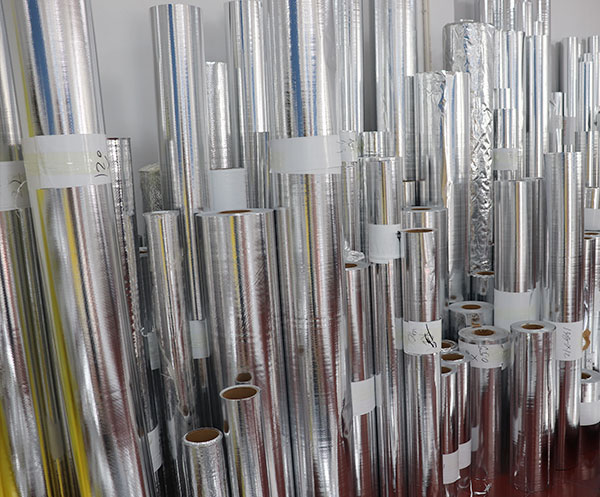
The aluminized layer is a functional metal layer formed through a vacuum aluminizing process. This extremely thin aluminum film constitutes a continuous and dense barrier, effectively blocking the passage of light, oxygen, and water vapor. Laboratory tests show that its water vapor transmission rate can be controlled below 0.8 g/m²·24h, and oxygen transmission rate does not exceed 0.3 cm³/m²·24h. The surface of the aluminum-plated layer undergoes nanoscale treatment to form a micro-rough structure, which not only enhances the adhesion to the waterproof layer but also further improves the material's barrier properties.
The waterproof layer is a functional coating on the outer layer of the material. This coating uses a special fluorocarbon resin system with added nano-silica particles to form a micro-nano composite structure. This structure allows the water contact angle to reach over 150 degrees, achieving a superhydrophobic effect. The coating also has a self-cleaning function, and surface contaminants are easily washed away by rainwater. The thickness of the waterproof layer is strictly controlled between 5-8 micrometers, a thickness that ensures waterproof performance without excessively affecting the material's flexibility.
The material's comprehensive performance has undergone rigorous testing and verification. In temperature cycling tests, after 100 cycles within a temperature range of -40℃ to 80℃, all performance indicators remained stable. UV aging tests showed that after 2000 hours of UV irradiation, the material retained over 85% of its main performance indicators. Chemical resistance tests demonstrated excellent resistance to most acids, alkalis, and salts. These superior properties enable the waterproof aluminized woven membrane to withstand various harsh environments.
III. Application Areas and Practical Value
In the field of outdoor product packaging, waterproof aluminized woven membrane demonstrates significant value. Outdoor equipment such as tents and sleeping bags require high levels of waterproofness and durability in their packaging. Packaging bags made from this material effectively protect products from rain and moisture during transportation and storage. One outdoor product manufacturer reported that after using the material, the return rate due to moisture decreased from 3.5% to below 0.5%, resulting in a significant improvement in customer satisfaction.
Building material packaging is another important application area. Building materials such as cement and gypsum board are susceptible to moisture damage during storage and transportation, affecting their performance. Waterproof aluminized woven membrane not only effectively blocks external moisture but also possesses good mechanical strength to withstand various stresses during stacking and handling. Actual usage data shows that building materials packaged in this way maintain their original quality after 90 days of outdoor storage.
The food and feed industry also benefits from this packaging material. Pet food and grain products have strict requirements for moisture and mold prevention. The excellent barrier properties of waterproof Aluminized woven film provide an ideal protective environment for these products. Comparative tests show that, under the same storage conditions, feed products packaged in this way have a 2-3 times longer mold growth period than those with ordinary packaging, effectively maintaining the product's nutritional value and palatability.
The demand for packaging in the electronics industry is growing rapidly. Electronic components, circuit boards, and other products are extremely sensitive to static electricity and moisture. Through special treatment, waterproof aluminized woven film can simultaneously provide anti-static and moisture-proof functions. After using customized waterproof aluminized woven film, an electronics manufacturing company reduced its product damage rate during sea transport from 8% to below 1%, significantly reducing quality costs.
Waterproof Aluminized Woven Membrane Used for Equipment Transportation and Storage Protection
Waterproof aluminized woven membrane is an industrial protective material formed by laminating an aluminized layer with polyester (PET) or polyethylene (PE) woven fabric through coating and hot-pressing processes. It combines waterproofing, barrier protection, tear resistance, and weather durability, making it an ideal solution for equipment transportation and storage protection. The following sections introduce its core performance, transportation applications, storage protection value, and usage considerations, without any company recommendations.
Waterproof, Moisture Resistance, and Barrier Properties
The aluminized layer effectively blocks water vapor, oxygen, and corrosive gases. Combined with the dense woven structure, it delivers reliable waterproof and moisture-resistant performance, helping prevent equipment from dampness, oxidation, and rust. In addition, the aluminum layer reflects ultraviolet radiation and heat, reducing surface aging of painted or plastic components and minimizing the impact of temperature fluctuations on precision equipment.
Excellent Mechanical Strength
The woven fabric substrate provides high toughness, strong tear resistance, puncture resistance, and compression resistance. It can withstand edge abrasion, stacking pressure, and friction during transportation and storage, effectively protecting equipment appearance and structural integrity.
High Adaptability
The material supports heat sealing and splicing and can be customized in size and thickness. Functional coatings such as antistatic or flame-retardant layers can be added to meet different packaging requirements. Some variants are recyclable, aligning with environmental considerations.
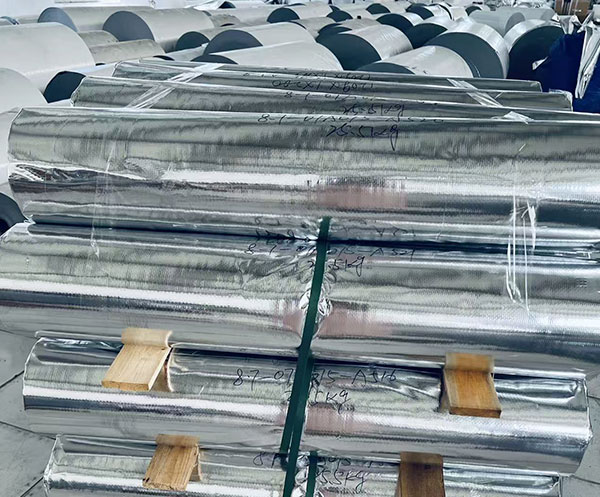
In long-distance transportation, especially sea freight and multimodal logistics, waterproof Aluminized woven membrane demonstrates clear advantages. For heavy machinery, machine tools, and electronic equipment, it can be made into sealed packaging bags or full protective covers with heat-sealed edges to isolate salt spray, moisture, and humid air, reducing transportation damage risks. For precision equipment, it can be combined with vacuum packaging to further limit oxygen and moisture exposure, protecting internal components from oxidation. Its lightweight nature does not significantly increase transportation weight, helping reduce packaging costs and improve logistics efficiency.
During storage, this material can be used as equipment dust covers, moisture barriers, inner liners, or pallet covers. It blocks dust, humidity, and light, creating a stable storage environment. For long-term storage, its barrier performance slows equipment aging and reduces maintenance frequency and costs. In outdoor storage scenarios, it provides protection against rain, snow, and prolonged sun exposure, preventing equipment failures caused by environmental factors and extending service life.
When selecting waterproof aluminized woven membrane, appropriate thickness and weight should be chosen based on equipment size, weight, and protection requirements. Full coverage and proper sealing are essential to ensure protective performance. For equipment with sharp edges, additional cushioning materials are recommended to prevent puncture and maintain barrier effectiveness.
Frequently Asked Questions (FAQs):
1. What are the core protective advantages of waterproof aluminized Woven Membranes in transportation and warehousing?
Waterproof aluminized woven membranes achieve multiple layers of protection through a composite structure of an aluminized barrier layer and a high-strength woven substrate. On one hand, the aluminized layer effectively blocks moisture, oxygen, and salt spray, reducing the risk of equipment moisture damage, oxidation, and corrosion. On the other hand, the woven fabric structure has excellent tear resistance and abrasion resistance, withstanding compression, friction, and stacking pressure during transportation, ensuring the equipment remains intact during transport and warehousing.
2. Is this material suitable for demanding scenarios such as ocean freight and long-term warehousing?
Yes. Waterproof Aluminized woven membranes are designed for high humidity and complex environments, making them particularly suitable for ocean freight, multimodal transport, and long-term warehousing. Under ocean freight conditions, its moisture-blocking and salt-spray-resistant properties effectively cope with high humidity and high-corrosion environments. In long-term warehousing, the material's barrier properties and weather resistance help delay equipment aging, reducing subsequent maintenance and repair costs.
3. Can the size and performance of waterproof aluminized woven membrane be customized?
Yes. We can provide customized solutions with different widths, thicknesses, and weights based on the size, weight, and protection level requirements of the customer's equipment. Additionally, we can add antistatic and flame-retardant functional layers according to the application scenario to meet the needs of electronic equipment, heavy machinery, or special industrial environments, ensuring stable performance in actual applications.
4. What are the advantages of this product compared to ordinary waterproof membranes or plastic packaging materials?
Compared to ordinary plastic films or single waterproof materials, waterproof aluminized woven membrane offers a more balanced performance in terms of barrier properties and mechanical strength. Its aluminized layer provides excellent moisture and oxidation protection, while the woven substrate significantly enhances tear and puncture resistance, making it particularly suitable for packaging large, heavy, or angular equipment. Furthermore, the lightweight design does not significantly increase transportation weight, helping to control overall logistics costs.
5. What precautions can be taken to improve the protective effect during actual use?
During use, select appropriate materials based on the equipment characteristics to ensure complete coverage and proper edge sealing or heat sealing. For equipment with sharp edges or heavy weight, it is recommended to use cushioning pads or corner protectors to prevent the film from being punctured and affecting its protective performance. Reasonable packaging structure design and standardized operation can significantly improve the overall protection effect during transportation and storage.
This website uses cookies to ensure you get the best experience on our website.
 Español
 Pусский
 Deutsch
 العربية



 WhatsApp
 Phone
Phone